
About Madeleine Lucette Ryley
Lived 1858 – 1934 (aged 75). Madeleine Lucette Ryley was a British actor, playwright and writer.
Madeleine Lucette Ryley (26 December 1858 – 7 February 1934) was an English actress and playwright known for her plays in London and then America in the late 1800s. She began writing plays under the pseudonym Noel Grant until she gained fame as a dramatist. Ryley wrote 27 plays and directed many of them herself, the best known being Mice and Men, Christopher Jr and An American Citizen, some of which were adapted on film in the early 1900s. She was an advocate for women's rights and was involved in the suffragette movement. Ryley rarely wrote suffragette drama for fear of trivializing complex political arguments.
Career Early career
Ryley first appeared onstage at the age of fourteen in London, playing Queen of the Fairies in an annual Christmas pantomime. She performed roles in light opera companies, including Carte's Comedy Opera Company with which she toured the British provinces in 1878 in the chorus of The Sorcerer and H.M.S. Pinafore, both starring J. H. Ryley. She had roles in the short companion pieces, Two Sharps and a Flat (Mrs. Minor) and Ryley's own Congenial Souls (Clara). Her American debut was in Princess Toto by W. S. Gilbert and Frederic Clay in Boston, and her first New York performance was in 1881 either in Solomon and Stephens's Billee Taylor with the D'Oyly Carte Opera Company, as Susan, Ryley stated: "Colonel McCaul, finding I was quick at writing songs and fixing up scenes, employed me at what is termed 'hack work,' on the understanding that my name was never to appear. He explained that women were not supposed to have a sense of humor, and that a topical song or a comedian's scene coming from a woman would not be tolerated!" Ryley penned her first comedy, Lady Jemima, in 1890 in two weeks. Minnie Maddern bought the piece and eventually produced it.
Ryley's career as a professional dramatist had a strong sendoff in 1894 with Christopher, Jr.'s original Brooklyn production. According to Ryley, the play took "five weeks to write and five years to place." Christopher, Jr. is a comic play that mixes well-rounded characters, ridiculous circumstances and clever dialogue. This original cast starred John Drew Jr. and Maude Adams. The Critic declared that overall, a "merrier little piece … has not been presented here for a long time, and the fun has the conspicuous merit of being entirely wholesome." Christopher Jr. ran for 64 performances and continued in Drew's repertoire for some time. Americans found Christopher Jr. to be a riotous comedy, but Londoners, when the play was performed as Jedbury Junior, read it as a domestic drama. The play achieved commercial success in both countries.
Later dramatic work and activism
In 1902, Ryley was writing and directing new works while productions of her plays Mice and Men and Jedbury Junior were receiving tours and revivals, respectively. By 1907, Ryley had either quit writing plays or simply could not interest anyone in her later work. By this time, she had written 27 plays. The Boston Transcript described her plays and position in the dramatic profession as follows: "These were all clean, wholesome comedies, and she scored heavily, for she proved, in contradistinction to many of her contemporaries, that American audiences could be entertained and amused by Anglo-Saxon themes and witty comedy as readily as those of Latin origin with their salacious plots and suggestive dialogue. Indeed, as far as women playwrights are concerned, she now has the field almost to herself."
When asked why women should have the right to vote, Ryley replied, "ooking at it from the standpoint of common sense, I think it necessary for the progress of humanity – necessary as the means to an end. Women must be educated to their responsibilities, and as long as the Vote is denied them they will remain uneducated. My point of view is impersonal and altruistic." Despite Ryley's work with the Woman Suffrage Movement, she did not write suffrage drama. She believed that such works risked trivializing complex political arguments.
Death Ryley's death in Hampstead, London, in 1934 was covered in both London and New York newspapers.
Don’t just read it —
keep it.
Full-length biographies made to live with: read them, listen on the way to work, watch them tonight.
- E-book
- Audio
- Video
Instant download · yours to keep · every purchase keeps this site free
Important facts
Family & relationships
People in Madeleine Lucette Ryley's life
Named in this biography and alive at the same time

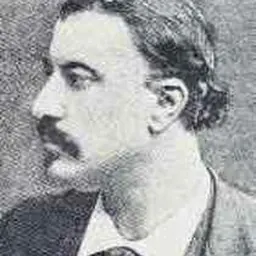


Related people
Same field, nearest in time
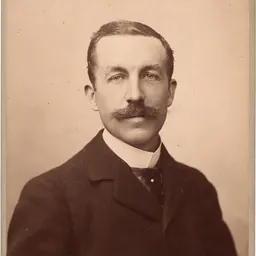


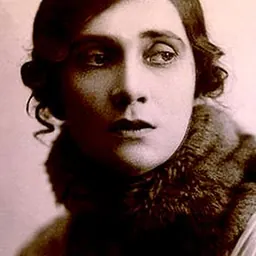
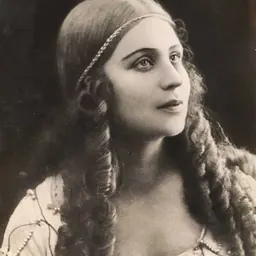
Contemporaries
People whose lives overlapped Madeleine Lucette Ryley's


Frequently asked questions
Who was Madeleine Lucette Ryley?
English actress, playwright (1858-1934)
When was Madeleine Lucette Ryley born?
Madeleine Lucette Ryley was born on 26 December 1858 in United Kingdom of Great Britain and Ireland.
When did Madeleine Lucette Ryley die?
Madeleine Lucette Ryley died on 7 February 1934 in Hampstead.
What was Madeleine Lucette Ryley's occupation?
Madeleine Lucette Ryley was an actor, playwright and writer.
What nationality was Madeleine Lucette Ryley?
Madeleine Lucette Ryley was British.
Sources & further reading
· Wikipedia: Madeleine Lucette Ryley
· DBpedia: Madeleine Lucette Ryley
Cite this page
APA: Biography.guide. (2026). Madeleine Lucette Ryley. https://biography.guide/madeleine-lucette-ryley/
MLA: "Madeleine Lucette Ryley." Biography.guide, https://biography.guide/madeleine-lucette-ryley/.
Chicago: "Madeleine Lucette Ryley." Biography.guide. https://biography.guide/madeleine-lucette-ryley/.
Data last updated: 2026-09-22 · Spot an error? Report a correction.
Page generated 2026-09-27 05:21 UTC