
About Machi Dilworth
Machi Dilworth was a botanist.
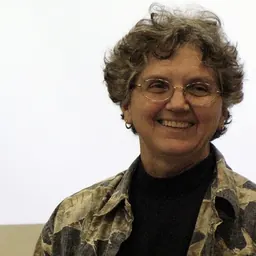
Machi Fukuyama Dilworth (born January 3, 1945) is a Japanese and American plant biologist whose research focuses on genetic and hormonal metabolism in plants and who has been instrumental in the Arabidopsis thaliana genome sequencing project. Raised in Japan and attending university there, Dilworth moved to the United States for graduate studies and then worked at multiple universities as a research associate during the 1970s. Later hired by the United States Department of Agriculture (USDA) and the National Science Foundation (NSF), she was placed into increasing positions of influence by program director Mary Clutter and put in charge of the various plant genome projects in progress.
She used this opportunity and later positions in Japan, such as at Riken or the NSF's Tokyo Office and later the Okinawa Institute of Science and Technology Graduate University, to advance the prospects of women in science. Her primary drive has been to increase the number of women in Japan who go into STEM fields and contribute to scientific research. Dilworth has been noted by the American Society of Plant Biologists for her work and for being a founding member of its Legacy Society.
Childhood and education Dilworth was born in Tamano, Okayama Prefecture, on 3 January 1945. She attended International Christian University in Tokyo and received a Bachelor's degree in biology, during which she conducted undergraduate research in the lab of her adviser, Masayuki Katsumi. Visited by UCLA professor Bernard Phinney, he suggested that Dilworth become a graduate student in his lab, which she accepted after Katsumi's approval and began attending in 1967
Career Postdoctorate and research associate Instead of returning to Japan, because of her marriage, Dilworth moved to work at Michigan State University alongside him. She then took a postdoctoral position at the MSU-DOE Plant Research Laboratory with Hans Kende as her sponsor. She was later made the postdoctoral representative for the faculty search committee and was involved in the hiring of two assistant professors for the research laboratory. After the birth of her first child and a year of maternity leave, Dilworth and her husband moved to the University of Georgia (UGA) in 1975. She obtained a research associate job in the lab of Leon Dure. During her three years there, she learned about genetic modification of plants using Agrobacterium tumefaciens after an interaction with Jozef Schell. In 1987, she was a founding member of The Plant Cell, remaining the reviews editor until 1991.
NSF and STEM for women
She spent most of a decade in the position navigating the proposal review panels before Clutter asked her to return to the NSF in 1990 to become a program director for the Biological Infrastructure Division (BIO) and to focus on supporting the Arabidopsis plant genome program. This resulted in Dilworth working alongside DeLill Nasser to create multiple research projects within the NSF, including the Multinational Coordinated Arabidopsis thaliana Genome Research Project, the International Arabidopsis genome sequencing program and the Arabidopsis 2020 Project. Taking a nine-month sabbatical at the end of 1996 to return to Japan, she spent the time at Riken as a visiting fellow funded by the Japan Science and Technology Agency. The purpose of the fellowship grant was to have her determine the current state of biotechnology research in Japan at various public and private institutions. She then retired again in 2019.
Research After her graduate work on gibberellins, her postdoctoral work moved to Agrostemma and the biochemistry involved in the genetic component of nitrate metabolism and hormonal impacts of nitrate that then leads to germination of the plant's seeds. Once she had changed to a UGA lab, her research swapped to cottonseed and how the germinating seeds' storage proteins control their amino acid metabolism. The Gantt lab saw her focus on Porphyridium cruentum and the biochemistry of its phycobilisomes.
Organizations Dilworth joined the American Society of Plant Biologists in the late 1960s and went on to become a founding member of the group's Legacy Society.
Personal life Dilworth met her husband, Greg Dilworth, while working on her Ph.D. at UCLA and they married the day after she successfully defended her thesis.
Don’t just read it —
keep it.
Full-length biographies made to live with: read them, listen on the way to work, watch them tonight.
- E-book
- Audio
- Video
Instant download · yours to keep · every purchase keeps this site free
Important facts
Related people
Same field, nearest in time



Frequently asked questions
Who was Machi Dilworth?
Japanese and American plant biologist
What was Machi Dilworth's occupation?
Machi Dilworth was a botanist.
Sources & further reading
Cite this page
APA: Biography.guide. (2026). Machi Dilworth. https://biography.guide/machi-dilworth/
MLA: "Machi Dilworth." Biography.guide, https://biography.guide/machi-dilworth/.
Chicago: "Machi Dilworth." Biography.guide. https://biography.guide/machi-dilworth/.
Data last updated: 2026-09-24 · Spot an error? Report a correction.
Page generated 2026-09-27 05:02 UTC