
About M. Brewster Smith
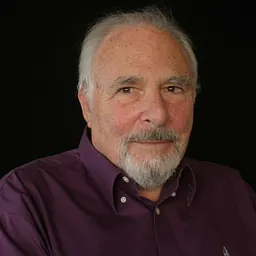
Lived 1919 – 2012 (aged 93). M. Brewster Smith was an American psychologist, known for Brown v. Board of Education.
Mahlon Brewster Smith (June 26, 1919 – August 4, 2012) was an American psychologist and past president of the American Psychological Association. His career included faculty appointments at Vassar College, New York University, University of California, Berkeley, University of Chicago and University of California, Santa Cruz. Smith had been briefly involved with the Young Communist League as a student at Reed College in the 1930s, which resulted in a subpoena by the U.S. Senate in the 1950s. That activity caused him to be blacklisted by the National Institute of Mental Health for ten years without his knowledge.
Smith testified against segregation in schools as an expert witness in the Brown v. Board of Education case; the scope and scientific basis for Smith's testimony have been the subjects of controversy. He was the vice president of the Joint Commission on Mental Illness and Health, the group whose recommendations led to the deinstitutionalization of most of the mentally ill in the United States. In 1961, he helped to interview and select the first group of Peace Corps volunteers.
Smith authored several notable works in social psychology, and a collection of his works was published in 2003. He was editor of two major psychological journals and was the recipient of numerous awards, including the Kurt Lewin Award from the Society for the Psychological Study of Social Issues and the APA Award for Distinguished Contributions to Psychology in the Public Interest. Smith died in 2012 after a brief illness.
Early life Mahlon Brewster Smith was born on June 26, 1919, in Syracuse, New York. When he was a child, his family moved to Oregon after his father became a dean at Oregon State University.
Smith directed Berkeley's Institute of Human Development from 1965 to 1968. After serving as department head at the University of Chicago for two years, he came to the University of California, Santa Cruz in 1970. He was dean of social sciences for five years, then was a professor of psychology until his retirement in 1988. At UC Santa Cruz, he influenced a focus on social justice in the social psychology program.
Brown v. Board of Education In 1954, Smith provided expert testimony in Brown v. Board of Education which characterized segregation as "inherently an insult to the integrity of the individual". Jackson argues that segregationist writers of the time "succeeded in framing the issues in a manner that put the actions of the social scientists in the worst possible light."
Joint Commission on Mental Illness and Health Smith was the vice president of the Joint Commission on Mental Illness and Health, an independent organization created by the United States Congress in 1955 to study the care of the nation's mentally ill. The group's final report is thought to have influenced legislation that led to the deinstitutionalization of the American mentally ill. The report, Action for Mental Health (1961), advocated for community-based mental health care. It recommended that no mental hospitals should be constructed with more than 1,000 beds and that existing hospitals of greater than 1,000 beds should be converted to centers treating chronic physical and mental conditions.
By the 1980s, the group's report was criticized for leading to deinstitutionalization in large numbers without establishing sufficient community resources for the mentally ill and for the subsequent overreliance on psychiatric drugs. Charles Schlaifer, a member of the group, said that he later became frustrated because "tranquilizers became the panacea for the mentally ill... Local mental health centers were going to be the greatest thing going, but no one wanted to think it through." In 1988, he received the APA Award for Distinguished Contributions to Psychology in the Public Interest. Smith was active in social psychology even after his retirement from UC Santa Cruz.
Selected works
Books The American Soldier Opinions and Personality (1956) Humanizing Social Psychology (1974) Values, Self and Psychology (1991) For a Significant Social Psychology: The Collected Writings of M. Brewster Smith (2003)
Journal articles McCarthyism: A Personal Account, Journal of Social Issues, 1986.
Don’t just read it —
keep it.
Full-length biographies made to live with: read them, listen on the way to work, watch them tonight.
- E-book
- Audio
- Video
Instant download · yours to keep · every purchase keeps this site free
Important facts
People in M. Brewster Smith's life
Named in this biography and alive at the same time

Related people
Same field, nearest in time




Contemporaries
People whose lives overlapped M. Brewster Smith's


Frequently asked questions
Who was M. Brewster Smith?
American psychologist
When was M. Brewster Smith born?
M. Brewster Smith was born on 26 June 1919 in Syracuse.
When did M. Brewster Smith die?
M. Brewster Smith died on 4 August 2012 in Santa Cruz.
What was M. Brewster Smith's occupation?
M. Brewster Smith was a psychologist.
What was M. Brewster Smith known for?
M. Brewster Smith was known for Brown v. Board of Education.
What nationality was M. Brewster Smith?
M. Brewster Smith was American.
Sources & further reading
· Wikipedia: M. Brewster Smith
Cite this page
APA: Biography.guide. (2026). M. Brewster Smith. https://biography.guide/m-brewster-smith/
MLA: "M. Brewster Smith." Biography.guide, https://biography.guide/m-brewster-smith/.
Chicago: "M. Brewster Smith." Biography.guide. https://biography.guide/m-brewster-smith/.
Data last updated: 2026-09-20 · Spot an error? Report a correction.
Page generated 2026-09-27 05:31 UTC