
About Lyuh Woon-hyung
Lived 1886 – 1947 (aged 61). Lyuh Woon-hyung was a Korean politician.
Lyuh Woon-hyung (; 25 May 1886 – 19 July 1947), also known by his art name Mongyang , was a Korean independence activist and reunification activist.
Lyuh was a prominent figure in the Korean Provisional Government (KPG) and participated in the creation of the February 8 Declaration of Independence during the Japanese colonial period. He is rare among politicians in modern Korean history for being revered in both South and North Korea.
Biography In August 1945, Lyuh organized a meeting with the representatives of "the Committee for Preparation of Korean Independence" who came from all over the country. Lyuh was born in 1886 in Yangpyeong, Gyeonggi Province, Joseon. He was born into the Hamyang Yeo clan to father Yŏ Chŏng-hyŏn . At around age 14, he married Yu Se-yŏng , but she died, and he remarried to Jin Sang-ha .
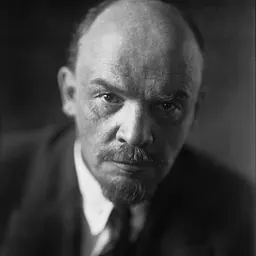
In 1900, Lyuh enrolled in the Western-style Pai Chai School. Soon afterwards, he switched to studying at the and Umu School . Concurrently, he participated in efforts to send Korean representatives to the 1919–1920 Paris Peace Conference, in hopes that they could advocate for Korean independence there. In Moscow, he met with Leon Trotsky and Vladimir Lenin. On the 17 August, Lyuh established the Committee for Preparation of Korean Independence which created over 140 subsections in North and South Korea during the remainder of that month. with Lyuh as Chairman of the National People's Representative Conference. However, when the United States landed on the Korean Peninsula two days later, General Hodge did not recognize the government. In October, Lyuh stepped down under pressure from the United States Military Government, and organized the People's Party of Korea, becoming its chairman. In the ensuing months of the anti-trusteeship movement and other political developments, Lyuh took a line of action in concert with the communists.
When a movement to unify the political left and the political right arose in May 1946, Lyuh represented the center-left. However, Lyuh's political stance was attacked by both the extreme right and the extreme left, and his efforts to pursue a centrist position became increasingly untenable in the midst of the turbulent political milieu.
Death On 19 July 1947, Lyuh was assassinated in Seoul by a 19-year-old man named Han Chi-geun, who fled from North Korea and was an active member of a right-wing terrorist group, the White Shirts Society. Lyuh's death was widely mourned.
Timeline
1894 – Moved to Danyang, Chungcheongbuk-do and returned to Myogok after two years. 1900 – Enrolled in the Baejae School 1901 – Transferred to Heung-hwa School . 1902 – Entered school attached to the Correspondent bureau . 1903 – Spouse died in August. Grandfather died in October. 1905 – Mother died. 1906 – Father died. 1907 – Became Christian. Founded Gwang-dong school in Yangpyeong. 1908 – Founded branch of National Debt Repayment Movement in Yangpyeong and toured to speech about it. 1910 – Became a teacher of Chodang Uisuk of Gangneung. 1911 – Had been fired from school because of rejecting Japanese era name. Entered to Pyongyang seminarium and studied to 2 years 1914 – Entered the English literature course of Jinling University (金陵大学) in Nanjing, studied 3 years. 1917 – Got a job of travel Agent at Xiehe bookstore (協和書局) in Shanghai and helped Koreans in passage procedure. Met Sun Yat-sen. In summer, returned to Korea in private. Fled to China with Lee Beom-seok. 1918 – Founded New Korea Youth Party in Shanghai and had been appointed to the leader. 1919 – Became deputy of Ministry of Foreign Affairs of the Provisional Government of the Republic of Korea in Shanghai. 27 November 1919 – Visited Japan and had a speech at the Imperial Hotel about Right to life of Koreans. 1920 – Joined the Koryŏ Communist Party in Shanghai and became a translation committee member and propaganda agent. 1921 – Established "Korea-China Cooperated company" (Hanjung hojosa, 韓中互助社, 한중호조사) in Shanghai. January 1922 – Participated in "Conference for Oppressed people of the Far East" (遠東被壓迫民族大會, 원동피압박민족대회) in Moscow. Met Vladimir Lenin and discussed about anti-imperialism movement in Korea. in October, Organized "Hanguk Nobyunghoe" (韓國勞兵會, 한국노병회) with Kim Ku, Son jung-do etc. 1924 – Became a special member of the Chinese Communist Party July 1929 – Became coach of the soccer team of Fudan University and went to the Southeast Asia for educational travel with players. While in travel he made a speech of Anti-Imperialism at the Philippines, Singapore etc. Arrested by Japanese police in Shanghai and taken to Korea. Had been sentenced to imprisonment for 3 years. November 1932 – Had been released on parole from the prison of Daejeon. February 1933 – Became the president of the Chungang Daily News (Chosun JoongAng Ilbo, 조선중앙일보). 1934 – Became chairman of the "Korea Sports Council" . 1935 – Set up the gravestone in Yi Sun-sin graveyard of Asan. August 1936 – Chungang Daily News ceased publication eternally for removing Japanese flag of Sohn Kee-chung's picture. 1940 – Gone off to Tokyo and led and inspire Korean students in Japan. Met Fumimaro Konoe, Shūmei Ōkawa. December 1942 – Arrested by Military police for violation of "Peace Preservation Law" (治安維持法) 1943 – Got released from prison with three years of probation. while retired from active life, he made contact with comrade and led the young people. 10 August 1944 – Formed Korean Restoration Brotherhood Secretly in Sam-gwang Oriental Medical Clinic in Seoul and expanded it on a nationwide scale. Rejected the suggestion to go to China of Endo Ryusaku (遠藤柳作), the vice-minister of the post of Governor-General of Korea (朝鮮総督府政務総監). Formed the "Farmers' Brotherhood" at the Yongmunsan in Yangpyeong. 15 August 1945 – Met Endo and had been transferred authority of administration and public order from Endo. 17 August 1945 – Formed the Committee for Preparation of Korean Independence.
6 September 1945 – Had been elected to temporary chairman of "National People's Representative Conference"(전국인민대표자회의 →People's Republic of Korea). 12 November 1945 – Formed "People's Party of Korea" . 9 February to 11 February 1946 – Visited Haeju, Pyongyang and met Cho Man-sik, Kim Il Sung. 15 February 1946 – Be elected one of the co-chairmen of "National Front for Democracy" (民主主義民族戰線, 민주주의민족전선). May 1946 – Propelled "Left-right cooperation movement" with Kim Kyu-sik, An Jae-hong etc. 17 July 1946 – kidnapped and taken to a mountain of Sindang-dong, Seoul and escaped risk of being murdered 16 October 1946 – Founded "Socialist Labourer's Party" . 28 December 1946 to 8 January 1947 – Visited Pyongyang. 24 May 1947 – Founded "Labor People's Party" . Had been elected to chairman. 19 July 1947 – Assassinated by Han Ji-geun of the White Shirts Society, at the Rotary Road, Hyehwa-dong, Seoul.
Genealogy
Spouse : Rhew, Se-yeong's daughter (류세영의 장녀, 진주 (柳氏)? – October 1903, Married 1899–1903) Spouse : Jin Sang-ha (진상하, 陳相夏, 1885 – ?) Daughter : Lyuh Nan-gu (여난구, 呂鸞九, 1923 – ?) Daughter : Lyuh Yeon-gu (여연구, 呂鷰九, 1927 – 28 September 1996) Daughter : Lyuh Hyeong-gu Son : Lyuh Bong-gu (여봉구, 呂鳳九, 1914 – 14 November 1932), died of typhoid fever Son : Lyuh Hong-gu (여홍구, 呂鴻九, 1918 – 1939), died of tetanus Son : Lyuh Young-gu (여영구, 呂鸋九, 1930~?) Unknown Japanese woman Son : Lyuh Boong-gu (여붕구, 呂鵬九, 1936 – 1991) Jin Ok-chul Daughter : Lyuh Sun-gu(여순구, 呂鶉九, 1942 – ) Brother : Lyuh Woon-il (여운일, 呂運一, 1890 – ?) Brother : Lyuh Woon-hong (여운홍, 呂運弘, 1 September 1891 – 3 February 1973) Sister : Unknown
Award On 21 February 2008, Lyuh Woon-hyung was posthumously awarded the Order of Merit for National Foundation Republic of Korea Medal.
In popular culture Portrayed by Kim Gil-ho in the 1981 MBC TV series The First Republic. Portrayed by Kim Yun-hyung in the 2003 SBS TV series Age of Wanderer. Portrayed by Shin Goo in the 2006 KBS1 TV series Seoul 1945.
Don’t just read it —
keep it.
Full-length biographies made to live with: read them, listen on the way to work, watch them tonight.
- E-book
- Audio
- Video
Instant download · yours to keep · every purchase keeps this site free
Important facts
People in Lyuh Woon-hyung's life
Named in this biography and alive at the same time



Related people
Same field, nearest in time





Contemporaries
People whose lives overlapped Lyuh Woon-hyung's



Frequently asked questions
Who was Lyuh Woon-hyung?
Korean politician (1886–1947)
When was Lyuh Woon-hyung born?
Lyuh Woon-hyung was born on 25 May 1886 in Yangpyeong County.
When did Lyuh Woon-hyung die?
Lyuh Woon-hyung died on 19 July 1947 in Seoul.
What was Lyuh Woon-hyung's occupation?
Lyuh Woon-hyung was a politician.
What nationality was Lyuh Woon-hyung?
Lyuh Woon-hyung was Korean.
Sources & further reading
Cite this page
APA: Biography.guide. (2026). Lyuh Woon-hyung. https://biography.guide/lyuh-woon-hyung/
MLA: "Lyuh Woon-hyung." Biography.guide, https://biography.guide/lyuh-woon-hyung/.
Chicago: "Lyuh Woon-hyung." Biography.guide. https://biography.guide/lyuh-woon-hyung/.
Data last updated: 2026-09-20 · Spot an error? Report a correction.
Page generated 2026-09-27 05:31 UTC