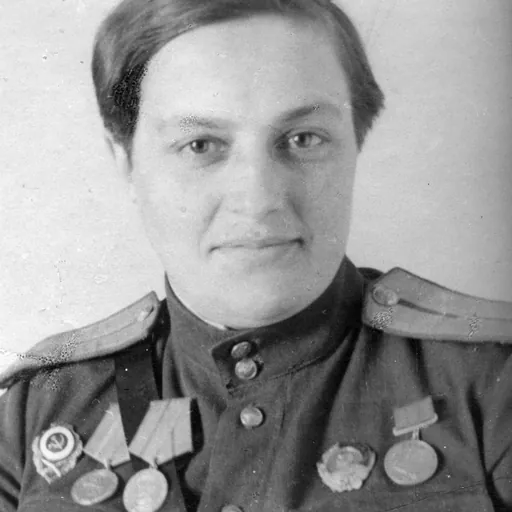
About Lyudmila Pavlichenko
Lived 1916 – 1974 (aged 58). Lyudmila Pavlichenko was a Russian sniper, historian and military personnel.
Lyudmila Mikhailovna Pavlichenko (; 10 October 1974) was a Soviet sniper in the Red Army during World War II. She is the deadliest female sniper, and one of the deadliest snipers in history, with 309 confirmed kills. She served in the Red Army during the siege of Odessa and the siege of Sevastopol, during the early stages of the fighting on the Eastern Front.
After she was injured in battle by a mortar shell, she was evacuated to Moscow. After she recovered from her injuries, she trained other Red Army snipers and was a public spokeswoman for the Red Army. In 1942, she toured the United States, Canada, and the United Kingdom. After the war ended in 1945, she was reassigned as a senior researcher for the Soviet Navy. She died of a stroke at the age of 58. who was of Russian nobility. The family moved to Kiev when Lyudmila was aged 14. Her father was a Communist Party member, and had served as a regimental commissar in the Red Army, being awarded the Order of the Red Banner.
As a child, Lyudmila was a self-described tomboy, who was fiercely competitive at athletic activities. In Kiev, she joined an OSOAVIAKhIM shooting club, developed into an amateur sharpshooter and earned her Voroshilov Sharpshooter badge and a marksman certificate.
In 1932, she married Alexei Pavlichenko, and gave birth to a son, Rostislav (1932–2007). However, the marriage was soon dissolved, and Lyudmila returned to live with her parents. She attended night school as well as performing household chores.
She enrolled at Kiev University in 1937, where she studied history and intended to be a scholar and teacher. There, she competed on the university's track team as a sprinter and pole vaulter.
Pavlichenko fought for about months during the Siege of Odessa and is credited with killing 187 soldiers. She was promoted to senior sergeant in August 1941, when she added 100 more kills to her official tally. At 25, she married a fellow sniper, Alexei Kitsenko.
She spent around a month in the hospital. She also trained snipers for combat duty until the end of the war in 1945. They also asked if she used makeup on the front line. While visiting Canada, along with fellow sniper Vladimir Pchelintsev and Moscow fuel commissioner Nikolai Kravchenko, she was greeted by thousands of people at Toronto's Union Station.
Having been made an officer, Pavlichenko never returned to combat, instead becoming an instructor and training snipers until the war's end. as well as the Order of Lenin twice.
A second Soviet commemorative stamp featuring her portrait was issued in 1976. It was released as part of The Asch Recordings.
Pavlichenko is the subject of the 2015 film Battle for Sevastopol (original Russian title, "Битва за Севастополь"). A joint Ukrainian-Russian production, it was released in both countries on 2 April 2015, and its international premiere took place two weeks later at the Beijing International Film Festival.
The first English language edition of her memoirs, Lady Death, was published by Greenhill Books in February 2018.
In the 2021 game Call of Duty: Vanguard, there is a character based loosely off of Pavlichenko named Polina Petrova.
Pavlichenko's experiences during World War II, both in battle and on tour in the United States, have inspired several historical fiction novels, including Beautiful Assassin (2010) and Kate Quinn's 2022 novel The Diamond Eye.
Additionally, she was featured in the Japanese manga series, The War of Greedy Witches, where Pavlichenko served as one of the witches to fight against Murasaki Shikibu in Walpurgis.
Awards and honours
Voroshilov Sharpshooter badge (1939)
Don’t just read it —
keep it.
Full-length biographies made to live with: read them, listen on the way to work, watch them tonight.
- E-book
- Audio
- Video
Instant download · yours to keep · every purchase keeps this site free
Important facts
People in Lyudmila Pavlichenko's life
Named in this biography and alive at the same time
Related people
Same field, nearest in time



Contemporaries
People whose lives overlapped Lyudmila Pavlichenko's



Frequently asked questions
Who was Lyudmila Pavlichenko?
Soviet sniper (1916–1974)
When was Lyudmila Pavlichenko born?
Lyudmila Pavlichenko was born on 12 July 1916 in Bila Tserkva.
When did Lyudmila Pavlichenko die?
Lyudmila Pavlichenko died on 10 October 1974 in Moscow.
What was Lyudmila Pavlichenko's occupation?
Lyudmila Pavlichenko was a sniper, historian and military personnel.
What nationality was Lyudmila Pavlichenko?
Lyudmila Pavlichenko was Russian.
Sources & further reading
· Wikipedia: Lyudmila Pavlichenko
· DBpedia: Lyudmila Pavlichenko
Cite this page
APA: Biography.guide. (2026). Lyudmila Pavlichenko. https://biography.guide/lyudmila-pavlichenko/
MLA: "Lyudmila Pavlichenko." Biography.guide, https://biography.guide/lyudmila-pavlichenko/.
Chicago: "Lyudmila Pavlichenko." Biography.guide. https://biography.guide/lyudmila-pavlichenko/.
Data last updated: 2026-09-22 · Spot an error? Report a correction.
Portrait: Wikimedia Commons · author & licence
Page generated 2026-09-27 05:04 UTC