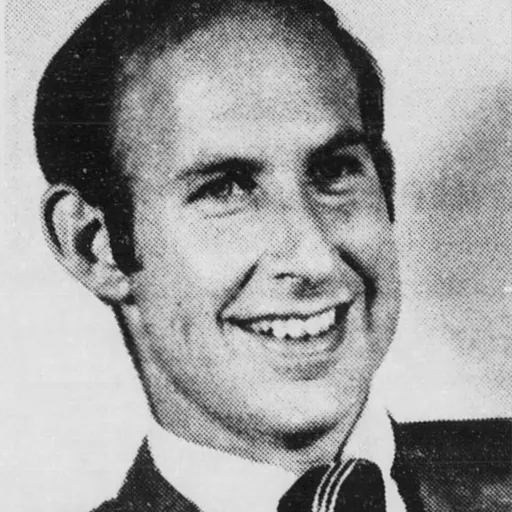
About Lynn S. Adelman
Born 1939. Lynn S. Adelman is an American lawyer, judge and politician.
Lynn Steven Adelman (born October 1, 1939) is an American lawyer and former politician. He has served as a United States district judge for the United States District Court for the Eastern District of Wisconsin since December 1997. Prior to becoming a federal judge, he served 20 years as a Democratic member of the Wisconsin Senate, representing southwest Milwaukee County and neighboring municipalities from 1977 to 1997. He also ran three times for the U.S. House of Representatives in 1974, 1982, and 1984.
Early life and education Adelman was born in Milwaukee. He received a Bachelor of Arts degree from Princeton University in 1961 and a Bachelor of Laws from Columbia Law School in 1965. In 1993, Adelman represented Todd Mitchell, a black man convicted of a racially motivated attack against a 14-year old white boy, in Wisconsin v. Mitchell, a landmark first amendment case.
Political career
Adelman made his first bid for elected office in 1974, running for U.S. House of Representatives and seeking to oust ten-term Republican incumbent Glenn Robert Davis from Wisconsin's 9th congressional district. Davis, who was a close ally of then-president Richard Nixon, was politically wounded by the Watergate scandal and Nixon's other recent controversies. Adelman focused much of his campaign on issues of executive overreach and the need for Congress to re-assert its authority. Davis, however, was defeated in the Republican primary by moderate Republican Bob Kasten. The general election was one of the most hotly-contested in the state, with both campaigns breaching campaign finance limits that had existed at that time—Adelman spent about $104,000 and Kasten spent about $89,000 (adjusted for inflation, $677,000 and $579,000, respectively). Kasten defeated Adelman with 52% of the vote.
In the aftermath of the election, Adelman was critical of some of Kasten's early votes in Congress and seemed intent on a rematch in 1976. Rather than running again for Congress in 1976, Adelman moved south from Shorewood, Wisconsin—in northern Milwaukee County—to New Berlin, Wisconsin—in southeast Waukesha County. The move immediately sparked speculation that Adelman would instead run for Wisconsin Senate against Republican incumbent James Devitt in the 28th Senate district. Shortly after Adelman's move, newspapers broke the story that Devitt was the subject of a John Doe investigation relating to campaign finance violations during his run for governor in 1974. Adelman officially announced his candidacy in June 1976. Devitt was indicted a month later. Despite the indictment, Devitt won renomination against two Republican challengers. Adelman won the general election in a landslide, receiving nearly two thirds of the vote. In the campaign, Adelman sought to tie Zablocki to the economic policies of the Reagan administration in the midst of the early 1980s recession. Zablocki was sometimes seen as too conservative for his safely Democratic district, but he fended off the criticisms and distanced himself from Reagan, winning the primary with 60% of the vote.
Zablocki died just a year later and Adelman made another run in the special election to succeed him in the spring of 1984. He lost the primary to state senator Jerry Kleczka—another popular Polish Catholic from Milwaukee's south side.
Federal judicial service Courtroom of Hon. Lynn Adelman in Milwaukee's Federal Building In 1997, Adelman chose to apply for appointment as U.S. district judge in the Eastern District of Wisconsin to fill the vacancy created when district judge Thomas John Curran took senior status at the beginning of that year. He was one of nineteen applicants, which included nine other state judges, two U.S. magistrate judges, and prominent state attorneys, including Maxine Aldridge White, Joan F. Kessler, and the then-chairman of the Democratic Party of Wisconsin Mark Sostarich. Adelman's application rose above the others as state Republicans embraced his candidacy and Republican then-governor Tommy Thompson wrote a glowing recommendation, describing Adelman as "thoughtful, fair, and open-minded." Newspapers at the time speculated that Republican praise for Adelman was at least partly motivated by their desire to flip his seat in a special election and thereby regain the majority in the state Senate. and received his commission on December 23, 1997. This law made voters of Wisconsin show a state-issued photo ID at the polls before they could vote.
Johnny Kimble vs Wisconsin's Department of Workforce Development, et al.
In this case Johnny Kimble sued former Equal Rights Division Secretary Sheehan Donoghue for not giving him a pay raise based on his race and gender. Sheehan Donoghue was appointed to this position in 1991 by then governor of Wisconsin Tommy Thompson. In his opinion, Adelman referenced Wikipedia articles on Traditionalist Catholic and Montessori education. His judgment was affirmed by a divided panel of the United States Court of Appeals for the Seventh Circuit in October 2018.
United States vs. Sujata Sachdeva
In this trial, Koss Corporation's Chief Financial Advisor Sujata Sachdeva was charged with embezzling $34 million from the company. The Koss Corporation is a manufacturer of headphones. The case received a rush of national attention as Democrats and legal experts denounced the arrest as an assault on the independence of the judiciary and an attempt by the Donald Trump administration to intimidate political opponents.
Dugan's attorneys moved to dismiss the case on the basis of judicial immunity, official acts, and the Tenth Amendment. They wrote "The government's prosecution of Judge Dugan is virtually unprecedented and entirely unconstitutional". On August 26, 2025 Adelman ruled against Dugan, stating "There is no basis for granting immunity simply because some of the allegations in the indictment describe conduct that could be considered 'part of a judge's job'" and that Dugan "went well beyond her judicial role." After Dugan was convicted by the jury, Adelman denied her motions for acquittal and/or a new trial. On June 16, 2026, Adelman upheld the 2025 obstruction of justice verdict, declining the appeal of Dugan's 2025 felony conviction. On July 8, 2026, Adelman ordered Dugan to pay a fine of $5000 and declined to sentence her to serve any time in prison.
Federal lawsuits against Joseph Mensah Adelman has presided over three separate civil trial lawsuits against former Milwaukee Police Department officer Joseph Mensah involving three people who Mensah shot to death, including Estate Of Antonio Gonzalez v. Joseph Anthony Mensah et al., Estate of Jay Anderson Jr., et al v. Joseph Anthony Mensah et al., and Estate of Alvin Cole et al. v. Joseph Anthony Mensah et al. As of September 2025, Adelman has dismissed the lawsuits against Mensah of the deaths of Gonzalez and Anderson, but has allowed the lawsuit against Mensah for the death of Cole to continue.
Criticism of the Supreme Court under John Roberts
In February 2020, Adelman wrote an article criticizing the recent record of the Supreme Court of the United States under Chief Justice John Roberts The article singled out Chief Justice Roberts and accused him of actively participating in "undermining American democracy," through activist decisions on voting rights and campaign finance by corporate interests. Adelman wrote, "Instead of doing what it can to ensure the maintenance of a robust democratic republic, the Court's decisions ally it with the most anti-democratic currents in American politics, forces that would be pleased if unlimited money could be spent on elections and if minorities could be deterred from voting."
The article specifically cited a number of partisan 5–4 decisions, such as Shelby County v. Holder, (which struck down part of the Voting Rights Act of 1965), Rucho v. Common Cause, (which decided that federal courts could not rule on cases of gerrymandering), Citizens United v. FEC, (which allowed unlimited corporate spending on elections), and Janus v. AFSCME (which held that it was unconstitutional for public employee unions to require collective bargaining fees). The article created waves in legal circles because of the unusually blunt criticism of the Court coming from a sitting federal judge. Legal scholar Jonathan Turley argued that the article makes "a better case of bias against himself than he does Chief Justice John Roberts" and noted previous articles where Adelman had also directly criticized conservatives while serving as a federal judge. The Judicial Council for the Seventh Circuit censured Judge Adelman for writing this article.
Consideration for Seventh Circuit On January 22, 2010, United States Senators Herb Kohl and Russ Feingold forwarded four names to the Obama White House for consideration to fill the vacancy on the United States Court of Appeals for the Seventh Circuit created when Judge Terence T. Evans assumed senior status. Adelman was recommended along with Victoria F. Nourse, Richard Sankovitz and Dean Strang, The Albert and Edith Adelman House in Fox Point, Wisconsin, was designed by Frank Lloyd Wright and is listed in the National Register of Historic Places.
Lynn Adelman married Elizabeth "Betty" Halmbacher on April 23, 1976, at Corrales, New Mexico. Through the marriage, Adelman became stepfather to Betty's two daughters from her previous marriage.
Electoral history
U.S. House of Representatives (1974)
Wisconsin Senate (1976–1996)
Don’t just read it —
keep it.
Full-length biographies made to live with: read them, listen on the way to work, watch them tonight.
- E-book
- Audio
- Video
Instant download · yours to keep · every purchase keeps this site free
Important facts
People in Lynn S. Adelman's life
Named in this biography and alive at the same time







Related people
Same field, nearest in time

Contemporaries
People whose lives overlapped Lynn S. Adelman's





Frequently asked questions
Who is Lynn S. Adelman?
United States federal judge
When was Lynn S. Adelman born?
Lynn S. Adelman was born on 1 October 1939 in Milwaukee.
What is Lynn S. Adelman's occupation?
Lynn S. Adelman is a lawyer, judge and politician.
What nationality is Lynn S. Adelman?
Lynn S. Adelman is American.
Sources & further reading
Cite this page
APA: Biography.guide. (2026). Lynn S. Adelman. https://biography.guide/lynn-s-adelman/
MLA: "Lynn S. Adelman." Biography.guide, https://biography.guide/lynn-s-adelman/.
Chicago: "Lynn S. Adelman." Biography.guide. https://biography.guide/lynn-s-adelman/.
Data last updated: 2026-09-23 · Spot an error? Report a correction.
Portrait: Wikimedia Commons · author & licence
Page generated 2026-09-27 05:04 UTC