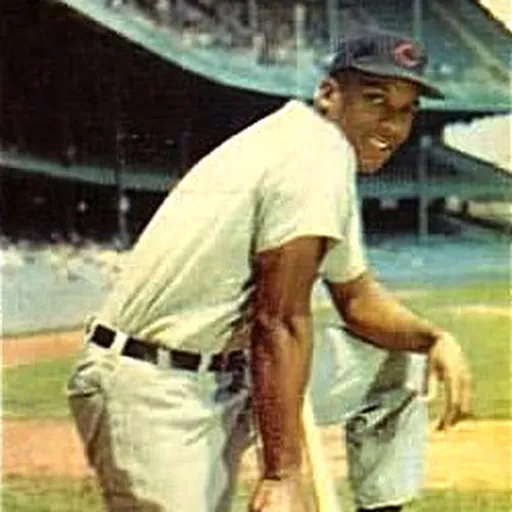
About Luke Easter
Lived 1915 – 1979 (aged 63). Luke Easter was an American baseball player.
Luscious "Luke" Easter (August 4, 1915 – March 29, 1979) was an American professional baseball player in Major League Baseball and the Negro leagues. He batted left-handed, threw right-handed, was , and weighed 240 lb.
Early life Luke Easter was born in Jonestown, Mississippi to parents James and Maude Easter. His father was a graduate of the Tuskegee Institute. His mother, Maude, died in 1922 and the family moved to St. Louis, Missouri where his father worked in a glass factory. Prior to that time, the Easters had been farmers in the Mississippi Delta. Luke Easter attended the same high school as fellow Negro league star, Quincy Trouppe, before dropping out in the ninth grade. A left-handed hitting first baseman, he was known for towering home runs. During his five years with the Giants, they fielded a very competitive team. Also featuring Sam Jethroe, they went 6–0 in exhibitions against teams from the Negro American League in 1940.
With World War II raging and America soon to enter the fray, Luke Easter planned to enlist in the United States Army in 1941. However, while returning from a trip to Memphis, Tennessee with Sam Jethroe, Easter was involved in an auto accident that left him with a fractured leg. and thereafter worked in the defense industry.
Following the war's end in 1945, Luke Easter had tryouts with two Negro National League teams, the Kansas City Monarchs and the Chicago American Giants. Both teams felt he was too big and awkward to be a good ballplayer despite his previous success with the Titanium Giants. He again batted .363, along with 25 home runs and 80 RBIs. This performance impressed the Indians so much that they called Easter up for a brief appearance at the end of the season, and, early in 1950, traded All-Star Mickey Vernon to open up first base for him.
As a 34-year-old rookie, Easter continued his power hitting, ranking among the league leaders in home runs and RBIs, and led the league in times hit by pitch. He continued to produce in 1951 and 1952, finishing 13th in Most Valuable Player voting in the latter year, but ongoing knee and ankle problems, as well as advancing age, brought his major league career to an end. He played in only 68 major league games in 1953, spending part of the year at Triple-A, and finished his major league career with six games in 1954.
Easter continued to play professionally at Triple-A, even though the leg injuries had reduced his running speed to a limp. He played regularly for the Ottawa Athletics, Charleston Senators, Buffalo Bisons, and Rochester Red Wings, and won the International League's MVP award with the Bisons in 1957. He ultimately retired as a player in 1963 at the age of 48 and worked for several years thereafter as a coach. The Rochester Red Wings retired his uniform number used while playing for them (36), as did the Buffalo Bisons (25).
In 2008, Easter was inducted into the International League Hall of Fame.
Notable home runs As a player, Easter was best known for his powerful home runs, colloquially known as "Easter Eggs." On July 18, 1948, while with the Homestead Grays, Easter became the first player to hit a home run into the center field bleachers at New York's Polo Grounds during game action, a drive estimated at 490 feet. During his rookie season, he also hit the longest home run in the history of Cleveland's Municipal Stadium, a 477-foot blast over the auxiliary scoreboard in right field. The only other player to match that feat was Mickey Mantle, who did it in 1960. Finally, during his twilight days with the Bisons, he became the first player to hit a home run over the center field scoreboard at Buffalo's home park, Offermann Stadium, doing so twice in 1957. On June 14 he cleared the board, and newspapers reported the blow at an estimated 500 feet. On August 15, he hit the board near the top, and it went through a space between the board and a sign just above it.
When told by a fan one time that the fan had seen Easter's longest home run in person, Easter is reported to have replied, "If it came down, it wasn't my longest."
Post-playing career While playing with the Red Wings, Easter also began to serve as a coach, and, after his playing days were over, he continued in this role. Future major leaguers Boog Powell, Curt Blefary, and Canadian-born Pete Ward were among the players who credited Easter as a positive influence on their careers.
After his days as a coach, Easter returned to the Cleveland area and went to work for the Aircraft Workers Alliance in 1964, eventually becoming the chief union steward for TRW in the east-side suburb of Euclid, Ohio.
Murder On March 29, 1979, Easter was shot and killed outside a bank at East 260th Street and Euclid Avenue while transporting over $5,000 from payroll checks. A statue of Easter was also dedicated at his now namesake park.
Historical analysis Easter was generally well-liked by teammates during his career, and most printed recollections by them refer to him as a good-natured practical joker. He owned and operated a sausage company while in Buffalo, and gave five pounds of sausage to every teammate who hit a home run. He was inducted into the Greater Buffalo Sports Hall of Fame in 1997, with that body citing his "grace and dignity on and off the field" and his "legacy as a friend to the community, a generous soul with plenty of time for any cause." He had already become a charter member of the Buffalo Baseball Hall of Fame in 1985, and of the Rochester Red Wings Hall of Fame in 1989. Ned Garver remembered that his favorite type of pitches to hit were ones "out over the plate and down" in the strike zone.
In The New Bill James Historical Baseball Abstract, baseball writer and statistician Bill James rated Easter as the second-best first baseman in the history of the Negro leagues, behind only Buck Leonard. He described Easter as "an amiable, fun-loving man who gambled, wasn't 100% honest, and had a temper," with "shoulders that crossed three lanes of traffic," but also claimed that "if you could clone him and bring him back, you'd have the greatest power hitter in baseball today, if not ever."
Don’t just read it —
keep it.
Full-length biographies made to live with: read them, listen on the way to work, watch them tonight.
- E-book
- Audio
- Video
Instant download · yours to keep · every purchase keeps this site free
Important facts
People in Luke Easter's life
Named in this biography and alive at the same time

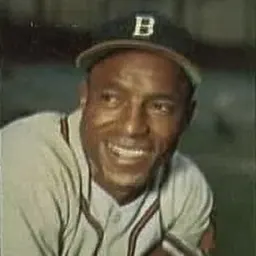
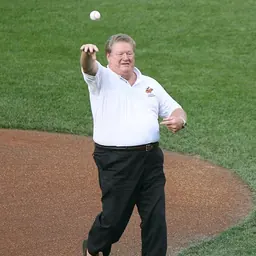
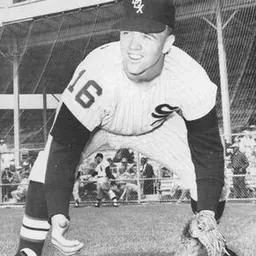
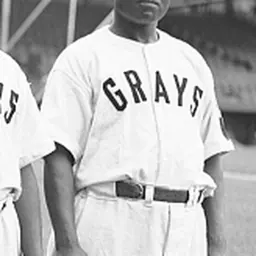

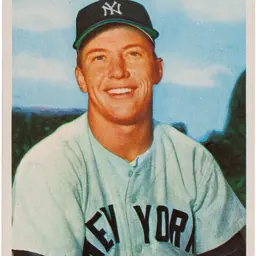

Related people
Same field, nearest in time
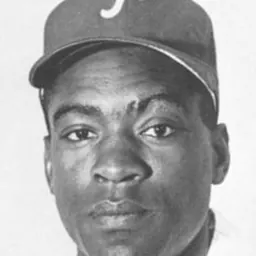
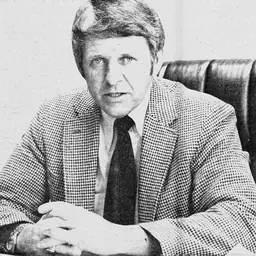
Contemporaries
People whose lives overlapped Luke Easter's





Frequently asked questions
Who was Luke Easter?
American baseball player and coach
When was Luke Easter born?
Luke Easter was born on 4 August 1915 in Jonestown.
When did Luke Easter die?
Luke Easter died on 29 March 1979 in Euclid.
What was Luke Easter's occupation?
Luke Easter was a baseball player.
What nationality was Luke Easter?
Luke Easter was American.
Sources & further reading
· DBpedia: Luke Easter (baseball)
Cite this page
APA: Biography.guide. (2026). Luke Easter. https://biography.guide/luke-easter/
MLA: "Luke Easter." Biography.guide, https://biography.guide/luke-easter/.
Chicago: "Luke Easter." Biography.guide. https://biography.guide/luke-easter/.
Data last updated: 2026-09-22 · Spot an error? Report a correction.
Portrait: Wikimedia Commons · author & licence
Page generated 2026-09-27 05:01 UTC