
About Luis de Molina
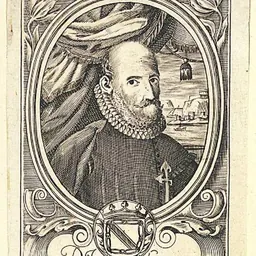
Lived 1535 – 1600 (aged 65). Luis de Molina was a Spanish jurist, philosopher, university teacher, economist, moral theologian and catholic theologian.
Luis de Molina (29 September 1535 – 12 October 1600) was a Spanish Jesuit priest, jurist, economist and theologian renowned for his contributions to philosophy and economics within the framework of the second scholasticism.
A prominent member of the School of Salamanca, pioneered a distinctive theory of divine grace and human freedom known as Molinism, which defends human autonomy in the face of divine omniscience.
His pro-liberty perspectives influenced not only theological debates on free will but also extended to economic and political thought, making him an intellectual precursor to individual rights and market dynamics. His work in developing early economic principles, particularly regarding human action, voluntarism, and property rights, laid a foundation that later contributed to Austrian economic theory and the evolution of modern libertarian thought.
Life Born into a noble and wealthy family in Castile, Luis de Molina followed the aspirations of his parents who wanted him to become a jurist. After learning Latin and literature at the Cathedral School of Cuenca, he enrolled at the University of Salamanca.
These doctrines, which opposed both traditional understanding of Augustinism and Thomism concerning the respective roles of free will and efficacious grace, and the teachings of Martin Luther and John Calvin, excited violent controversy in some quarters, especially on the part of the Dominican Order and of the Jansenists, and at last rendered it necessary for Pope Clement VIII to intervene. At first (1594) he simply enjoined silence on both parties so far as Spain was concerned; but ultimately, in 1598, he appointed the Congregatio de auxiliis Gratiae for the settlement of the dispute, which became more and more a party one. After very numerous sessions the congregation was unable to decide anything, and in 1607 its meetings were suspended by Paul V, who in 1611 prohibited all further discussion of the question de auxiliis and of discussions about efficacious grace, and studious efforts were made to control the publication even of commentaries on Aquinas. and Tomás de Lemos (1540–1629) were given the responsibility of representing the Dominican Order in debates before Pope Clement VIII and Pope Paul V.
Contract law
Although he is a convinced supporter of contractual consensualism, Molina remains aware of the differences that still exist between civil law and canon law, but calls for their disappearance. With his opinions, he also prepares the emergence of a theory of the autonomy of the will, later formulated by Pedro de Oñate.
Like most members of the School of Salamanca, he discusses the respect of the principles of equity and commutative justice in contractual exchanges, which he considers fundamental.
Discussing the "diamond-water paradox", Molina cogitated a theory of just price where the utility wasn't take into account. Thus, in his De jure et Justitia he said, "the just price of a pearl, which can be used only to decorate, is higher than the just price of grain, bread, or horses, even if the utility of these things is superior."
Furthermore, he discusses the effect of defects of consent on the validity of contractual commitments and allows, with Lessius, to distinctly separate the matters of contract law and testamentary law.
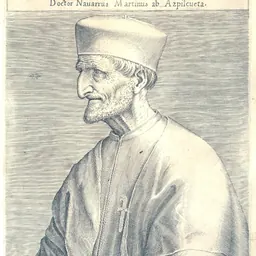
Economy In his writings on economics, Molina helped further develop a theory of price inflation proposed by Juan de Medina and Martín de Azpilcueta in Salamanca, writing that "n equal circumstances, the more abundant money is in one place, so much less is its value to buy things or to acquire things that are not money."
Works De liberi arbitrii cum gratiae donis, divina praescientia, praedestinatione et reprobatione concordia, 4 vols., Lisbona, 1588; 2nd ed. Antwerp, 1595.
De jure et justitia, 6 vols., 1593–1609.
Don’t just read it —
keep it.
Full-length biographies made to live with: read them, listen on the way to work, watch them tonight.
- E-book
- Audio
- Video
Instant download · yours to keep · every purchase keeps this site free
Important facts
People in Luis de Molina's life
Named in this biography and alive at the same time

Related people
Same field, nearest in time


Contemporaries
People whose lives overlapped Luis de Molina's



Frequently asked questions
Who was Luis de Molina?
Spanish priest and writer
When was Luis de Molina born?
Luis de Molina was born on 29 September 1535 in Cuenca.
When did Luis de Molina die?
Luis de Molina died on 12 October 1600 in Madrid.
What was Luis de Molina's occupation?
Luis de Molina was a jurist, philosopher, university teacher, economist, moral theologian and catholic theologian.
What nationality was Luis de Molina?
Luis de Molina was Spanish.
Sources & further reading
Cite this page
APA: Biography.guide. (2026). Luis de Molina. https://biography.guide/luis-de-molina/
MLA: "Luis de Molina." Biography.guide, https://biography.guide/luis-de-molina/.
Chicago: "Luis de Molina." Biography.guide. https://biography.guide/luis-de-molina/.
Data last updated: 2026-09-26 · Spot an error? Report a correction.
Page generated 2026-09-27 05:16 UTC