
About Luís António Verney
Lived 1713 – 1792 (aged 78). Luís António Verney was a philosopher.
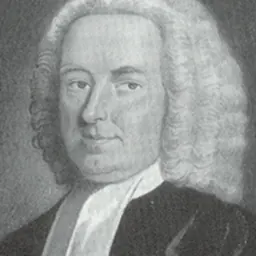
Luís António Verney (23 July 1713 – 23 March 1792) was a Portuguese philosopher, theologian, and pedagogue. An estrangeirado, Verney is sometimes called the most important figure of the Portuguese Enlightenment.
Most notably, Verney advocated a plan to completely reform the educational system in Portugal, in radical opposition to the methods employed at the time by the Jesuits, who had long had a near-monopoly on teaching in the country; his controversial manifesto, Verdadeiro Método de Estudar (first published anonymously in 1746), would later serve as the basis for many of the educational reforms instituted under the Marquis of Pombal.
Biography Luís António Verney was born in Lisbon in 1713, the son of Denys Verney (1650 – c. 1734), from Saint-Clément-les-Places in Lyon, France, and Maria da Conceição Arnaut, from the parish of Santa Eufémia in the town of Penela, Coimbra. The family of wealthy merchants was established in Rua Nova do Almada, where they owned a drugstore. One of 10 siblings (4 boys and 6 girls — through one of which Verney was to be João Frederico Ludovice's brother-in-law), Luís António was baptized on 6 August of that year, in the Church of Saint Julian. He was first tutored by the family's chaplain, Fr. Manuel de Aguiar Paixão, at the age of six, in his first studies of Latin Grammar, Spanish, French, and Italian.
He studied in the Jesuit College of Saint Antony the Abbot, probably between 1720 and 1727, and from then till 1729, Philosophy with the Oratorians, at the Convent of the Holy Spirit of the Quarry (Espírito Santo da Pedreira). In April 1729, Luís António Verney interrupted his studies to enlist as a volunteer in a military expedition in Portuguese India; for unknown reasons, however, he seems to have had a change of heart — by November of that year, he enrolled in the Jesuit-run University of Évora, from which he concluded his studies in Philosophy and Theology, achieving the degree of Artium Magister in 1736. and corresponded with important figures of the Italian Enlightenment, such as leading encyclopedist Ludovico Antonio Muratori, and Antonio Genovesi. In 1741, he was appointed Archdeacon of the Metropolitan Archdiocese of Évora. In Verdadeiro Método de Estudar, Verney argued that grammar should be taught in Portuguese, not Latin, and staunchly defended experimental methods, as opposed to a system of argumentation based on authority, calling into question the influence of the Society of Jesus, who held a near-monopoly of higher education in the country; Verney also approached (without necessarily adopting) some of the principles of the Jansenists and Gallicans in relation to the methods used in theological studies. The book prompted a furious polemic: between its first publication and 1757, over forty books were written in response to Verney's manifesto. De Re Metaphysica ad usum lusitanorum adolescentium, libri quatuor (Rome, 1753) Grammatica Latina, tractada por um methodo novo, claro e facil (Barcelona, 1758) Cartas de Luis Antonio Verney e Antonio Pereira de Figueiredo aos padres da Congregação do Oratorio de Goa (New Goa, 1858) Synopsis primi tentaminis pro litteratura scientiisque instaurandis apud Lusitanos, etc. (Lisbon and Paris, 1762) De Re Physica (Rome, 1769)
Don’t just read it —
keep it.
Full-length biographies made to live with: read them, listen on the way to work, watch them tonight.
- E-book
- Audio
- Video
Instant download · yours to keep · every purchase keeps this site free
Important facts
People in Luís António Verney's life
Named in this biography and alive at the same time

Related people
Same field, nearest in time




Contemporaries
People whose lives overlapped Luís António Verney's



Frequently asked questions
Who was Luís António Verney?
Portuguese philosopher
When was Luís António Verney born?
Luís António Verney was born on 23 July 1713 in Lisbon.
When did Luís António Verney die?
Luís António Verney died on 20 March 1792 in Rome.
What was Luís António Verney's occupation?
Luís António Verney was a philosopher.
What nationality was Luís António Verney?
Luís António Verney's recorded nationality: Kingdom of Portugal.
Sources & further reading
· Wikipedia: Luís António Verney
· DBpedia: Luís António Verney
Cite this page
APA: Biography.guide. (2026). Luís António Verney. https://biography.guide/luis-antonio-verney/
MLA: "Luís António Verney." Biography.guide, https://biography.guide/luis-antonio-verney/.
Chicago: "Luís António Verney." Biography.guide. https://biography.guide/luis-antonio-verney/.
Data last updated: 2026-09-22 · Spot an error? Report a correction.
Page generated 2026-09-27 05:17 UTC