
About Luis Antonio Argüello
Lived 1784 – 1830 (aged 45). Luis Antonio Argüello was a Spanish and Mexican politician.
Luis Antonio Argüello (; June 21, 1784 – March 27, 1830) was the first Californio (native-born) governor of Alta California, and the first to take office under Mexican rule. He was the only governor to serve under the First Mexican Empire (of 1821–1823) and also served as acting governor under the subsequent provisional government, which preceded the First Mexican Republic (of 1824–1835).
Biography Argüello was born at Presidio of San Francisco (in present-day San Francisco), Alta California, to José Darío Argüello and Maria Ygnacia Moraga, members of one of the most distinguished and influential families in early California history. His father founded the Pueblo de Los Angeles, and served as Governor of Alta California and later of Baja California.
In August, 1806, Argüello succeeded his father as Commandant of California with the rank of lieutenant. In 1821, he launched an exploration of Northern California to investigate the rumors of "Foreigners" setting up a base. Argüello published his expedition diary, titled The Diary of Captain Arguello: The Last Spanish Expedition in California, October 17 - November 17, 1821. He ordered retribution on hunters of the Russian-American Company who were catching sea otters in San Francisco Bay. There were numerous sea otter populations to hunt and a lack of Spanish military posts above San Francisco Bay made it hard for Argüello to stop this northern activity and the possibility of them trading with the Spanish Missions.
In 1823, Rancho Llano de Buena Vista, means "Good View Plain". in the Salinas Valley was given by Argüello to José Mariano Estrada a lieutenant of the Mexican Artillery and in-law of Argüello.
In 1823, Argüello gave a land grant of Rancho San Pablo, in present-day Contra Costa County, California to Francisco María Castro (1775–1831), a former soldier at the San Francisco Presidio and one-time alcalde of the Pueblo of San José.
In 1823, Argüello gave a land grant of Rancho Las Cienegas, at a size of in present-day Los Angeles County, California to Francisco Avila
In 1824, Rancho Bolsa de San Cayetano was a land granted in present-day Monterey County, California near Monterey Bay by Argüello to Ygnacio Ferrer Vallejo
Rancho Bolsa de San Cayetano was an 8,896-acre (36.00 km2) Mexican land grant in present-day Monterey County, California given in 1824 by Governor Luís Antonio Argüello to Ygnacio Ferrer Vallejo, and confirmed to his eldest son, José de Jesús Vallejo, by Governor José Figueroa in 1834. The name means "pocket of St. Cayetano". Pocket in this case usually refers to land surrounded by slough - in this case the Elkhorn Slough. The grant was bordered on the west by Monterey Bay.
Rancho Moro Cojo, that became part of Rancho Bolsa Nueva y Moro Cojo, in present-day Monterey County, California was granted by Governor Luís Antonio Argüello in 1825.
Antonio Maria Osio married Dolores Argüello, sister of Luis Antonio Argüello. In 1838, Osio settled in Monterey. In 1839, Governor Alvarado granted Osio, Angel Island (California), on the condition that Osio would set aside part of the island for a fort. However, Osio never took up residence there.
Francisco de Paula Marín, a Spaniard who became influential in the early Kingdom of Hawaii, was a confidant of Hawaiian King Kamehameha I. Marín acted as a jack-of-all-trades, sometimes even acting as a physician, probably without any formal education, and is credited with introducing many agricultural products. Marín wrote to governor Luis Antonio Argüello about moving to Alta California, but was told his multiple wives would not be welcome in California.
In Argüello's tenure one new mission was founded: Mission San Francisco Solano (California) on July 4, 1823, by Father Jose Altimira. This was the last of the 21 missions founded as the Mexican secularization act of 1833 put an end to the missions. Mission San Francisco Solano was also the northernmost mission and the only one started after Mexico gained independence from Spain. Argüello wanted a robust Mexican presence north of the San Francisco Bay to keep the Russians who had established Fort Ross on the Pacific coast from moving further inland and down the coast. General Mariano Guadalupe Vallejo later closed the mission in 1834–1835, he took the roof titles for his own home, others joined in taking parts of the buildings and it turned to ruins, later being completely torn down. In need of a church for the town he made, in 1840 Vallejo had a small chapel built were the original parish church was.
Legacy In World War II, the United States liberty ship SS Luis Argüello was named in his honor.
Don’t just read it —
keep it.
Full-length biographies made to live with: read them, listen on the way to work, watch them tonight.
- E-book
- Audio
- Video
Instant download · yours to keep · every purchase keeps this site free
Important facts
Family & relationships
People in Luis Antonio Argüello's life
Named in this biography and alive at the same time
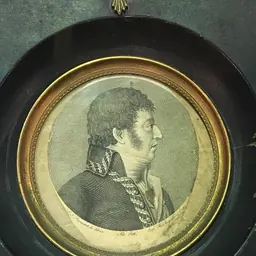


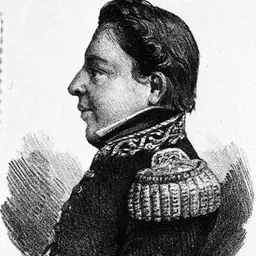

Related people
Same field, nearest in time

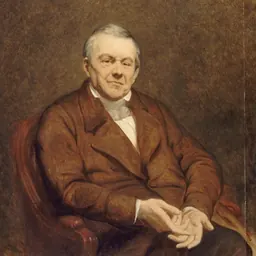
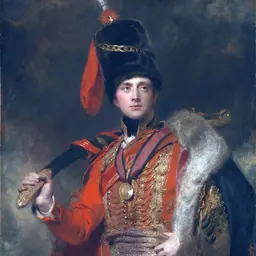

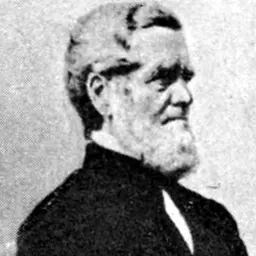
Contemporaries
People whose lives overlapped Luis Antonio Argüello's
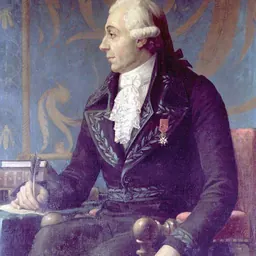
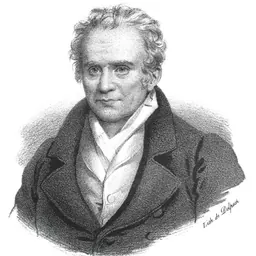

Frequently asked questions
Who was Luis Antonio Argüello?
California governor, Mexican politician
When was Luis Antonio Argüello born?
Luis Antonio Argüello was born on 21 June 1784 in Yerba Buena.
When did Luis Antonio Argüello die?
Luis Antonio Argüello died on 27 March 1830 in Yerba Buena.
What was Luis Antonio Argüello's occupation?
Luis Antonio Argüello was a politician.
What nationality was Luis Antonio Argüello?
Luis Antonio Argüello was Spanish and Mexican.
Sources & further reading
· Wikipedia: Luis Antonio Argüello
· DBpedia: Luis Antonio Argüello
Cite this page
APA: Biography.guide. (2026). Luis Antonio Argüello. https://biography.guide/luis-antonio-arguello/
MLA: "Luis Antonio Argüello." Biography.guide, https://biography.guide/luis-antonio-arguello/.
Chicago: "Luis Antonio Argüello." Biography.guide. https://biography.guide/luis-antonio-arguello/.
Data last updated: 2026-09-20 · Spot an error? Report a correction.
Page generated 2026-09-27 05:18 UTC