
About José Figueroa
Lived 1792 – 1835 (aged 42–43). José Figueroa was an American politician and soldier.
José María Figueroa (;1792 – 29 September 1835) was a Mexican politician and military officer. A veteran of the Mexican War of Independence, he played a key role in formalizing the alliance between Vicente Guerrero and Agustín de Iturbide which ended the war and secured Mexican independence. In the decade after he held senior commands in northern Mexico, notably as comandante general of the Estado de Occidente, before being appointented governor of Alta California where he served from 1833 until his death in 1835.
During his tenure, Figueroa unified a politically divided provincional government, oversaw the initial implementation of mission secularization in a manner relatively protective of indigenous interests, issued dozens of land grants, and authored the Manifiesto a la República Mexicana (1835), the first book-length work printed in California.
Early life and Mexican War of Independence Born in 1792 in Jonacatepec in the modern day state of Morelos, Mexico, Figueroa was of short stature and dark complexion. He came from a family of predominantly indigenous ancestry and openly expressed pride in his heritage. | Letter from Iturbide to Viceroy Juan Ruiz de Apodaca
As Guerrero's emissary, Figueroa served as an intermediary between both commanders arranging their famed meeting in Acatempan and directly facilitating the proclamation of the Plan of Ayala by which the opposition faction under the newly formed Army of the Three Guarantees ended the long standing stalemate of the war. Figueroa, now holding the rank of brigadier general was amongst those that march into Mexico City alongside Guerrero and Iturbide, ultimately achieving Mexico's independence.
Alta California governorship Figueroa's 1835 Manifesto, published in Monterey, was the first book printed in California. Figueroa was appointed governor of Alta California in 1832, and arrived for duty in January 1833.
Híjar-Padrés colony In 1833, the Mexican Congress passed legislation to secularize the California missions. Acting Mexican president Valentín Gómez Farías, a liberal reformer, appointed José María de Híjar and D. José María Padrés to lead a group of 239 colonists to establish secular control of Alta California. Híjar, a wealthy landowner, was appointed governor to replace Figueroa, and Padrés, an army officer, was appointed military commander. The colonists were farmers and artisans, and were volunteers carefully selected by Farías. His objective was to modernize and strengthen Mexican rule over California, as a bulwark against the growing influence of Russia and the United States.
While the colonists were traveling north to Alta California on two ships, president Antonio López de Santa Anna took full power, and revoked Híjar's appointment as governor, thereby allowing Figueroa to continue in that post. A horseman traveled for 40 days from Mexico City to Monterey to bring the news to Figueroa. The Morelos arrived in San Diego on 1 September 1833, and La Natalie in Monterey on 25 September. As the horseback courier had preceded them, Híjar learned to his consternation that he had no official powers.
Illness, death and burial El Funeral del Gobernador José Figueroa (The Funeral of Governor José Figueroa); mural at Santa Barbara Courthouse by Theodore Van Cina; c. 1930. Francisco García Diego y Moreno, who later became California's first bishop, reported that Figueroa was "greatly agitated on account of the disturbances that the colonists caused", Although he was initially able to continue his work, he felt weak and did not recover. He participated in the session of the territorial assembly that convened on 25 August, but informed that body on 27 August that he needed to take a leave of absence for health reasons, appointing José Castro as interim governor.
Rumors circulated after his death that he had been poisoned. The following year, Diego reported to the Mexican government that Figueroa had shown symptoms of apoplexy in his final months, and that blood clots had been discovered in his brain when his body was preserved after his death.
There were also persistent rumors that his body was not buried in Santa Barbara. In 1912, his casket was opened, and the body was consistent in that it was in a Mexican military uniform. The size of the skeleton matched Figueroa's small stature, no more than five feet, two inches tall.
Legacy Early 20th-century historian J. M. Guinn wrote that "He [Figueroa] is generally regarded as the best of the Mexican governors sent to California". Historian Kevin Starr wrote that Figueroa was "the most competent governor of California during the Mexican era".
Landmarks named after General José Figueroa include: Altar, Sonora was named Altar de Villa de Figueroa in 1828 in recognition of his role as Commandante General del Estado de Ocidente Figueroa Mountain, in the San Rafael Mountains, Los Padres National Forest, Santa Barbara County, California Figueroa Street and Figueroa Avenue, in Los Angeles, California Figueroa Street Tunnels Figueroa at Wilshire
Figueroa rancho land grants Mexican land grants in Alta California issued by Governor José Figueroa:
Rancho Acalanes Rancho Aguajito Rancho Aptos Rancho Arroyo de Las Nueces y Bolbones Rancho Arroyo del Rodeo Rancho Ausaymas y San Felipe Rancho Bolsa de San Cayetano Rancho Cañada del Corte de Madera Rancho Cañón de Santa Ana Rancho Corte Madera del Presidio Rancho El Alisal Rancho El Molino Rancho El Rincon (Arellanes) Rancho El Sur Rancho Encinal y Buena Esperanza Rancho Guadalupe y Llanitos de los Correos Rancho Laguna Seca Rancho Laguna Seca (Alvires) Rancho Las Animas Rancho Las Posas Rancho Los Alamitos Rancho Los Carneros (Littlejohn) Rancho Monte del Diablo Rancho Nuestra Señora del Refugio
Rancho Ojo del Agua de la Coche Rancho Paso de Bartolo Rancho Pescadero (Gonzalez) Rancho Petaluma Rancho Punta de Pinos Rancho Salsipuedes Rancho San Andrés Rancho San Agustin Rancho San Francisco de las Llagas Rancho San Pascual Rancho San Ramon (Amador) Rancho San Ramon (Pacheco-Castro) Rancho San Ysidro Rancho Santa Teresa Rancho Saucito Rancho Sausal Rancho Sespe Rancho Solis Rancho Soquel Rancho Tecate Rancho Tularcitos (Gomez) Rancho Yerba Buena Rancho Zayante
Don’t just read it —
keep it.
Full-length biographies made to live with: read them, listen on the way to work, watch them tonight.
- E-book
- Audio
- Video
Instant download · yours to keep · every purchase keeps this site free
Important facts
People in José Figueroa's life
Named in this biography and alive at the same time
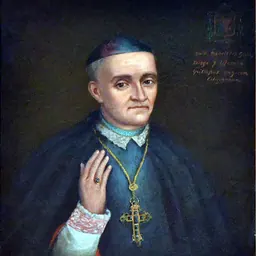

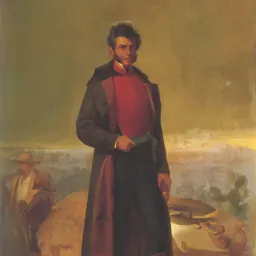

Related people
Same field, nearest in time
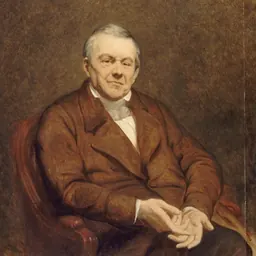


Contemporaries
People whose lives overlapped José Figueroa's



Frequently asked questions
Who was José Figueroa?
Governor of Alta California
When was José Figueroa born?
José Figueroa was born in 1792.
When did José Figueroa die?
José Figueroa died on 19 September 1835.
What was José Figueroa's occupation?
José Figueroa was a politician and soldier.
What nationality was José Figueroa?
José Figueroa was American.
Sources & further reading
Cite this page
APA: Biography.guide. (2026). José Figueroa. https://biography.guide/jose-figueroa/
MLA: "José Figueroa." Biography.guide, https://biography.guide/jose-figueroa/.
Chicago: "José Figueroa." Biography.guide. https://biography.guide/jose-figueroa/.
Data last updated: 2026-09-25 · Spot an error? Report a correction.
Page generated 2026-09-27 05:07 UTC