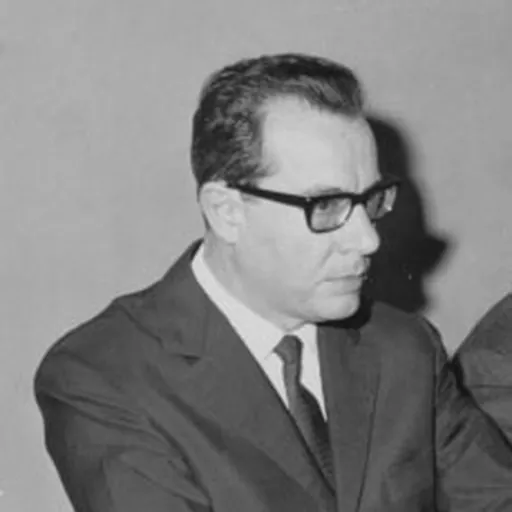
About Luigi Pareyson
Lived 1918 – 1991 (aged 73). Luigi Pareyson was an Italian art historian, politician, philosopher, university teacher, resistance fighter and teacher.
Luigi Pareyson (; 4 February 1918 – 8 September 1991) was an Italian philosopher, best known for challenging the positivist and idealist aesthetics of Benedetto Croce in his 1954 monograph, Estetica. Teoria della formatività (Aesthetics. A Theory of Formativity).
Biography Luigi Pareyson was born on 4 February 1918, in Piasco, in the province of Cuneo. He received his doctorate from the University of Turin in 1939, finishing his degree with a dissertation entitled "Karl Jaspers and the Philosophy of Existence". As a professor at the University of Turin, he had many famous students, including Mario Perniola, Gianni Vattimo, Umberto Eco, and Valerio Verra, who studied with Hans-Georg Gadamer in Germany and diffused his thought in Italy.
In 1971, Pareyson published Verità ed interpretazione (Truth and interpretation), his fundamental text, which, two years later, was followed by Verra's monography Ontologia e ermeneutica in Germania (Ontology and hermeneutics in Germany). Preceded by the Italian jurist Emilio Betti, the work of Pareyson spread hermeneutics out of the juridical studies in which it had been limited until then. Pareyson gave birth to the Italian hermeneutic school of thought, a school that dominated the Italian philosophical gamut until the 1990s. His thought intersected with the approval of Gianni Vattimo and Sergio Givone, followed by Carlo Sini, Vincenzo Vitiello, Carlo Bianco and Mario Ruggenini.
Pareyson died in Milan on 8 September 1991.
Philosophy Pareyson was considered among the leading Italian philosophers of the 20th century. Together with Nicola Abbagnano, he was among the first to make German existentialism (especially Heidegger and Jaspers) known in Italy. Pareyson, who worked within a framework dominated by neo-idealism, identified himself with this style of doing philosophy. He also proposed a new interpretation of German idealism that did not focus on Hegel as its main interpretive key (Fichte, 1950), but instead focused on Friedrich Schelling as the precursor to whom existentialism owed its ascendancy. In this regard, he argued that “the authentic existentialists, the only ones truly worthy of the name, Heidegger, Jaspers and Marcel, have either referred back to Schelling or intended to come to terms with him.”
For Pareyson, German existentialism had to be taken up in a hermeneutic key: he considered truth not an objective datum, as it is in science, but as an interpretation of the individual, which requires subjective responsibility. He called his position “ontological personalism.”
In his historiographical research, Pareyson identifies two currents in post-Hegelian German philosophy, which could be traced back to Søren Kierkegaard and Ludwig Feuerbach, respectively, and which would result in existentialism and Marxism, respectively.
Many of Luigi Pareyson's philosophical works focus on the problem of evil and suffering.
Pareyson's emphasis on the reception of Schelling's late philosophy and his use of it in his own ontology of freedom led Xavier Tilliette to describe Pareyson as «Schelling redivivus».
Works La filosofia dell'esistenza e Karl Jaspers, Napoli: Loffredo, 1940 (new ed. Karl Jaspers, Casale M.: Marietti, 1983) Studi sull'esistenzialismo, Firenze: Sansoni, 1943 Esistenza e persona, Torino: Taylor, 1950 (IV ed. Genova: Il Melangolo, 1985) L'estetica dell'idealismo tedesco, Torino: Edizioni di «Filosofia», 1950 Fichte, Torino: Edizioni di «Filosofia», 1950 (new ed. Fichte. Il sistema della libertà, Milano: Mursia, 1976) Estetica. Teoria della formatività, Torino: Edizioni di «Filosofia», 1954 (new ed. Milano: Bompiani 1988) Teoria dell'arte, Milano: Marzorati, 1965 I problemi dell'estetica, Milano: Marzorati, 1966 Conversazioni di estetica, Milano: Mursia, 1966 Il pensiero etico di Dostoevskij, Torino: Einaudi, 1967 Verità e interpretazione, Milano: Mursia, 1971 L'esperienza artistica, Milano: Marzorati, 1974 Federico Guglielmo Schelling, in Grande antologia filosofica, vol. XVIII, Milano: Marzorati, 1971, pp. 1–340 Dostoevskij: filosofia, romanzo ed esperienza religiosa, 1976; Torino: Einaudi, 1993 La filosofia e il problema del male, "Annuario filosofico" 2 (1986), pp. 7–69 Filosofia dell'interpretazione, Torino: Rosenberg & Sellier, 1988 Filosofia della libertà, Genova: Il Melangolo, 1989 Ontologia della libertà. Il male e la sofferenza, Torino: Einaudi, 1995 (posthumous). Existence, Interpretation, Freedom: Selected Writings, Aurora (CO): Davies Group, 2009 (selected writings edited with an introduction and notes by Paolo Diego Bubbio). Andrea Bellocci, Implicanza degli opposti, aporia dell'identico. Luigi Pareyson interprete di Karl Barth (prefazione di Gennaro Sasso), Lithos, Roma 2012
Don’t just read it —
keep it.
Full-length biographies made to live with: read them, listen on the way to work, watch them tonight.
- E-book
- Audio
- Video
Instant download · yours to keep · every purchase keeps this site free
Important facts
People in Luigi Pareyson's life
Named in this biography and alive at the same time

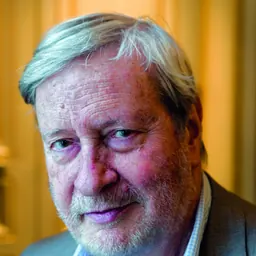

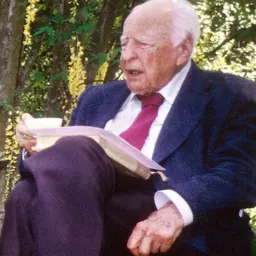
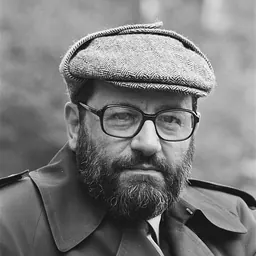

Related people
Same field, nearest in time

Contemporaries
People whose lives overlapped Luigi Pareyson's



Frequently asked questions
Who was Luigi Pareyson?
Italian philosopher (1918–1991)
When was Luigi Pareyson born?
Luigi Pareyson was born on 4 February 1918 in Piasco.
When did Luigi Pareyson die?
Luigi Pareyson died on 8 September 1991 in Milan.
What was Luigi Pareyson's occupation?
Luigi Pareyson was an art historian, politician, philosopher, university teacher, resistance fighter and teacher.
What nationality was Luigi Pareyson?
Luigi Pareyson was Italian.
Sources & further reading
Cite this page
APA: Biography.guide. (2026). Luigi Pareyson. https://biography.guide/luigi-pareyson/
MLA: "Luigi Pareyson." Biography.guide, https://biography.guide/luigi-pareyson/.
Chicago: "Luigi Pareyson." Biography.guide. https://biography.guide/luigi-pareyson/.
Data last updated: 2026-09-21 · Spot an error? Report a correction.
Portrait: Wikimedia Commons · author & licence
Page generated 2026-09-27 05:01 UTC