
Luigi Guido Grandi
Mathematician and philosopher from Italy
About Luigi Guido Grandi
Lived 1671 – 1742 (aged 70). Luigi Guido Grandi was a mathematician, engineer, philosopher and theologian.
Dom Guido Grandi, (1 October 1671 – 4 July 1742) was an Italian monk, priest, philosopher, theologian, mathematician, and engineer.
Life Grandi was born on 1 October 1671 in Cremona, Italy and christened Luigi Francesco Lodovico. When he was of age, he was educated at the Jesuit college there. After he completed his studies there in 1687, he entered the novitiate of the Camaldolese monks at Ferrara and took the name of Guido. In 1693 he was sent to the Monastery of St. Gregory the Great, the Camaldolese house in Rome, to complete his studies in philosophy and theology in preparation for Holy Orders. A year later, Grandi was assigned as professor of both fields at the Camaldolese Monastery of St. Mary of the Angels in Florence. It appears that it was during this period of his life that he took an interest in mathematics. He did his research privately, however, as he was appointed professor of philosophy at St. Gregory Monastery in 1700, subsequently holding a post in the same field in Pisa, where he replaced Pascasio Giannetti.
By 1707, however, Dom Grandi had developed such a reputation in the field of mathematics that he was named court mathematician to the Grand Duke of Tuscany, Cosimo III de' Medici. In that post, he also worked as an engineer, being appointed Superintendent of Water for the Duchy, and in that capacity, he was involved in the drainage of the Chiana Valley. In 1709 he visited England where he clearly impressed his colleagues there, as he was elected a Fellow of the Royal Society. The University of Pisa named him Professor of Mathematics in 1714. It was there that he died on 4 July 1742.
Mathematical studies In 1701 Grandi published a study of the conical loxodrome, followed by a study in 1703 of the curve which he named versiera, from the (to turn). This curve was later studied by one of the few women scientists to achieve a degree, Maria Gaetana Agnesi. Through a mistranslation by the translator of her work into English who mistook the term "witch" for Grandi's term, this curve became known in English as the witch of Agnesi. It was through his studies on this curve that Grandi helped introduce Leibniz' ideas on calculus to Italy.
In mathematics Grandi is best known for his work Flores geometrici (1728), studying the rose curve, a curve which has the shape of a petalled flower, and for Grandi's series. He named the rose curve rhodonea. He also contributed to the Note on the Treatise of Galileo Concerning Natural Motion in the first Florentine edition of Galileo Galilei's works.
Giovanni Lami, Giammaria Ortes and Abondio Collina were among his pupils.
List of works
Don’t just read it —
keep it.
Full-length biographies made to live with: read them, listen on the way to work, watch them tonight.
- E-book
- Audio
- Video
Instant download · yours to keep · every purchase keeps this site free
Important facts
People in Luigi Guido Grandi's life
Named in this biography and alive at the same time
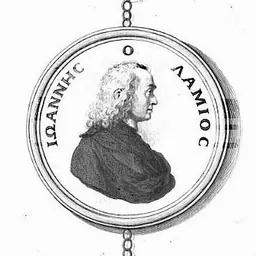
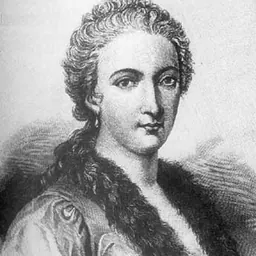

Related people
Same field, nearest in time

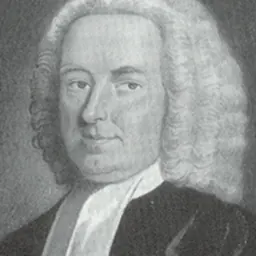
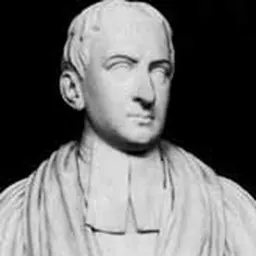

Contemporaries
People whose lives overlapped Luigi Guido Grandi's




Frequently asked questions
Who was Luigi Guido Grandi?
mathematician and philosopher from Italy
When was Luigi Guido Grandi born?
Luigi Guido Grandi was born on 1 October 1671 in Cremona.
When did Luigi Guido Grandi die?
Luigi Guido Grandi died on 4 July 1742 in Pisa.
What was Luigi Guido Grandi's occupation?
Luigi Guido Grandi was a mathematician, engineer, philosopher and theologian.
Sources & further reading
· Wikipedia: Luigi Guido Grandi
Cite this page
APA: Biography.guide. (2026). Luigi Guido Grandi. https://biography.guide/luigi-guido-grandi/
MLA: "Luigi Guido Grandi." Biography.guide, https://biography.guide/luigi-guido-grandi/.
Chicago: "Luigi Guido Grandi." Biography.guide. https://biography.guide/luigi-guido-grandi/.
Data last updated: 2026-09-20 · Spot an error? Report a correction.
Page generated 2026-09-27 05:25 UTC