
About Luigi Acquisti
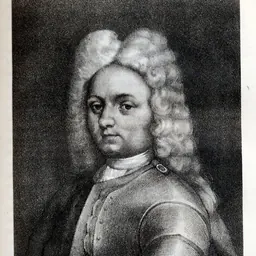
Lived 1745 – 1823 (aged 77–78). Luigi Acquisti was a sculptor.
Luigi Acquisti (1745–1823) was an Italian sculptor mainly known for his works in the neoclassical style.
He was born in Forlì the 29 March 1747 and died in Bologna in 1823. His works are distributed throughout Italy. Among them are reliefs of Arco della Pace in Milan; the statue of the Vecchia Legge for the facade of Milan Cathedral; Mars and Venus for the Villa Carlotta in Tremezzo on Lake Como; statues in Palazzo Braschi in Rome; and an Atlanta (c. 1806) for the Villa Belgiojoso Bonaparte in Milan.
Biography
Acquisti was still young when he moved to Bologna in order to study at the Accademia Clementina as a student of Filippo Balugani and Carlo Bianconi. He consecutively won the prestigious 1st class Marsili-Aldrovandi prize with his works Enea condotto dalla Sibilla ai Campi Elisi (1774) and Un Romano che rapisce una Sabina (1775). In 1785 he was nominated Academico del Numero in the figurative sculpture class, and in 1780 he became the Direttore di Figura.
He was an honorary member of the Gran Ducale Fiorentina academy (1782), the Academy of St Luke (1803), and the Academy of Mantova.
Bologna His work in Bologna (1774–1791) was typified by the decorazioni all'antica or decorations in imitation of the Greco-Roman classics. His work is also imbued with a search of the magnificent and impressive as seen in his enormous statue for the Chiesa del Triregno (1781). His masterpiece from this period is found in the cupola of the Santuario Santa Maria della Vita (1787).
Milan After 1807 Acquisti moved to Milan, where he produced among his most famous works such as the marble statue Atalanta, the marble group Mars and Venus, the statue of David on the façade of the Milan Cathedral and reliefs on the Arco della Pace. These last works were completed in neoclassical style.
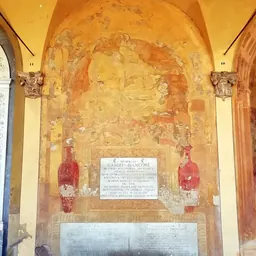
Return to Bologna Acquisti returned to Bologna in 1814, from then until his death producing sculptures for the Certosa of Bologna. However, in the only two works that are known to be his in the cemetery (another pair is attributed to him with the consensus of experts), the artistic level has diminished and the monuments are of a modest nature with sparse detail.
Legacy Acquisti, along with Giacomo Rossi, helped promote the transition from the graceful figures of the baroque and the flowery rococo to the heroic scenes inspired by Benedetto Alfieri. Despite having travelled around Italy, he is considered a Bolognese artist due to having spent most of his childhood in Bologna, having been educated in Bologna, and producing many of his most important works in Bologna.
He is buried in the Certosa of Bologna.
Don’t just read it —
keep it.
Full-length biographies made to live with: read them, listen on the way to work, watch them tonight.
- E-book
- Audio
- Video
Instant download · yours to keep · every purchase keeps this site free
Important facts
People in Luigi Acquisti's life
Named in this biography and alive at the same time

Related people
Same field, nearest in time





Contemporaries
People whose lives overlapped Luigi Acquisti's





Frequently asked questions
Who was Luigi Acquisti?
Italian artist (1745-1823)
When was Luigi Acquisti born?
Luigi Acquisti was born in 1745 in Forlì.
When did Luigi Acquisti die?
Luigi Acquisti died on 4 December 1823 in Bologna.
What was Luigi Acquisti's occupation?
Luigi Acquisti was a sculptor.
Sources & further reading
Cite this page
APA: Biography.guide. (2026). Luigi Acquisti. https://biography.guide/luigi-acquisti/
MLA: "Luigi Acquisti." Biography.guide, https://biography.guide/luigi-acquisti/.
Chicago: "Luigi Acquisti." Biography.guide. https://biography.guide/luigi-acquisti/.
Data last updated: 2026-09-20 · Spot an error? Report a correction.
Page generated 2026-09-27 05:26 UTC