
About Ludwik Regamey
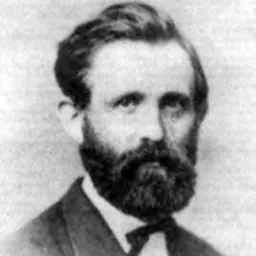
Lived 1877 – 1967 (aged 89). Ludwik Regamey was a French civil engineer.
Ludwik Regamey (1877-1967) was a Polish construction engineer by trade. He worked in Bydgoszcz where he had a very active associative life as a musician. He was the first chairman of the Alliance Française in Bydgoszcz. After moving to France in 1934, he was a formidable promoter of French and Polish culture exchanges till his demise in 1977, in Toulouse.
Biography
The Regameys established in Switzerland in the 17th century: the great-grandfather left the country when his shoe making business collapsed. He moved to Vilnius (known at the time as Wilno), then in the Russian Empire. His son Louis, Ludwik grandfather, married there a Polish girl: he worked as a French teacher. In the wake of the Polish Uprising of 1863, the family left Polish-Lithuania territory to Russian Kyiv. As a Swiss citizen, he officially became in 1883, a Tsarist civil servant. Louis fathered two sons, Casimir Ludwigovitch (1859-1907) and Rudolf Felix Gabriel Ludwigovitch (1852-1891), Ludwik's father.
Rudolf Felix Gabriel married Marianna, née Zeleney: she had Hungarian blood but was a great Polish patriot. Ludwik was born on May 20, 1877, in Kyiv: he was their first child. Soon, two brothers and a sister will follow. He graduated from the Faculty of Construction at the Lviv Polytechnic and afterwards expanded his professional knowledge in Zürich. He got married with Kazimiera, née Spław-Neyman, and moved to Voronezh, Russian Empire There he sired two children: Rudolf born in 1905, and Regina in 1914. In 1915, Rudolf got infected by typhus, while bringing cigarettes and food to German POW transported through Voronezh by railroad. He died the same year: this ordeal left a lasting scar on the Regamey marriage as Ludwik constantly blamed his wife for leaving their son without surveillance in such hazardous places.
Their first abode was at 6 Jana Zamoyskiego Street, room Nr.36. A few months later (1921), as Kazimierza's aunt, evacuated similarly from Ukraine, established in Paderewskiego Street, the Regameys moved to Józef Weyssenhoff Square, then called Plac Zacisze.
Life in Bydgoszcz
From October 1921 to March 1934, Ludwik worked as a building counselor of the Municipal Office for Underground Construction and Municipal Power Engineering: his working life revolved around issues related to the development of municipal housing. One of his main contribution at this position was to have the municipal power plant in Jachcice realized. On behalf of the city magistrate, Ludwik, together with engineers Markowicz and Missir, supervised the entire investment, which began in January 1927. He was considered at the time as the best construction manager in Bydgoszcz. In parallel, Ludwik gave several lectures on city investments.
In the spring of 1923, Marie Strowska came to Bydgoszcz to organize French courses, as part of an official program carried out by the French government in Pomerania and Greater Poland. Maria's father was Fortunat Strowski, a French academic with Polish origins, a literary historian, essayist and critic lecturer at the Faculté des lettres de Paris. Elegant and energetic, she quickly charmed the inhabitants of Bydgoszcz.
In the mid-1920s, Regamey separated from Kazimiera who then lived with their daughter in a flat at Jana Zamoyskiego Street. On October 9, 1924, together with his new wife Marie, he moved to the apartment 6 at 3 Cieszkowskiego Street. Maria Janina, Marie's daughter, born in 1921, lived in Switzerland for the first seven years of her life, though she was legitimated in 1924 by the marriage in Wilno between Marie Strowski and Ludwik Regamey, her parents. A month later (November 1924), Maria launched at their home a private preparatory school, the Seine French courses-Institut D’etudes Francaises, which, thanks to his father, presented diplomas signed by professors from Paris University. The success was so unexpected that the house at 3 Cieszkowskiego was not large enough to hold end-of-school celebrations. To mitigate this, she cooperated with the State Industrial School and used the institution's auditorium, with the help of Franciszek Siemiradzki, the headmaster and also a close friend of Ludwik. However, the break up of Ludwik first marriage was soon blamed upon Marie, who quickly lost the trust of many co-workers and friends, especially those coming from the eastern borderlands. For that reason, she had to resign at the end of 1924, from the direction of the French governmental course program and was replaced by Jadwiga Kalm-Podowska, the wife of Tytus Podoski, counselor of the Bydgoszcz magistrate and Ludwik's friend from his time in Kyiv.
In February 1924, the Alliance Francaise society was established in Bydgoszcz, and Ludwik became its first president. In addition to her private school, Maria additionally set up the Society of Friends of France in Bydgoszcz in which she was vice-president.
The Regamey couple worked closely with Les Amis de la Pologne, a French-based association, editing a monthly magazine. Its chief editor was Rosa Bailly born in Saint-Florent-sur-Cher, a scholar from Paris École normale supérieure. Mrs. Rosa, a great Polish lover, visited several times the Regameys in Bydgoszcz: the first occurrence happened in September 1926. For this occasion, a reception was held at the Pod Orłem hotel, followed by a musical performance with the singer Aurelia Klein-Mierzyńska accompanied by Ludwik Regamey on the piano. The visit included many places of Bydgoszcz, including the French soldiers grave corners from the 1870 German-French war in the Starofarny Cemetery. In March 1929, after another visit to Bydgoszcz the year prior, Les Amis de la Pologne described the newly built power plant, quoting Regamey's engagement to the project.
Music Ldudwik Regamey had a solid musical education, since his childhood. In Bydgoszcz, he generally played the piano, but he also performed on the violin, guitar and cello. His favorite composers were Frédéric Chopin, Bach, Brahms, Mozart.
His artistic debut took place for a specific purpose: he appeared at a banquet of the Borderland Internat at 80 Senatorska street (currently 32 Chodkiewicza street), together with the dentist Idzi Świtała, in February 1921.
He then began to work earnestly for the creation of the Bydgoszcz Music Society, which happened on May 30, 1922: he chaired the chamber music section. The association celebrated Karol Szymanowski during a special ceremony on August 12, 1922; Ludwik knew his mother and relatives -living in Bydgoszcz- from his life in Kyiv. His nephew Constantin (the future famous composer) took part in the performance. The first official concert inaugurating the artistic society took place on 5 December, 1922, at the Civil Casino on Gdańska Street. The association welcomed many musical celebrities, like the violinist Wacław Kochański.
Besides, Ludwik made individual representations, often following lectures from Witold Bełza, then director of the Municipal Library, related to French music and culture. He performed in different premises of Bydgoszcz (School of Art Industry, Copernicanum, Gymnasium of Humanities), but also in nearby Toruń where he played with a larger orchestra in the Municipal Theatre. In November 1927, he organized a concert to commemorate the 20th anniversary of the death of Edvard Grieg.
In France, he quickly joined the social life of Polish organizations. Henceforth he became in January 1936, the president of the Committee of Polish Societies in Paris, position which added to his other functions:
On her side, Maria translated Polish works and studies into French, among others: Joseph Pilsudski en Sibérie by Mieczysław Lepecki; Mineurs de Pologne: des étoiles dans le puits and Six jours by Gustaw Morcinek. They came back to visit Bydgoszcz several times before the outbreak of WWII. Ludwik's last article relating his French activities was sent out in June 1939.
The Regameys bought two houses in France, in Locmiquel-en-Baden, Brittany and in the Pyrenees mountains. They left Paris in June 1940, when German troops arrived and divided their time between Locmiquel and Toulouse. Their friend Rosa Bailly also stayed in this city during WWII, from where she steered Les Amis de la Pologne activity. Rosa organized as well a great aid campaign in Toulouse for Poles who had fled their occupied country.
After the war, Maria and Ludwik did not come back to Paris, mainly due to their dire financial situation. While Maria earned money from music lessons, their position gradually improved after the intervention of Regina, Ludwik's first daughter. As a matter of fact, Regina interceded at the beginning of the 1950s upon Polish authorities to have his pensions paid anew. The couple had still visits from their friends, among whom was Count Roman Wodzicki, the Polish consul in Toulouse.
Family
Louis Regamey, French teacher, Vilnius Casimir Ludwigovitch (1859-1907) Rudolf Felix Gabriel Ludwigovitch (1852-1891) + Marianna, née Zeleney Ludwik Regamey (1877-1967)
Rudolf (1905-1915) with Kazimiera née Lutosławski (1st marriage) Regina (1914-2010) with Kazimiera née Lutosławski (1st marriage) Ewa (born 1934) with Jerzy Morzycki (1st marriage) Tomasz with Edward Falkowski (2nd marriage) Maria Janina (1921-) with Marie Strowska (2nd marriage) Leon Regamey (-1944) Helena Regamey (1883-1958) + Aleksander Dobrowolski h. Nałęcz (1881-1941)
Jan Wanda Konstanty Regamey (1879-)
Constantin (1907-1982) with Lidia Sławicz (1st marriage) Svietlana Konstantinovna Regamey with Natalia Alexandrovna (2nd marriage)
Kazimierza's (Ludwik's first wife) aunt, Kazimiera Spława-Neyman, née Lutosławski, had moved from the Eastern borderlands on the 1920s to Bydgoszcz, with her children, Ludwik's cousins, by an evacuation train. Jerzy Morzycki was the brother of Irena Iłłakowicz. Regina had a daughter with him, Ewa (born 1934), before their divorce. From her second marriage with Edward Falkowski, she had a son, Tomasz. Regina Regamey died in 2010.
Ludwik's siblings comprised two brothers -Leon and Konstanty- and one sister, Helena. They all received a thorough musical education: Leon, Ludwik's first brother, moved to Tarnopol, where he taught mathematics and physics at the 3rd Male Gymnasium. Occasionally he contacted his family scattered around Poland. He died in 1944. He worked in the artistic circles in Warsaw in the 1930s, fought with the Polish underground resistance under the pseudonym Czesław Drogowski and left Warsaw during the uprising in October 1944, to Lausanne, Switzerland, where he taught at the university.
Works As an engineer Ludwik Regamey initiated and managed the construction of the power plant in Jachcice in the late 1920s. The district of Jachcice was at the time a rural area in the north-west part of the city, additionally located near the main train station, ideal for the erection of such a facility.
The plant has been supplying the municipal district heating network with hot water for more than 90 years.
As a musician Ludwik Regamey's musical plays included performances and accompaniments.
He accompanied among others: Julia Gorzechowska's recital in 1923 and 1927; Wacław Kochański's violin performance in 1923; a concert devoted to French music in 1924; Witold Bełza's lectures about Frédéric Chopin and French culture and music from 1922.
He performed (as soloist or as member of an orchestra), in particular: during a special ceremony to Karol Szymanowski on August 12, 1922; at the inauguration of Bydgoszcz Music Society on December 5, 1922. The program comprised the Piano Quartet in D minor, Op. 8 by Zygmunt Noskowski; as head of the chamber section of the Bydgoszcz Music Society; the Piano Quartets by Beethoven and the Piano Quintet by Brahms on February 21, 1926; a Piano trio by Wolfgang Amadeus Mozart on March 14, 1926; a Sonata for violin and piano by Beethoven and a Piano trio by Felix Mendelssohn on April 11, 1926; the Piano Concerto by Grieg on November 30, 1927; during the concert on the occasion of the 40th anniversary of Stanisław Niewiadomski's career on May 12, 1928.
Gallery
Don’t just read it —
keep it.
Full-length biographies made to live with: read them, listen on the way to work, watch them tonight.
- E-book
- Audio
- Video
Instant download · yours to keep · every purchase keeps this site free
Important facts
People in Ludwik Regamey's life
Named in this biography and alive at the same time





Related people
Same field, nearest in time



Contemporaries
People whose lives overlapped Ludwik Regamey's


Frequently asked questions
Who was Ludwik Regamey?
Polish construction engineer
When was Ludwik Regamey born?
Ludwik Regamey was born on 20 May 1877 in Kyiv.
When did Ludwik Regamey die?
Ludwik Regamey died on 8 February 1967 in Toulouse.
What was Ludwik Regamey's occupation?
Ludwik Regamey was a civil engineer.
What nationality was Ludwik Regamey?
Ludwik Regamey was French.
Sources & further reading
Cite this page
APA: Biography.guide. (2026). Ludwik Regamey. https://biography.guide/ludwik-regamey/
MLA: "Ludwik Regamey." Biography.guide, https://biography.guide/ludwik-regamey/.
Chicago: "Ludwik Regamey." Biography.guide. https://biography.guide/ludwik-regamey/.
Data last updated: 2026-09-22 · Spot an error? Report a correction.
Page generated 2026-09-27 05:17 UTC