
About Ludwig Fischer
Lived 1745 – 1825 (aged 79). Ludwig Fischer was a German opera singer and composer.
Johann Ignaz Ludwig Fischer (c. 18 August 1745 – 10 July 1825), commonly called Ludwig Fischer, was a German opera singer, a notable bass of his time.
Life Ludwig Fischer was born in Mainz on 18 or 19 August 1745. Fischer began his musical studies not as a singer but with the violin and cello. When he was heard singing in a church choir and in student operetta productions, his voice was noticed and he took up singing seriously. He was then made a supernumerary singer in the Electoral court of Mainz. the singer Barbara Strasser (born 1758 in Mannheim), who sang with him in Vienna A year earlier, Antonio Salieri was inspired by his remarkable vocal range in composing his comic opera Der Rauchfangkehrer, writing for him the role of Herr von Bär. Further roles were Axur in Salieri's Axur, re d'Ormus, Osroes in Semiramide and Brenno in the eponymous opera by Reichardt.
Compositions Apparently Fischer was also a composer but most of his work has not survived. is perhaps unusual for a popular song, but would not have been a barrier for the composer; see below.
Fischer and Mozart Fischer was evidently a friend of Mozart's. When he got into a disagreement with the Imperial theatre manager, , and decided to leave Vienna, Mozart gave him a letter of introduction to help him as he pursued his career (successfully) in Paris. Mozart may also have written another work for Fischer, the recitative and aria "Così dunque tradisci...Aspri rimorsi atroci" (K. 432/421a).
In 1796 (28 February), Fischer participated in a memorial concert for Mozart organized by his widow Constanze; he sang excerpts from La clemenza di Tito.
Assessment A critic for the Deutsches Museum of Leipzig, writing in 1781, called him "the foremost bass in Germany, and after Günther [possibly (1750 – after 1800)], the one who acts best". According to Corneilson, this was a generally held view: "In his day Fischer was regarded as Germany’s leading serious bass singer." Fischer could sing from a low D to a high A, and he controlled this extraordinary range with unusual lightness, purity, and precision. Reichardt said of his voice that it displayed "the depth of a cello and the natural height of a tenor."
Mozart was evidently delighted by Fischer's abilities. He added a major aria to the first act of Die Entführung, "Solche hergelauf'ne Laffen", explaining to his father by letter (26 September 1781) that "one must make good use of such a man"; adding that (as Clive says) "the new aria would provide an opportunity for Fischer's 'beautiful low notes' to glow".
Don’t just read it —
keep it.
Full-length biographies made to live with: read them, listen on the way to work, watch them tonight.
- E-book
- Audio
- Video
Instant download · yours to keep · every purchase keeps this site free
Important facts
People in Ludwig Fischer's life
Named in this biography and alive at the same time
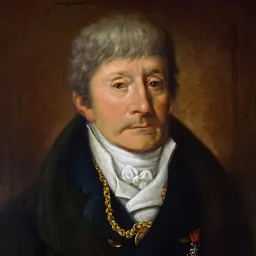
Related people
Same field, nearest in time
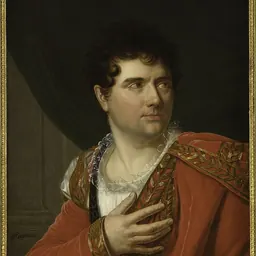
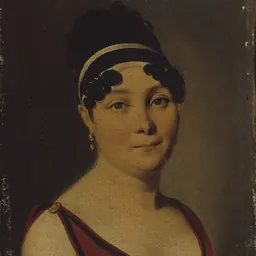

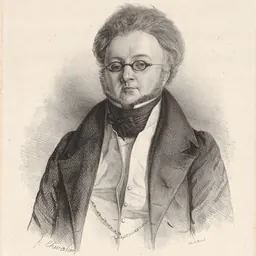


Contemporaries
People whose lives overlapped Ludwig Fischer's






Frequently asked questions
Who was Ludwig Fischer?
German bass opera singer
When was Ludwig Fischer born?
Ludwig Fischer was born on 18 August 1745 in Mainz.
When did Ludwig Fischer die?
Ludwig Fischer died on 10 July 1825 in Berlin.
What was Ludwig Fischer's occupation?
Ludwig Fischer was an opera singer and composer.
What nationality was Ludwig Fischer?
Ludwig Fischer was German.
Sources & further reading
· DBpedia: Ludwig Fischer (bass)
Cite this page
APA: Biography.guide. (2026). Ludwig Fischer. https://biography.guide/ludwig-fischer-opera-singer/
MLA: "Ludwig Fischer." Biography.guide, https://biography.guide/ludwig-fischer-opera-singer/.
Chicago: "Ludwig Fischer." Biography.guide. https://biography.guide/ludwig-fischer-opera-singer/.
Data last updated: 2026-09-20 · Spot an error? Report a correction.
Page generated 2026-09-27 05:11 UTC