
About Ludwig Bruns
Lived 1858 – 1916 (aged 58). Ludwig Bruns was a German neurologist and psychiatrist.
Ludwig Bruns (25 June 1858 – 9 November 1916) was a German neurologist who was a native of Hanover.
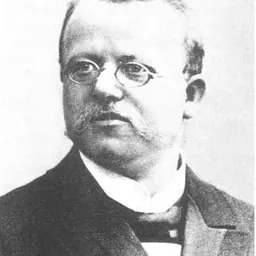
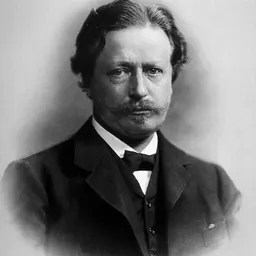
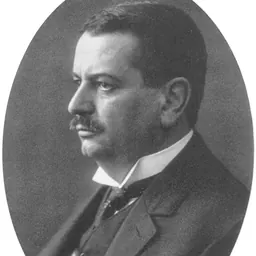
He studied medicine in Göttingen (since 1878: member of Corps Hannovera Göttingen) and Munich, receiving his doctorate in 1882. Subsequently, he was an assistant to Eduard Hitzig (1839-1907) at the insane asylum in Nietleben as well as at the psychiatric and nerve clinic in Halle. Afterwards he worked with Karl Westphal (1833-1890) and Hermann Oppenheim (1858-1919) at the Charité Hospital in Berlin. Bruns would maintain a working relationship with Oppenheim throughout his professional career. He also studied in Paris (under Jean Charcot) and England, later returning to his hometown of Hanover, where in 1903 he became a professor of neurology. Bruns was the first director of the Gesellschaft Deutscher Nervenärzte (German Society of Neurologists).
Bruns was interested in all aspects of neurology, however he is best known for his work in the fields of child neurology and neuropsychology. In 1906 he published Die Hysterie im Kindesalter (Hysteria in Childhood), in which he explains that abnormal behaviour in children is due to internal conflicts, being largely caused by overbearing parents who favor harsh punishment. His most significant work was Handbuch der Nervenkrankheiten im Kindesalter (Handbook of Nervous Diseases of Childhood), a textbook he co-authored with August Cramer (1860-1912) and Theodor Ziehen (1862-1950). In addition. he published an important treatise on localization of tumors titled Die Geschwultse des Nervensystem (Tumors of the Nervous System).
Associated eponyms Bruns ataxia: Difficulty in moving the feet when they are in contact with the ground and a tendency to fall backwards, associated with frontal lobe lesions. Bruns’ syndrome: Characterized by sudden and severe headache, accompanied by vomiting and vertigo, triggered by abrupt movement of the head. Principal causes are cysts and cysticerosis of the fourth ventricle, and tumours of the midline of the cerebellum and third ventricle. Bastian-Bruns law: In complete transverse lesion in the upper spinal cord, the tendon reflexes and muscular tone below the level of the lesion are lost. Named with neurologist Henry Charlton Bastian (1837-1915). Bruns nystagmus: Bilateral nystagmus found in patients with vestibular schwannoma.
Don’t just read it —
keep it.
Full-length biographies made to live with: read them, listen on the way to work, watch them tonight.
- E-book
- Audio
- Video
Instant download · yours to keep · every purchase keeps this site free
Important facts
People in Ludwig Bruns's life
Named in this biography and alive at the same time


Related people
Same field, nearest in time


Contemporaries
People whose lives overlapped Ludwig Bruns's

Frequently asked questions
Who was Ludwig Bruns?
German neurologist (1858–1916)
When was Ludwig Bruns born?
Ludwig Bruns was born on 25 June 1858 in Hanover.
When did Ludwig Bruns die?
Ludwig Bruns died on 9 November 1916 in Hanover.
What was Ludwig Bruns's occupation?
Ludwig Bruns was a neurologist and psychiatrist.
What nationality was Ludwig Bruns?
Ludwig Bruns was German.
Sources & further reading
Cite this page
APA: Biography.guide. (2026). Ludwig Bruns. https://biography.guide/ludwig-bruns/
MLA: "Ludwig Bruns." Biography.guide, https://biography.guide/ludwig-bruns/.
Chicago: "Ludwig Bruns." Biography.guide. https://biography.guide/ludwig-bruns/.
Data last updated: 2026-09-20 · Spot an error? Report a correction.
Page generated 2026-09-27 05:32 UTC