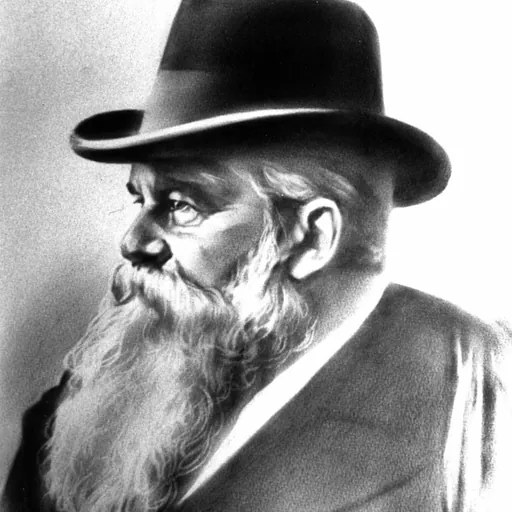
About Ludwig Brunow
Lived 1843 – 1913 (aged 69). Ludwig Brunow was a German sculptor.
Ludwig Brunow (9 July 1843, Lutheran – 13 January 1913, Berlin) was a German sculptor.
Life
He was the illegitimate child of the local sexton's daughter and spent most of his youth working as a shepherd but quickly caught up on his education when the opportunity arose. First, he went to Lübz, completing an apprenticeship in carpentry, then found work as a journeyman in Rostock, where he began taking drawing lessons. In 1866, he planned to emigrate to America, but his plans fell through, and he became a student of at the Bauakademie in Berlin. The following year, his talent was recognized by the art historian Friedrich Eggers and, at Eggers request, he moved to the Prussian Academy of Art. From 1871 to 1873, he worked as an assistant on the staffs of Rudolf Siemering and Christian Genschow.
He won his first award in 1876 at the Centennial Exhibition in Philadelphia, followed that same year by the "Verdienstkreuz" of the House Order of the Wendish Crown of Mecklenburg-Schwerin. In 1893, he was appointed a "Grand Ducal Professor". In 1901 he closed his studio and stopped accepting large projects. In his spare time, he was a member of a private chamber music quartet, along with the poet Karl Eggers (Friedrich's brother) and Heinrich Seidel. His grave in the is unmarked.
Selected major works An exhaustive list of his works may be found in the corresponding article on German Wikipedia 1876: Statue of Helmut von Moltke, Moltkeplatz, Parchim 1884: Statue of Frederick I, Berlin-Mitte, Ruhmeshalle (Hall of Fame); in Hohenzollern Castle since 1961. 1884: Statue of Frederick William II, Berlin-Mitte, Ruhmeshalle; in Hohenzollern Castle since 1961. 1886: Cornice sculpture of Gustavus II Adolphus, Lützen, Rathaus. 1891: Statues with copper sheet of John Albert I, Duke of Mecklenburg and Frederick Francis II, Rostock, Ständehaus; part of a four-figure group (the other two are by ) 1893: Equestrian statue of Frederick Francis II. Schwerin, castle garden. 1898: Statue of Otto von Bismarck, Elberfeld; melted down during World War II. 1900: Equestrian statue of Kaiser Wilhelm I, Erfurt, Kaiserplatz; melted down during World War II. 1902: Bust on a pedestal of Ernst Dircksen, Berlin, Bahnhof Friedrichstraße; melted down during World War II.
Gallery
Don’t just read it —
keep it.
Full-length biographies made to live with: read them, listen on the way to work, watch them tonight.
- E-book
- Audio
- Video
Instant download · yours to keep · every purchase keeps this site free
Important facts
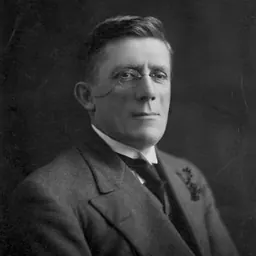
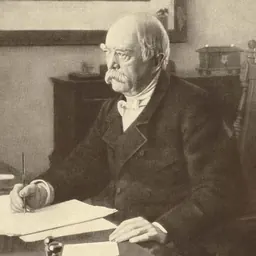
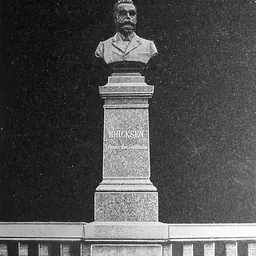
People in Ludwig Brunow's life
Named in this biography and alive at the same time



Related people
Same field, nearest in time


Contemporaries
People whose lives overlapped Ludwig Brunow's

Frequently asked questions
Who was Ludwig Brunow?
German sculptor (1843–1913)
When was Ludwig Brunow born?
Ludwig Brunow was born on 9 July 1843 in Lutheran.
When did Ludwig Brunow die?
Ludwig Brunow died on 21 January 1913 in Berlin.
What was Ludwig Brunow's occupation?
Ludwig Brunow was a sculptor.
What nationality was Ludwig Brunow?
Ludwig Brunow was German.
Sources & further reading
Cite this page
APA: Biography.guide. (2026). Ludwig Brunow. https://biography.guide/ludwig-brunow/
MLA: "Ludwig Brunow." Biography.guide, https://biography.guide/ludwig-brunow/.
Chicago: "Ludwig Brunow." Biography.guide. https://biography.guide/ludwig-brunow/.
Data last updated: 2026-09-22 · Spot an error? Report a correction.
Portrait: Wikimedia Commons · author & licence
Page generated 2026-09-27 05:01 UTC