
About Ludwig Börne
Lived 1786 – 1837 (aged 50). Ludwig Börne was a writer, poet, literary critic, poet lawyer, journalist and opinion journalist.
Karl Ludwig Börne (born Judah Löw Baruch; 6 May 1786 – 12 February 1837) was a German-Jewish political writer and satirist, who is considered part of the Young Germany movement.
Early life Karl Ludwig Börne was born Loeb Baruch on 6 May 1786, at Frankfurt am Main, to a Jewish family living in the Frankfurter Judengasse. He was the third son of Jakob Baruch, a banker. His grandfather had been a government bureaucrat and funded the construction of a community synagogue. After her husband died in 1803, he expressed his adoration in a series of letters. When he enrolled at Halle University, she was influential in his boarding with Professor Reil. He abandoned his medical studies in favor of constitutional law and political science at the University of Heidelberg and Giessen. There, he received his PhD in 1809 with the dissertation Ueber die Geometrische Vertheilung der Staatsgebiete.
Career On his return to Frankfurt, now constituted as a part of the grand duchy of Frankfurt under the sovereignty of the prince bishop Karl von Dalberg, who had granted the Jewish community broader citizenship rights, he received the appointment of police actuary in 1811.
In 1814, he was forced to resign his post because he was Jewish and those limited civil rights were revoked. Embittered by the oppression suffered by Jews in Germany, he took to journalism and edited the Frankfurt liberal newspapers Staatsristretto and Die Zeitschwingen.
Die Wage was suppressed by the police, and in 1821, Börne took a pause from journalism and led a quiet life in Paris, Hamburg, and Frankfurt. Although to some extent disappointed in his hopes, he did not look any more kindly on the political condition of Germany; this lent additional zest to the brilliant satirical letters (Briefe aus Paris, 1830–1833, published Paris, 1834), which he began to publish in his last literary venture, La Balance, a revival of Die Wage. The Briefe aus Paris was Börne's most important publication, and a landmark in the history of German journalism. Its appearance led him to be regarded as a leading thinker in Germany. fontsize = 85%
Börne's works are known for brilliant style and for thorough French satire. His best criticism is to be found in his Denkrede auf Jean Paul (1826) – a writer for whom he had warm sympathy and admiration –, in his Dramaturgische Blätter (1829–1834), and the witty satire Menzel der Franzosenfresser (1837). He also wrote a number of short stories and sketches, of which the best known are the Monographie der deutschen Postschnecke (1829) and Der Esskünstler (1822).
In an essay published anonymously, Freud wrote that the Börne collection he had received as a teenager was one of the few childhood books he had kept, and, upon rereading "How to Become an Original Writer" in light of his theories of free association, observed, "It seems then that we can not rule out that this reference has uncovered one of those bits of cryptomnesia which in so many cases may be supposed to lie behind a seeming originality."
In 1885, Frankfurt's Jewish Market (Judenmarkt) was renamed Börneplatz in honor of his centennial, as was the synagogue built there in 1882. (The site was destroyed and renamed Dominikanerplatz, a reference to the nearby Dominican Monastery, by the Nazis in 1935, but the name was restored in 1978. Since 1996 it has been a Holocaust memorial maintained by the Jewish Museum Frankfurt.)
Two portraits of him, by the Jewish painter Moritz Daniel Oppenheim, are in the Israel Museum Collection.
The town of Boerne in the U.S. state of Texas, founded by German liberal immigrants (Forty-Eighters), is named after him. The town is a part of the San Antonio metropolitan area.
The Ludwig Börne Prize has been awarded to German-language nonfiction writers since 1993; previous winners include Dan Diner, Robert Habeck, and Daniel Kehlmann.
The University of Giessen established the Ludwig Börne Professorship in 2015; the position is held by political scientist Claus Leggewie.
The Börne Gallery at the Jewish Museum Frankfurt in Frankfurt, Germany, is also named after him.
Don’t just read it —
keep it.
Full-length biographies made to live with: read them, listen on the way to work, watch them tonight.
- E-book
- Audio
- Video
Instant download · yours to keep · every purchase keeps this site free
Important facts
People in Ludwig Börne's life
Named in this biography and alive at the same time


Related people
Same field, nearest in time

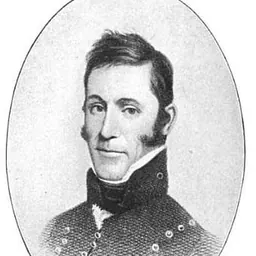
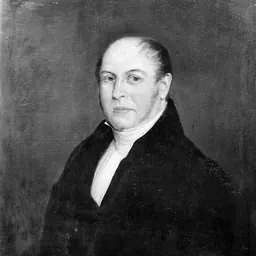



Contemporaries
People whose lives overlapped Ludwig Börne's
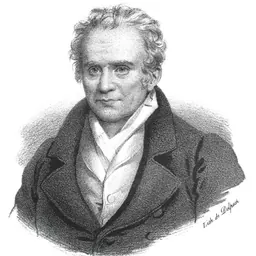

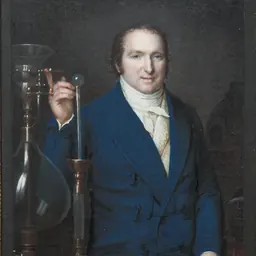
Frequently asked questions
Who was Ludwig Börne?
German writer
When was Ludwig Börne born?
Ludwig Börne was born on 6 May 1786 in Frankfurt.
When did Ludwig Börne die?
Ludwig Börne died on 12 February 1837 in Paris.
What was Ludwig Börne's occupation?
Ludwig Börne was a writer, poet, literary critic, poet lawyer, journalist and opinion journalist.
What nationality was Ludwig Börne?
Ludwig Börne's recorded nationality: Free City of Frankfurt.
Sources & further reading
Cite this page
APA: Biography.guide. (2026). Ludwig Börne. https://biography.guide/ludwig-borne/
MLA: "Ludwig Börne." Biography.guide, https://biography.guide/ludwig-borne/.
Chicago: "Ludwig Börne." Biography.guide. https://biography.guide/ludwig-borne/.
Data last updated: 2026-09-20 · Spot an error? Report a correction.
Page generated 2026-09-27 05:28 UTC