
About Lucien Sebag
Lived 1933 – 1965 (aged 31). Lucien Sebag was a French anthropologist.
Lucien Sebag (1933, Tunis – 1965, Paris) was a French Marxist anthropologist, a student of Claude Lévi-Strauss.
Sebag was a member of the Francophone community of Tunisian Jews. A researcher at the Centre national de la recherche scientifique, he became known for trying to reconcile structuralism and marxism in a book precisely entitled Marxisme et structuralisme (1964). Of suicidal temperament, he was followed by the psychoanalyst Jacques Lacan. In 1965, he committed suicide after falling in love with Judith, the daughter of Lacan.
Politics and ideas Initially a member of the Union of Communist Students, Sebag became an anti-Stalinist after 1956 and abandoned the French Communist Party. Along with fellow UEC member and Levi-Strauss disciple, Pierre Clastres, he was influenced by the libertarian socialist group Socialisme ou Barbarie. In François Dosse's words, for the adherents of Lévi-Strauss's Structural anthropology, "it was a matter of locating societies that had been sheltered from the unitary map of Hegelian Marxist thinking, societies that were not classified in Stalinist handbooks."
Sebag was very close to Levi-Strauss, who considered him his likely successor. Sebag's book-length study of the cosmogonic myths of the Pueblo Indians, published posthumously in 1971, was intended to further Levi Strauss' analysis of myth. Sebag was influenced by psychoanalysis; one of his papers analyzed the dreams of Baipurangi, a young woman of the Aché people. Sebag visited during periods which overlapped with Pierre Clastres' ethnography among them, but then settled among the Ayoreo of the Chaco for his own fieldwork, which he did not complete before his death.
Sebag and Clastres had "the ambition to re-read modern social philosophy in light of the teachings of Lévi-Strauss's anthropology". Sebag focused on myths and dreams, "the discourses of human fabulation".
Publications 1964: Marxisme et structuralisme, Paris, Payot
1971: L'Invention du monde chez les Indiens Pueblos, introduction by Jacqueline Bolens, Paris, , (posthumous) 1977: Les Ayoré du Chaco septentrional. Étude critique à partir des notes de Lucien Sebag, by Carmen Bernand-Munoz
Don’t just read it —
keep it.
Full-length biographies made to live with: read them, listen on the way to work, watch them tonight.
- E-book
- Audio
- Video
Instant download · yours to keep · every purchase keeps this site free
Important facts
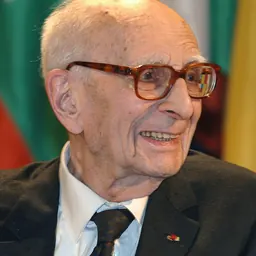
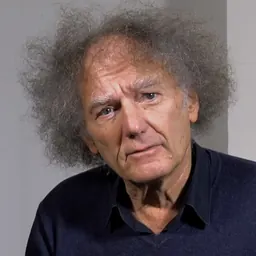
People in Lucien Sebag's life
Named in this biography and alive at the same time


Related people
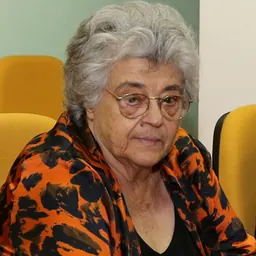
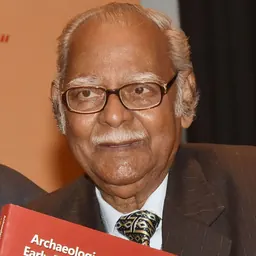
Same field, nearest in time



Contemporaries
People whose lives overlapped Lucien Sebag's



Frequently asked questions
Who was Lucien Sebag?
French anthropologist
When was Lucien Sebag born?
Lucien Sebag was born on 30 January 1933 in Tunis.
When did Lucien Sebag die?
Lucien Sebag died on 9 January 1965 in Paris.
What was Lucien Sebag's occupation?
Lucien Sebag was an anthropologist.
What nationality was Lucien Sebag?
Lucien Sebag was French.
Sources & further reading
Cite this page
APA: Biography.guide. (2026). Lucien Sebag. https://biography.guide/lucien-sebag/
MLA: "Lucien Sebag." Biography.guide, https://biography.guide/lucien-sebag/.
Chicago: "Lucien Sebag." Biography.guide. https://biography.guide/lucien-sebag/.
Data last updated: 2026-09-20 · Spot an error? Report a correction.
Page generated 2026-09-27 05:25 UTC