
About Lucien Biva
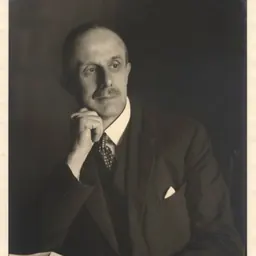
Lived 1878 – 1965 (aged 87). Lucien Biva was a French and American painter.
Lucien Felix Biva (13 August 1878 – October 1965) was a French–American artist. He studied painting early on with his father, the Naturalist painter Henri Biva. He was also the nephew of the painter Paul Biva. Between 1921 and 1949 he was an ornamental designer for textile fabrics and similar articles of manufacture having surface ornamentation, patenting over eighty designs with the United States Patent Office. He was a member of the Society of French Artists and the Society of Independent Artists.
Biography
Biva was born in Paris, where his family lived in Montmartre, 18 rue du Vieux Chemin de Paris (named rue Ravignan after 1867), and it is from designer Charles Biva (1821–1884), father of Henri Biva and Paul Biva that the family developed its artistic talents. In 1845, motivated by the fashion of the time for bourgeois interior ornamentation, Charles Biva opened a wallpaper factory in a northern suburb of Paris where his sons Henri and Paul began their apprenticeship as designers and colorists.
Lucien Biva benefited from the creativity inherent in his family, as well as from the proliferation of artistic environment of Montmartre at the end of 19th century and early 20th century, the so–called the Belle Époque.
The family influence Lucien Biva first studied under his father, then enrolled at the École nationale supérieure des arts décoratifs, and the École nationale supérieure des beaux-arts of Paris. At this time his professors included the poster designer Eugène Grasset (1845–1917). His education formed him as a painter but also as an interior designer and decorator.
He exhibited for the first time at the Salon des artistes français in 1902, with an entry titled Derniers rayons à Villeneuve-l’Étang, and exhibited there regularly until 1914. Other exhibition venues that saw his participation during this period included Salon des Indépendants in 1909.
United States
During the month of August 1919, Lucien Biva left Le Havre aboard the transatlantic ocean liner Le Rochambeau. On the first of September he debarked in New York City where he would reside throughout the rest of his career.
Various reasons impelled Lucien Biva to emigrate to the United States. His father was a well-known painter, and it may have been difficult for Lucien Biva to make a name for himself without being linked to the work of his father.
In the press chroniclers speak of "the Biva's" assimilating the son behind the father, and tended to write of the Biva brothers, confusing in a single work that of Henri and Paul Biva. In 1903, the Bulletin de la Société des amis des arts du département de l'Eure Henry Chantraine evokes the Exposition des beaux-arts d’Evreux: "Passing in front of the Dahlias with its rich impasto and the Village, with violent tones, but already much more moderate [than those of Lucien Lamarre, mentioned above by the columnist] of MM. Henri and Lucien Biva [...]." he was cited with other artists in the columns of New York Times (10 March 1922) as "stamped all over with the stamp of independence". It may be noted that the statement of the chronicler was somewhat tinged with irony. Since Society of Independent Artists created in 1916 was modeled after Société des Artistes Indépendants created in Paris in 1884, the author seems to have suggested this "independent" movement was already classical.
Other family reasons probably contributed to his departure for the States in 1919, at the age of 41. World War I had just ended, but his younger brother, jewelry designer Marius Biva, also formed at the École nationale supérieure des arts décoratifs, died at Verdun in 1915 at the age of 25 years.
American nationality Lucien Biva became an American citizen in 1928, residing mostly in New York City, Brooklyn, Queens, White Plains and Catskill. He painted and exhibited throughout the second leg of his career in the United States.
Design Between 1921 and 1949 Biva patented ornamental designs for textile fabrics and other articles of manufacture having surface ornamentation, patenting over eighty designs with the United States Patent Office.
At least one of Biva's designs, U.S. patent 59.177 of 1921, inspired other patents, such as U.S. patent 5,445,863, of 1995, used in clothing and other camouflage material for activities such as hunting and military maneuvers.
Lucien Biva, Après-midi, Villeneuve l'Etang, Salon 1912 postcard. At this time Lucien Biva lived at 29, rue des Vinaigriers in Paris U.S. Pat. No. D-59,177 issued to Lucien Biva on Oct. 4, 1921 discloses a design for a Textile Fabric or similar article wherein the material is gathered and apparently sewn along straight seams at regular intervals to create a rippled or wrinkled appearance. However, the regular spacing of the seams and their straight lines fail to provide a natural appearance, as is accomplished with the irregular seams of the present invention. With realism in his past, Biva's new work consisted of colorful landscapes, with certain titles of his paintings emphasizing the primacy given to colors.
Lucein Biva's work was shown in New York in the form of a retrospective exhibition, November 1957, at the Albany Institute of History & Art 1910, Derniers rayons sur le lac de la Malmaison 1911, Les Derniers rayons à Villeneuve-l’Étang 1912, Après-midi, Villeneuve-l’Étang; Les dernières fleurs; Automne au Grand Trianon 1913, La rivière à Villeneuve 1914, Villeneuve, matinée
United States
1921, Fifth Annual Exhibition of the Society of Independent Artists: no jury, no prizes, Waldorf Astoria, New York, The White Plain (Landscape in France), no. 58 and When the Sun is Setting, no. 59 1922, Sixth Annual Exhibition of the Society of Independent Artists: no jury, no prizes, Waldorf Astoria, New York, 1922, The Girl and the Parrot, no. 73, The Hudson River, no. 74 refers to the acquisition of one hundred paintings in order to create a museum of fine arts. Lucien Biva is mentioned among the artists selected.
1957, Retrospective at Albany Institute of History and Art
Field of heather Our peonies Harvest time, Chartres, France Lilacs in Vase Moulin de la Galette, Montmartre Apples, grapes, tea, kettle The Little fisherman Farmyard, Normandy, France Autumn pond, White Plains Washday, Brittany, France New York skyline, from studio Old country road, France Tea for two Peaches, pears in candlelight Brittany coast, France Incense burner and chrysanthemums Peonies in iridescent vase Fireworks, Montmartre La rue St. Rustique, Montmartre Villeneuve-l’Etang, France Thawing, Dourdon, France Brook, Haines Falls, Catskill Village church, France White face Mt, Adirondacks Low tide, Douarnenez, France Autumn, White Face Mt, Adirondacks New York Bay, from studio Sunflowers in old jug Our barn, Catskill The Mistletoe, Orléans, France Catskill pond Springtime in Saint-Cloud, France Stony Brook, Ardsley, New York Winding river, Ardsley, New York Palisades, Englewood Chrysanthemums in Chinese vase Pam
Don’t just read it —
keep it.
Full-length biographies made to live with: read them, listen on the way to work, watch them tonight.
- E-book
- Audio
- Video
Instant download · yours to keep · every purchase keeps this site free
Important facts
People in Lucien Biva's life
Named in this biography and alive at the same time
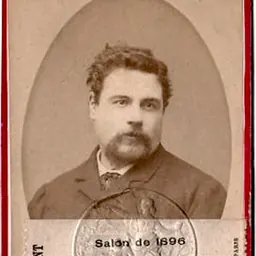
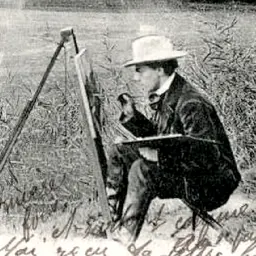
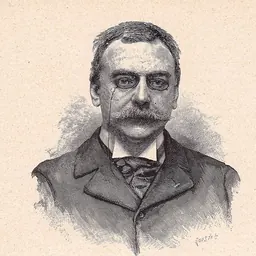
Related people
Same field, nearest in time

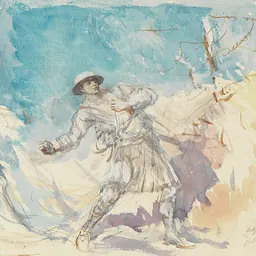


Contemporaries
People whose lives overlapped Lucien Biva's





Frequently asked questions
Who was Lucien Biva?
French artist (1878-1965)
When was Lucien Biva born?
Lucien Biva was born on 13 August 1878 in Paris.
When did Lucien Biva die?
Lucien Biva died on 1 October 1965 in New York City.
What was Lucien Biva's occupation?
Lucien Biva was a painter.
What nationality was Lucien Biva?
Lucien Biva was French and American.
Sources & further reading
Cite this page
APA: Biography.guide. (2026). Lucien Biva. https://biography.guide/lucien-biva/
MLA: "Lucien Biva." Biography.guide, https://biography.guide/lucien-biva/.
Chicago: "Lucien Biva." Biography.guide. https://biography.guide/lucien-biva/.
Data last updated: 2026-09-20 · Spot an error? Report a correction.
Page generated 2026-09-27 05:33 UTC