
About Luciano Bianciardi
Lived 1922 – 1971 (aged 48). Luciano Bianciardi was an Italian linguist, journalist, writer, translator, librarian and teacher.
Luciano Bianciardi (; 14 December 1922 – 14 November 1971) was an Italian writer, journalist, translator and librarian. He contributed significantly to the cultural ferment in post-war Italy, working actively with various publishing houses, magazines and newspapers. His work is characterized by periods of rebellion against the cultural establishment, to which he also belonged, and by a careful analysis of social habits during Italian economic miracle. His most famous novel, La vita agra, became a bestseller in Italy and was translated into several languages. In 1964, it was made into a film adaptation directed by Carlo Lizzani.
Bianciardi was the first Italian translator of Henry Miller's Tropic of Cancer and Tropic of Capricorn, Saul Bellow's Henderson the Rain King, John Steinbeck's The Winter of Our Discontent and Travels with Charley, Jack London's John Barleycorn, J.P. Donleavy's The Ginger Man and William Faulkner's A Fable and The Mansion.
Early life and education Luciano Bianciardi was born on Via Ivo Saletti (now Via Bruno Buozzi) in Grosseto on 14 December 1922. His father, Atide, was a cashier at the Banca Toscana, while his mother, Adele Guidi, was an elementary school teacher who always demanded excellence in studies from her son. Bianciardi remembered her with these words: "I was her student before being her son for the beautiful span of thirty-two years. It's like having a 'teacher for life,' and teachers for life aren't easy." From his father, with whom he had a good relationship, he inherited a passion for soccer (Atide had been a goalkeeper in the first team of US Grosseto) and for the Italian unification movement, the Risorgimento. At the age of 8, he received the book he would always consider his favourite, I Mille by Giuseppe Bandi, a story of Giuseppe Garibaldi's Expedition of the Thousand. During his early university years, he moved toward liberal socialism, only to drift away from it shortly thereafter. At the end of January 1943, he was drafted and was then sent to Apulia, where he witnessed one of the bombings of Foggia on 22 July. The library had been severely damaged by the bombings of 1943 and the flood of the Ombrone River in 1944, and Bianciardi himself had worked as a volunteer to clean the books from the mud. His relationship with the residents of Ribolla was very close and profoundly affected him when, on 4 May 1954, one of the coal mine's shafts exploded, killing 43 workers.
He subsequently accepted the invitation to move to Milan to participate in the establishment of a new publishing house, Feltrinelli, and left Grosseto in June 1954.
Among the others, he also translated: Stephen Crane's Maggie and The Red Badge of Courage, Fred Hoyle's The Black Cloud, Osamu Dazai's The Setting Sun, Cyril Northcote Parkinson's Parkinson's Law, Mary Renault's The King Must Die, Brendan Behan's Borstal Boy, Irwin Shaw's Tip on a Dead Jockey, Aldous Huxley's Brave New World Revisited, Richard Brautigan's A Confederate General from Big Sur, Thomas Berger's Little Big Man and Killing Time.
In 1969, he published his fifth and final novel, Aprire il fuoco ("Open Fire"), a complex alternate history novel that combines criticism of contemporary society against the backdrop of the Risorgimento riots. In that same year, he also published Viaggio in Barberia, a travel report in North Africa funded by the Automobile Club d'Italia. His relationship with Jatosti gradually deteriorated, also due to his progressive alcoholism, until she left him, taking Marcello with her. In 1970, he returned to Milan, and later appeared in the comedy The Naked Cello, a film adaptation of his short story "Il complesso di Loth".
In these years, despite his descent into alcoholism, Bianciardi began to reconnect with his hometown, feeling remorse for having abandoned it years earlier. He returned more often to Grosseto and reconnected with his now-teenage daughter Luciana, whom he had never known. On 10 August 1970, he was awarded the Grifone d'Oro, the highest civic honour of the municipality of Grosseto.
Death His severe alcohol dependency prematurely took his life at the age of 48, on 14 November 1971, in Milan. He was buried in the Cemetery of Misericordia in Grosseto.
Works Novels Il lavoro culturale ("Cultural Work"), 1957. L'integrazione ("The Integration"), 1960. La vita agra ("The Bitter Life"), 1962. La vita agra: or, It's a Hard Life, Hodder & Stoughton, London, 1965; translation by Eric Mosbacher. La vita agra. It's a Hard Life, Viking Press, New York, 1965; translation by Eric Mosbacher. La battaglia soda ("The Firm Battle"), 1964. Aprire il fuoco ("Open Fire"), 1969.
Non-fiction I minatori della Maremma ("The Miners of the Maremma"), with Carlo Cassola, 1956. Da Quarto a Torino ("From Quarto to Turin"), 1960. Dághela avanti un passo! ("Come on, a Step Forward!"), 1969. Viaggio in Barberia ("A Trip to Barbary"), 1969. Garibaldi, 1972.
Short stories collections Il peripatetico e altre storie, Rizzoli, 1976. La solita zuppa e altre storie, Bompiani, 1994.
Filmography La vita agra, directed by Carlo Lizzani (1964) Secret Fantasy, directed by Pasquale Festa Campanile (1971)
Don’t just read it —
keep it.
Full-length biographies made to live with: read them, listen on the way to work, watch them tonight.
- E-book
- Audio
- Video
Instant download · yours to keep · every purchase keeps this site free
Important facts
People in Luciano Bianciardi's life
Named in this biography and alive at the same time



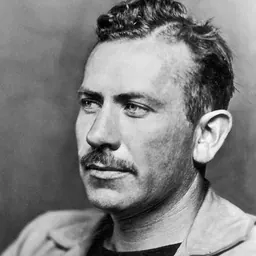
Related people
Same field, nearest in time


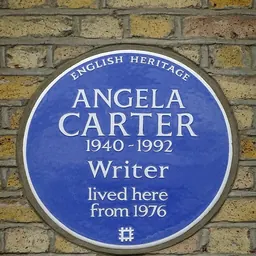

Contemporaries
People whose lives overlapped Luciano Bianciardi's

Frequently asked questions
Who was Luciano Bianciardi?
Italian writer (1922-1971)
When was Luciano Bianciardi born?
Luciano Bianciardi was born on 14 December 1922 in Grosseto.
When did Luciano Bianciardi die?
Luciano Bianciardi died on 14 November 1971 in Milan.
What was Luciano Bianciardi's occupation?
Luciano Bianciardi was a linguist, journalist, writer, translator, librarian and teacher.
What nationality was Luciano Bianciardi?
Luciano Bianciardi was Italian.
Sources & further reading
· Wikipedia: Luciano Bianciardi
Cite this page
APA: Biography.guide. (2026). Luciano Bianciardi. https://biography.guide/luciano-bianciardi/
MLA: "Luciano Bianciardi." Biography.guide, https://biography.guide/luciano-bianciardi/.
Chicago: "Luciano Bianciardi." Biography.guide. https://biography.guide/luciano-bianciardi/.
Data last updated: 2026-09-20 · Spot an error? Report a correction.
Page generated 2026-09-27 05:23 UTC