
About Lucia Bercescu-Țurcanu
Lived 1911 – 1995 (aged 84). Lucia Bercescu-Țurcanu was a Romanian and American opera singer.
Lucia Bercescu-Țurcanu, also known as Lucia Turcano or Turkano (born Lucia Bercescu, March 27, 1911 – June 26, 1995), was a Romanian and American soprano. A native of Bucharest, she was trained as an opera singer in that city, also performing folk music and recording romances. She made her debut at the Romanian National Opera in 1939 where she was a leading prima donna until 1946. There she met and married the opera conductor Constantin Țurcanu with whom she frequently collaborated. She also worked regularly at the Vienna Volksoper during World War II, and performed with the Bucharest Radio Orchestra in Croatia. The Țurcanus were in Bucharest after the anti-fascist coup of August 1944, though Lucia spent some time touring in the Hungarian Republic with acclaimed versions of Aida and Madame Butterfly. She also performed at galas organized by left-wing groups, including the Romanian Communist Party, but overall resented Romania's communization; the Țurcanus emigrated in 1947, selling their belongings.
Bercescu-Țurcanu was a leading soprano in Italy's major opera houses in the late 1940s. Her husband worked as a conductor at La Scala while she was prima donna there from 1946 to 1949. In 1949 the Țurcanus came to the United States at the invitation of opera impresario Alfredo Salmaggi on a temporary visa. They were active with American opera companies into the early 1950s. Not wishing to return to communist-aligned Romania, they stayed in the United States under tenuous circumstances in which deportation was a possibility. They ultimately became American citizens in 1954 when a federal bill written on their behalf was signed into law by American president Dwight D. Eisenhower. In addition to working as a musician, Lucia supported her husband's work in the United States as an ordained priest in the Romanian Orthodox Church.
Bercescu-Țurcanu also worked as a voice teacher in Worcester, Massachusetts and Detroit, Michigan. She and her husband returned to Romania in 1963; here, she resumed her opera and concert career, while Constantin composed and conducted until his death ten years later. Lucia's own career ended when she was blacklisted by the communist authorities; though still referred to as one of Romania's greatest voices, she could no longer appear on the stage. She lived through the fall of communism, after which she was honored publicly by other members of her profession. She died in Bucharest in 1995, aged 84.
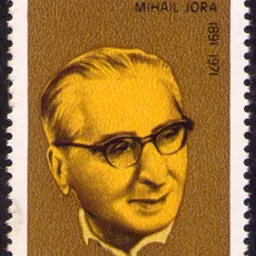
Early life and debut Lucia Bercescu was born in Bucharest, capital of the Romanian Kingdom, on March 27, 1911. In April 1930, she was mentioned in Rampa journal as one of the eminent students at Egizio Massini's music school. She then studied with voice teachers Demetru Baziliu and Elena Saghin at the Bucharest Conservatory. Her professional opera debut occurred at the Romanian National Opera, Bucharest (RNOB) in 1939 where she first appeared as Marguerite in Gounod's Faust. She was offered a longterm contract at that theatre by George Georgescu immediately following this performance. She also appeared at a Straja Țării-organized concert for Christmas, with a recital of Romanian folk songs. Not long after this she met and married opera conductor Constantin Țurcanu (sometimes given as Constantino Turcano). Composer Mihail Jora similarly commented that the RNOB had used her rarely, "perhaps out of pettiness", but that this had unwittingly conserved her pitch. At the time, she was doing work for the Romanian Radio Broadcasting Company, which aired her rendition of various romances in June 1940. During early 1941, she was cast as Princess Ruxandra in Alexandru Zirra's new opera, Alexandru Lăpușneanu. Jora was especially impressed with her, calling hers "the most beautiful female voice ever to have graced the Romanian Opera." In tandem, she was cast as Countess Almaviva in Mozart's The Marriage of Figaro. In December, after Romania had entered the war as an ally of Nazi Germany, she sang one of her husband's doine at a ceremony honoring the Wehrmacht; held at the Romanian Atheneum, this function was also attended by Georgescu, Manfred Freiherr von Killinger, and Ion Marin Sadoveanu. In June 1942, she toured nationally with Alexandru Lăpușneanu, reaching Brașov. A local critic, Lia Busuioceanu, admired her "golden voice" and her physique, but noted that her diction needed improvement.
First European breakthroughs During her early thirties, Bercescu-Țurcanu was a guest artist at several locations in Nazi-occupied Europe. She thus worked at the Croatian National Theatre (HNK) and the . though Răutu believes that it may have been as Floria in Puccini's Tosca. Her appearances in that role were interrupted later that month, when she became seriously ill and had to undergo surgery in Nazified Austria.
In October 1942, Bercescu-Țurcanu sang for a charity event (Servus-Konzert) at Vienna, celebrating the German–Romanian friendship. She was Aida in a new Volksoper version, which began in early 1943 after Georgescu's departure; Dinu Bădescu did Radamés, singing his role in Romanian. According to Răutu, her time at the Volksoper meant that she could no longer be sidestepped at RNOB, allowing her to have a diverse repertoire. and Eva in Wagner's Die Meistersinger von Nürnberg. Returning to the HNK, Lucia reprised her Aida to a reported "jam-packed hall".
Communization era In July 1944, just before the Soviet penetration into Romania, it was announced that Bercescu-Țurcanu and her colleagues at the RNOB were going on an extended tour of the provinces. Her team was set to sing in places from Pucioasa to Hațeg. On August 17, six days ahead of the anti-fascist coup in Bucharest, she performed at the Petroșani workers' casino. In October, she and the entire RNOB could return to Soviet-occupied Bucharest, resuming performances of Tosca. She was again praised, including by the România Liberă, a central organ of the Communist Party (PCR). Its house critic, E. Vergu, only observed that the stagecraft was antiquated, and that Bercescu-Țurcanu's facial expressions were "rather overdone". On November 5, she performed at a RNOB festival honoring the Red Army.
Forming the Enescu Chamber Orchestra around the same time, Constantin Țurcanu had Lucia employed as its soloist. After a concert they held in February 1945, Universul paper declared that she was also the orchestra's animator, driven by her "overwhelming vocal dedication". By early 1946, both husband and wife had returned to the Radio Orchestra, and were giving new concerts. In the PCR daily, Scînteia, Edgar Elian praised Constantin as a hard-working conductor, and upheld Lucia as a guiding light of classical music in her relatively young generation. On her own, Bercescu-Țurcanu was touring with Puccini's Madame Butterfly, in which she had the lead role of Cio-Cio-San. Her travels had ended by July, when she sued her impresario, Mihail Ghidionescu, over outstanding fees.
From January 1946, Bercescu-Țurcanu appeared as Rachel in Halévy's La Juive, produced by the RNOB. The premiere was attended by the Prime Minister of Romania, Petru Groza, accompanied by the Soviet Ambassador, Sergey Kavtaradze. Groza personally congratulated her and the other performers, adding his musings about the communists' "exceptional care regarding artistic manifestations for the masses, [as] a focus that is currently brought to the forefront far more prominently than in bygone days." In the Jewish community weekly, Unirea, a critic noted that she was still Romania's "best dramatic soprano", who could expect to triumph anywhere in the world. Also that month, Bercescu-Țurcanu appeared as a guest performer at the Socialist Group for Art and Culture, which was a cultural branch of the Social Democratic Party (itself part of the governing coalition), and at the PCR's own commemoration of Romain Rolland.
Hungarian tour and Italian departure In March 1946, while becoming a regular entertainer at PCR conferences, Bercescu-Țurcanu joined Aura Buzescu, Pál Jávor and George Vraca in performing at a Bucharest gala, which promoted Hungaro–Romanian co-operation; the show was overseen by Dezső Keresztury. In April, she went on an acclaimed tour of the Hungarian Republic—as part of an artists' exchange between the RNOB and the Hungarian State Opera House. After her first performances there, critic Endre Gaál commented: "Budapest will learn the name Lucia Bercescu in no time. This Aida with her twinkling eyes, blessed with magnificent acting skills, seems to be a universal singer."
The Țurcanus stopped in Allied-occupied Austria during September 1946. Lucia again attracted notice, with another Tosca—now with Ludwig Kaufmann as conductor. Eduard Herzog of the Weltpresse called hers "the only bright spot in an otherwise insignificant production". Herzog adds: "Charming in appearance, perhaps a little too impersonal, but tasteful in her acting, [Bercescu-Țurcanu] made an excellent impression." Later that month, she gave a recital alongside the Vienna Symphony (with Constantin as conductor). In Das Kleine Volksblatt, composer Kurt Schmidek declared this her second Viennese success of that season, noting her "magnificent voice and powerful dramatic impact", and observing that she had to perform an encore.
The Țurcanus returned to Bucharest (where their address was recorded as 12 Coriolan Street),
As "Lucia Turcano" (Bercescu-Țurcanu adopted the italianized version of her name Lucia Turcano, a name which, in 1947, puzzled Romanian opera fans, who did not immediately recognize it.) She made her Milan debut as Abigaille in Verdi's Nabucco for the opening of the 1946–1947 season. Bercescu-Țurcanu was active in the newly formed Italian Republic's other major opera houses, achieving acclaim on Italian stages in the title roles of Aida, Bellini's Norma, Tosca and Puccini's Turandot.
During early 1948 Bercescu-Țurcanu was in Switzerland, being employed by Lausanne Municipal Theater for another production of Tosca. Some of the other theaters she worked for included La Fenice in Venice, the Teatro di San Carlo in Naples, and the Teatro Comunale di Bologna. She also performed at the Baths of Caracalla for the Teatro dell'Opera di Roma summer opera season, and at theaters in Cagliari, Cremona, Palermo, and Turin, among others. They had temporary visas, but were determined to remain in the United States and become American citizens rather than live under the oppressive regime of the since-established Romanian People's Republic. On the American stage Lucia was still billed with the Italianized version of her name, Lucia Turcano. She toured with the Salmaggi Opera Company to the Newark Opera House. Her other role with that troupe, in 1949, was Santuzza in Mascagni's Cavalleria rusticana; Richard Torigi was Alfio. In March 1950 Bercescu-Țurcanu signed a contract with the New York City Opera (NYCO) at the invitation of Laszlo Halasz. She made her debut with the NYCO the following month as Turandot. Later that year she sang Aida with the NYCO. In October 1950 Bercescu-Țurcanu appeared at the Philadelphia Academy of Music with the Philadelphia La Scala Opera Company, again as Gioconda. She performed with Fortune Gallo's San Carlo Opera Company at the Boston Opera House in November 1950. In February 1951 she returned to Philadelphia to sing Aida to Francesco Battaglia's Radamès. She also sang Violetta in La traviata at Carnegie Hall.
Lucia's husband, Constantin Țurcanu, was as a priest in the Romanian Orthodox Church. In 1951 the couple moved to Terre Haute, Indiana where her husband accepted a position as a minister. In October 1951 Lucia performed three Romanian songs at the Terre Haute House at an event featuring Princess Ileana of Romania as the honored speaker during her exile in the United States. Sometime in the winter months of 1952–1953 her husband was appointed priest of St. Nicholas Romanian Orthodox Church in Worcester, Massachusetts (congregation is now in new premises in Shrewsbury). That same month American congressman Harold Donohue introduced a bill to the United States Congress granting citizenship to Bercescu-Țurcanu and her husband. The bill passed and was signed by American president Dwight D. Eisenhower; making Lucia and Constantin American citizens. An earlier bill introduced by Franklin D. Roosevelt Jr. in 1950 failed, and other Americans assisted them to prevent their deportation in the intervening years. She worked as a voice teacher in Detroit at the Art Center Music School. In October 1956 she was the featured soprano soloist at the Reformation Festival organized by the Detroit Council of Churches with 725 different congregations participating. In December 1957 she was a guest soloist in a Christmas concert with the Fitzgerald A Capella Choir which was filmed for television broadcast on CKLW-TV. She continued to perform periodically as a guest soloist at church music events in Detroit until as late as April 1960.
Romanian return and final decades In September 1960, during a thawing period in US–Romanian relations, a delegation of Romanian scientists, led by Ilie G. Murgulescu, visited Chicago. Bercescu-Țurcanu provided the entertainment, performing samples of Romanian folk music. In 1963, she returned permanently to Romania, Her various concerts included one with the Iași Philharmonic, in March 1966. Here, she sang one of her husband's doine. Writing a year later, musicologist Viorel Cosma openly referred to her years abroad, as part of a wider claim that "the playbills of lyrical theaters across Europe, Africa, and the Americas have lived under the mirage of brilliant Romanian singers."
Widowed in November 1973, Bercescu-Țurcanu resumed performing at the RNOB, but only after being forced to go through an intensive screening process. She also worked as a concert soprano in theatres in Craiova, Bacău, Sibiu, and Oradea. In 1992, some two years after the fall of communism, the Union of Romanian Composers and Musicologists (Uniunea Compozitorilor și Muzicologilor din România) honored her with the Mihail Jora Prize for a life "dedicated to art". The RNOB dedicated the company's 2003 album, Arta cântului, to her. It was accompanied by a DVD.
Notes and references
Don’t just read it —
keep it.
Full-length biographies made to live with: read them, listen on the way to work, watch them tonight.
- E-book
- Audio
- Video
Instant download · yours to keep · every purchase keeps this site free
Important facts
People in Lucia Bercescu-Țurcanu's life
Named in this biography and alive at the same time






Related people
Same field, nearest in time



Contemporaries
People whose lives overlapped Lucia Bercescu-Țurcanu's






Frequently asked questions
Who was Lucia Bercescu-Țurcanu?
Romanian-born American soprano (1911-1995)
When was Lucia Bercescu-Țurcanu born?
Lucia Bercescu-Țurcanu was born on 27 March 1911 in Bucharest.
When did Lucia Bercescu-Țurcanu die?
Lucia Bercescu-Țurcanu died on 26 June 1995.
What was Lucia Bercescu-Țurcanu's occupation?
Lucia Bercescu-Țurcanu was an opera singer.
What nationality was Lucia Bercescu-Țurcanu?
Lucia Bercescu-Țurcanu was Romanian and American.
Sources & further reading
· Wikipedia: Lucia Bercescu-Țurcanu
· DBpedia: Lucia Bercescu-Țurcanu
Cite this page
APA: Biography.guide. (2026). Lucia Bercescu-Țurcanu. https://biography.guide/lucia-bercescu-turcanu/
MLA: "Lucia Bercescu-Țurcanu." Biography.guide, https://biography.guide/lucia-bercescu-turcanu/.
Chicago: "Lucia Bercescu-Țurcanu." Biography.guide. https://biography.guide/lucia-bercescu-turcanu/.
Data last updated: 2026-09-20 · Spot an error? Report a correction.
Page generated 2026-09-27 05:29 UTC