
About George Georgescu
Lived 1887 – 1964 (aged 76). George Georgescu was a Romanian conductor, composer, cellist, violinist and music educator.
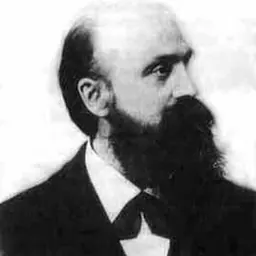
George Georgescu (September 12, 1887 – September 1, 1964) was a Romanian conductor. The moving force behind the Bucharest Philharmonic Orchestra for decades beginning shortly after World War I, a protégé of Artur Nikisch and a close associate of George Enescu, he received honors from the French and communist Romanian governments and lived to make recordings in the stereo era.
Education and career as soloist Georgescu was born in the river port of Sulina, Tulcea County, Romania on September 12, 1887. His father, Leonte, was head of customs, and his mother, Elena, was the daughter of the captain of the port. As Leonte took up positions in various ports along the Danube, the family moved to Galaţi and then Giurgiu. In Galaţi, the toddler George found and, placing it between his legs like a cello, began playing a violin that his father had won in a raffle; Leonte, who did not want his son to be a "fiddler", was not pleased,
Following his graduation in 1911, As at the Philharmonic, he directed a wide-ranging repertoire, which, in addition to a heavy emphasis on the works of Wagner, and representative of, among others, Arturo Toscanini, who then shared the New York Philharmonic podium with Mengelberg. Thus, when issues of health compelled Toscanini to cancel his remaining appearances beginning in late 1926, Judson immediately thought of Georgescu as a potential replacement, albeit an unknown quantity. After obtaining reassurance from Richard Strauss, Judson recommended Georgescu for the position, and in December 1926 Georgescu made his US debut with the New York Philharmonic, scoring a critical success in music of Smetana, Schubert, and Richard Strauss. He would continue to conduct the orchestra for some months thereafter. Later, making his return to Europe, Georgescu traveled on the same ship as Toscanini, and the two former cellists developed a friendship. In November 1935, the two would again perform that work in Szeryng's Romanian debut, this time with the Bucharest Philharmonic. The next day they repeated the performance at the royal palace for Queen Maria.
Georgescu also took his home orchestra on tour again, this time to the Eastern Mediterranean. Nor did he neglect his labors in the opera pit during travels abroad. He led performances of the unrevised Boris Godunov, then very much a novelty, in Italy, Florica Oroveanu. She was the adoptive daughter of the Minister of Public Works Constantine Busila and descended from Romanian aristocracy. Aged only 18, she was 25 years Georgescu's junior, and the marriage took place only after the couple overcame three years of opposition by her family. Tutu Georgescu, as she was known, would remain Georgescu's wife and staunch supporter for the rest of his life and would publish two volumes of memoirs devoted to preserving the memory of his art.
Georgescu's fortunes, a largely unbroken string of successes for the preceding quarter century, would take a dramatically unfavorable turn in 1944, when Romania abruptly switched sides, joining the Allies. On the strength of his participation in the Nazi cultural and propaganda machine, the authorities branded Georgescu a collaborator and barred him "for life" from conducting in Romania. At this time Georgescu also directed the Iaşi "Moldova" Philharmonic Orchestra, and his international career began to revive with invitations to conduct in Prague and Kiev. gave his first performance with the Philharmonic in 1949 under Georgescu's direction, and when he performed with the same forces in Belgrade in 1957, the cheering audience refused to leave the hall until threatened with firehoses;
Georgescu's activities abroad, both with and without the Philharmonic, were not limited to Belgrade. Under his renewed direction, the orchestra traveled to Finland; Sweden; the Soviet Union; and the New York Philharmonic. Three years later, Georgescu made his British debut at the Royal Festival Hall. the Russians also arranged a concert for their visitor Georgescu with fellow jurist Sviatoslav Richter.
Recordings
Like his countryman Sergiu Celibidache, Georgescu found the process of making phonograph records uncongenial. The tedium of interruptions, retakes, trials to accommodate the setup of equipment, and the like were at odds with his temperament, which found greatest expressiveness when given free rein in the presence of an audience; moreover, he was concerned about the need for perfection when performances were fixed in a permanent medium. Unlike Celibidache, however, Georgescu did not benefit from extensive release of concert tapings; indeed many of his postwar broadcast tapes were erased. Unfortunately, death preempted plans, mediated by Toscanini's daughter Wally, for Georgescu to make records in 1963 and 1964 for RCA Victor. Therefore, the centerpiece of his recorded legacy is a complete stereo cycle of Beethoven symphonies with the George Enescu Philharmonic recorded by Electrecord in 1960, with later LP issues as Intercord 976 and Lingen Köln 1124; a compact disc release on Lys 485-490 apparently was dubbed from the Electrecord LPs. Though some collectors believe that the Lingen Koln issue is a separately recorded set done on tour, and not a re-issue of the Electrecord series, as they do not sound like the same performances, even allowing for transfer variability. Also of importance, given his closeness to the composer, is the recording of Enescu's First Symphony; after a performance of this work under Georgescu's direction in 1925, Enescu wrote Georgescu a letter marking the occasion as only the third or fourth time in his career that he had been understood.
Quotations
Don’t just read it —
keep it.
Full-length biographies made to live with: read them, listen on the way to work, watch them tonight.
- E-book
- Audio
- Video
Instant download · yours to keep · every purchase keeps this site free
Important facts
People in George Georgescu's life
Named in this biography and alive at the same time


Related people
Same field, nearest in time



Contemporaries
People whose lives overlapped George Georgescu's



Frequently asked questions
Who was George Georgescu?
Romanian musician
When was George Georgescu born?
George Georgescu was born on 12 September 1887 in Sulina.
When did George Georgescu die?
George Georgescu died on 1 September 1964 in Bucharest.
What was George Georgescu's occupation?
George Georgescu was a conductor, composer, cellist, violinist and music educator.
What nationality was George Georgescu?
George Georgescu was Romanian.
Sources & further reading
Cite this page
APA: Biography.guide. (2026). George Georgescu. https://biography.guide/george-georgescu/
MLA: "George Georgescu." Biography.guide, https://biography.guide/george-georgescu/.
Chicago: "George Georgescu." Biography.guide. https://biography.guide/george-georgescu/.
Data last updated: 2026-09-20 · Spot an error? Report a correction.
Page generated 2026-09-27 05:25 UTC