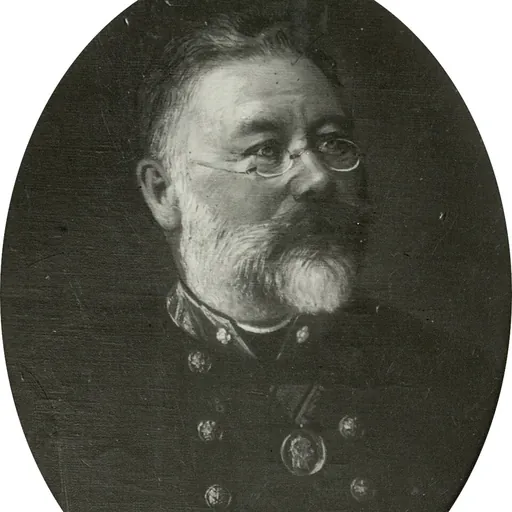
About Lovrenc Košir
Lived 1804 – 1879 (aged 75). Lovrenc Košir was an Austrian inventor and official.
Lovrenc Košir, also Laurenz Koschier (29 July 1804 – 7 August 1879) was a Slovenian accountant and civil servant in the Austrian Empire, who worked in Ljubljana. He is notable as being one of the claimants to the title of the inventor of the postage stamp, besides Rowland Hill and James Chalmers. His claim was widely supported in Austria and Yugoslavia, and he was recognized as undisputed "conceptual inventor" of postage stamps in those two countries. Today, those claims are controversial and he is not seen as undisputed inventor any more, as there is evidence that his claims were based on misconstructions.
Biography Lovrenc Košir was born in Spodnja Luša, Carniola and baptized Laurentius Koschier. The Slovenized spelling of his name, Lovrenc Košir, appeared in print by 1937. He died in Vienna on 7 August 1879.
Idea of adhesive tax postmarks In 1835, five years before the introduction of the worldwide first stamps in Great Britain, Košir allegedly suggested the introduction of adhesive tax postmarks (aufklebbare Brieftaxstempel) to the Department of Commerce in Vienna, which was responsible for the postal system. These postmarks were to be used for the pre-payment of postage. He called them gepresste Papieroblate (pressed paper wafers). His suggestion was looked at in detail, but rejected for the time being. Košir conceived that the stamps would be modelled on the official sealing stamps that were already used in Austria. However, because he had contact with England, it is presumed that he got the idea from James Chalmers, who had already made stamp designs one year earlier than Košir. However, Chalmers did not submit his designs until three years after Košir's suggestion.
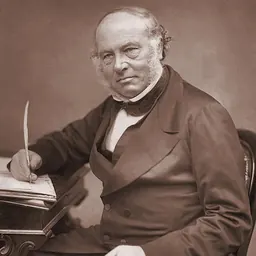
Only in 1858, Košir began to claim that he was the inventor of the idea of postage stamps. In 1874, when the inaugural congress of the General Postal Union (GPU) was held in Bern, Switzerland, Košir sent a letter to it asking the congress to recognize him for his "work and commitment to the cause of the introduction of postage stamps". With the letter, Košir provided certain "documents" as a proof of his work. Košir claimed that in 1837, he shared his ideas on postage stamps with a certain English trader named Galloway, who then revealed the idea to Rowland Hill. Košir also claimed that he published his ideas in Allgemeine Zeitung newspapers in 1839. Schweiger-Lerchenfeld's claim was based on his reading of the documents provided by Košir to the GPU congress in 1874. Despite the lack of critical analysis of those documents, Schweiger-Lerchenfeld became the main source for those who supported Košir as the inventor of the postage stamp. Mićić opined that those documents support Košir's (and Schweiger-Lerchenfeld's) claims. Sokol claimed that some of Košir's documents were forgeries while others do not directly confirm that he invented postage stamp. According to Sokol, those documents do not speak about postage stamps but about some more general ideas on the "reform of the postal service" which Košir proposed in 1830s. Only after the postal stamps were introduced, Košir tried to retroactively present his ideas as origins of postal stamps, although they do not mention postal stamp as such. Despite this, some philatelists and historians continued to support Schweiger-Lerchenfeld's claims. For example, Edward Gobetz, founder of the Slovenian Research Center of America, proposed in 1984 that the United States Postal Service issue a stamp dedicated to Košir. Memorial dedicated to Košir in Škofja Loka. He is credited as the "initiator" of postal stamps. Košir was immortalised on several commemorative stamps in Austria, Slovenia and Yugoslavia. Both Austria and Yugoslavia were very much supportive of Lovrenc Košir being recognized as the one and only inventor of the postage stamp. On 21 August 1948, a commemorative stamp set was issued in Yugoslavia, which consisted of four stamps and showed his portrait. In the same year, the Yugoslav postal system issued an airmail stamp depicting Košir, his birth house in Spodnja Luša, and an aeroplane. What is special about this stamp is the allonge attached to each stamp. It has an inscription in Serbo-Croatian and in French giving information about Lovrenc Košir's contribution regarding the invention of stamps. On the centenary of his death 1979, Košir was depicted on an Austrian commemorative stamp (as Laurenz Koschier), with the inscription "pioneer of the postage stamp."
References and sources
Don’t just read it —
keep it.
Full-length biographies made to live with: read them, listen on the way to work, watch them tonight.
- E-book
- Audio
- Video
Instant download · yours to keep · every purchase keeps this site free
Important facts
People in Lovrenc Košir's life
Named in this biography and alive at the same time
Related people
Same field, nearest in time

Contemporaries
People whose lives overlapped Lovrenc Košir's






Frequently asked questions
Who was Lovrenc Košir?
Austrian civil servant (1804–1879)
When was Lovrenc Košir born?
Lovrenc Košir was born on 29 July 1804 in Spodnja Luša.
When did Lovrenc Košir die?
Lovrenc Košir died on 7 August 1879 in Vienna.
What was Lovrenc Košir's occupation?
Lovrenc Košir was an inventor and official.
What nationality was Lovrenc Košir?
Lovrenc Košir was Austrian.
Sources & further reading
Cite this page
APA: Biography.guide. (2026). Lovrenc Košir. https://biography.guide/lovrenc-kosir/
MLA: "Lovrenc Košir." Biography.guide, https://biography.guide/lovrenc-kosir/.
Chicago: "Lovrenc Košir." Biography.guide. https://biography.guide/lovrenc-kosir/.
Data last updated: 2026-09-22 · Spot an error? Report a correction.
Portrait: Wikimedia Commons · author & licence
Page generated 2026-09-27 05:01 UTC