
About Louise Bourgeois
Lived 1911 – 2010 (aged 98). Louise Bourgeois was a French and American sculptor, visual artist, painter, illustrator, jewelry designer and photographer.
Louise Joséphine Bourgeois (; 25 December 191131 May 2010) was a French-American artist. Although she is best known for her large-scale sculpture and installation art, Bourgeois was also a prolific painter and printmaker. She explored a variety of themes over the course of her long career including domesticity and the family, sexuality and the body, as well as death and the unconscious. These themes connect to events from her childhood which she considered to be a therapeutic process. Although Bourgeois exhibited with the abstract expressionists and her work has a lot in common with Surrealism and feminist art, she was not formally affiliated with a particular artistic movement.
Life Early life Bourgeois was born on 25 December 1911 in Paris, France. She was the middle child of three born to parents Joséphine Fauriaux and Louis Bourgeois. Her parents owned a gallery that dealt primarily in antique tapestries. A few years after her birth, her family moved out of Paris and set up a workshop for tapestry restoration below their apartment in Choisy-le-Roi, for which Bourgeois filled in the designs where they had become worn.
In 1930, Bourgeois entered the Sorbonne to study mathematics and geometry, subjects that she valued for their stability,
Bourgeois graduated from the Sorbonne in 1935. She began studying art in Paris, first at the École des Beaux-Arts and École du Louvre, and after 1932 in the independent academies of Montparnasse and Montmartre such as Académie Colarossi, Académie Ranson, Académie Julian, Académie de la Grande Chaumière and with André Lhote, Fernand Léger, Paul Colin and Cassandre. Bourgeois had a desire for first-hand experience and frequently visited studios in Paris, learning techniques from the artists and assisting with exhibitions. Later, however, Bourgeois became disillusioned with the conception of patriarchal genius which dominated the art world, a change motivated in part by these masters' refusal to recognize women artists. and where she met visiting American art professor Robert Goldwater as a customer. They married and moved to the United States (where he taught at New York University). They had three sons; one was adopted. The marriage lasted until Goldwater's death in 1973.
Bourgeois incorporated those autobiographical references to her sculpture Quarantania I, on display in the Cullen Sculpture Garden at the Museum of Fine Arts, Houston.
Middle years
For Bourgeois, the early 1940s represented the difficulties of a transition to a new country and the struggle to enter the exhibition world of New York City. Her work during this time was constructed from junkyard scraps and driftwood which she used to carve upright wood sculptures. The impurities of the wood were then camouflaged with paint, after which nails were employed to invent holes and scratches in the endeavor to portray some emotion. The Sleeping Figure is one such example which depicts a war figure that is unable to face the real world due to vulnerability. Throughout her life, Bourgeois's work was created from revisiting her own troubled past as she found inspiration and temporary catharsis from her childhood years and the abuse she suffered from her father. Slowly she developed more artistic confidence, although her middle years are more opaque, which may be because she received very little attention from the art world despite her first solo show in 1945. Bourgeois' father died in 1951, and she then became an American citizen.
In 1945, Bourgeois was featured in an exhibition of fourteen women artists at Peggy Guggenheim's Art of This Century, titled The Women. As part of the American Abstract Artists Group, Bourgeois made the transition from wood and upright structures to marble, plaster, and bronze as she investigated concerns like fear, vulnerability, and loss of control. This transition was a turning point. She referred to her art as a series or sequence closely related to days and circumstances, describing her early work as the fear of falling which later transformed into the art of falling and the final evolution as the art of hanging in there. Her conflicts in real life empowered her to authenticate her experiences and struggles through a unique art form. In 1958, Bourgeois and her husband moved into a terraced house at West 20th Street, in Chelsea, Manhattan, where she lived and worked for the rest of her life. Works such as Femme Maison (1946–1947), Torso self-portrait (1963–1964), and Arch of Hysteria (1993), all depict the feminine body. In the late 1960s, her imagery became more explicitly sexual as she explored the relationship between men and women and the emotional impact of her troubled childhood. Sexually explicit sculptures such as Janus Fleuri (1968) show she was not afraid to use the female form in new ways. She stated, "My work deals with problems that are pre-gender". "For example, jealousy is not male or female." Despite this assertion, in 1976 Femme Maison was featured on the cover of Lucy Lippard's book From the Center: Feminist Essays on Women's Art and became an icon of the feminist art movement.
In 1973, Bourgeois started teaching at the Pratt Institute, Cooper Union, Brooklyn College and the New York Studio School of Drawing, Painting and Sculpture. From 1974 until 1977, Bourgeois worked at the School of Visual Arts in New York where she taught printmaking and sculpture. However, Bourgeois' long-time friend and assistant, Jerry Gorovoy, has stated that Bourgeois considered her own work "pre-gender".
Bourgeois aligned herself with activists and became a member of the Fight Censorship Group, a feminist anti-censorship collective founded by fellow artist Anita Steckel. In the 1970s, the group defended the use of sexual imagery in artwork. Steckel argued, "If the erect penis is not wholesome enough to go into museums, it should not be considered wholesome enough to go into women."
In 1978 Bourgeois was commissioned by the General Services Administration to create Facets of the Sun, her first public sculpture.
Between the years of 1984 and 1986, Bourgeois created a series of sculptures all under the title Nature Study which continued her lifetime commitment of challenging patriarchal standards and traditional methods of femininity in art. Nature Study addressed concerns about aggression, creativity, gender, autonomy, and childhood. In her childhood, she learned to draw through being tasked with sketching partial figures and patterns missing from damaged artworks so they could be replicated. The elements in Nature Study are forms Bourgeois repeated in drawings and bronze, but it was through sculpture that she was most clearly able to express her desire "to twist the neck". As mentioned above, Bourgeois created multiple versions of Nature Study with notable examples located at the Harvard Art Museums and the Whitney Museum of American Art in New York.
In the later stages of her career, Bourgeois continued her exploration of the use of less traditional materials, such as stuffed fabric, for her sculptures, thus challenging the accepted elevation of hard-wearing materials such as bronze or stone.
In 1989, Bourgeois made a drypoint etching, Mud Lane, of the home she maintained in Stapleton, Staten Island, which she treated as a sculptural environment rather than a living space.
In 1992, Bourgeois' work was shown at Documenta 9 in Kassel, Germany. In 2000 her works were selected to be shown at the opening of the Tate Modern in London.
In 2010, the last year of her life, Bourgeois used her art to speak up for lesbian, gay, bisexual and transgender (LGBT) equality. She created the piece I Do, depicting two flowers growing from one stem, to benefit the nonprofit organization Freedom to Marry. Bourgeois has said "Everyone should have the right to marry. To make a commitment to love someone forever is a beautiful thing." Bourgeois had a history of activism on behalf of LGBT equality, having created artwork for the AIDS activist organization ACT UP in 1993.
Death
Bourgeois died of heart failure on 31 May 2010, at the Beth Israel Medical Center in Manhattan.
The New York Times said that her work "shared a set of repeated themes, centered on the human body and its need for nurture and protection in a frightening world".
Work
Femme Maison
Femme Maison (1946–47) is a series of paintings in which Bourgeois explores the relationship of a woman and the home. In the works, women's heads have been replaced with houses, isolating their bodies from the outside world and keeping their minds domestic. This theme goes along with the dehumanization of modern art.
Destruction of the Father Destruction of the Father (1974) is a biographical and a psychological exploration of the power dominance of father and his offspring. The piece is a flesh-toned installation in a soft and womb-like room. Made of plaster, latex, wood, fabric, and red light, Destruction of the Father was the first piece in which she used soft materials on a large scale. Upon entering the installation, the viewer stands in the aftermath of a crime. Set in a stylized dining room (with the dual impact of a bedroom), the abstract blob-like children of an overbearing father have rebelled, murdered, and eaten him.
... telling the captive audience how great he is, all the wonderful things he did, all the bad people he put down today. But this goes on day after day. There is tragedy in the air. Once too often he has said his piece. He is unbearably dominating although probably he does not realize it himself. A kind of resentment grows and one day my brother and I decided, 'the time has come!' We grabbed him, laid him on the table and with our knives dissected him. We took him apart and dismembered him, we cut off his penis. And he became food. We ate him up ... he was liquidated the same way he liquidated the children.
Cells While in her eighties, Bourgeois produced two series of enclosed installation works she referred to as Cells. Many are small enclosures into which the viewer is prompted to peer inward at arrangements of symbolic objects; others are small rooms into which the viewer is invited to enter. In the cell pieces, Bourgeois uses earlier sculptural forms, found objects as well as personal items that carried strong personal emotional charge for the artist.
The cells enclose psychological and intellectual states, primarily feelings of fear and pain. Bourgeois stated that the Cells represent "different types of pain; physical, emotional and psychological, mental and intellectual ... Each Cell deals with a fear. Fear is pain ... Each Cell deals with the pleasure of the voyeur, the thrill of looking and being looked at."
Maman
In the late 1990s, Bourgeois began using the spider as a central image in her art. Maman, which stands more than nine metres high, is a steel and marble sculpture from which an edition of six bronzes were subsequently cast. It first made an appearance as part of Bourgeois's commission for The Unilever Series for Tate Modern's Turbine Hall in 2000. The bronze casts of Maman reside in the permanent collections of many notable institutions including the Qatar National Convention Centre in Doha, Qatar and the National Gallery of Canada in Ottawa, ON. Maman is the largest Spider sculpture ever made by Bourgeois. Moreover, Maman alludes to the strength of her mother, with metaphors of spinning, weaving, nurture and protection.
The Spider is an ode to my mother. She was my best friend. Like a spider, my mother was a weaver. My family was in the business of tapestry restoration, and my mother was in charge of the workshop. Like spiders, my mother was very clever. Spiders are friendly presences that eat mosquitoes. We know that mosquitoes spread diseases and are therefore unwanted. So, spiders are helpful and protective, just like my mother.|Louise Bourgeois The site focuses on the artist's creative process and places Bourgeois's prints and illustrated books within the context of her overall production by including related works in other mediums that deal with the same themes and imagery.
Themes and critique One theme of Bourgeois's work is that of childhood trauma and hidden emotion. After Bourgeois's mother became sick with influenza, her father began having affairs with other women, most notably a decade-long affair with Sadie Gordon Richmond, Bourgeois's English tutor, who was only six years older than her. He would bring mistresses home and be openly unfaithful in front of the family.
Motherhood is another recurrent theme of Bourgeois's work. It was her mother who encouraged Bourgeois to draw and who involved her in the tapestry business. Bourgeois considered her mother to be intellectual and methodical; the continued motif of the spider in her work often represents her mother. The notion of a spider that spins and weaves its web is a direct reference to her parents' tapestry business and can also be seen as a metaphor for her mother, who repairs things. Bourgeois had a feminist approach to her work similar to fellow artists such as Agnes Martin and Eva Hesse, less driven by the political but rather made work that drew on their experiences of gender and sexuality, naturally engaging with women's issues. Bourgeois's work are very organic, biological, reproductive feel to them; they draw attention to the work itself.
Collaboration
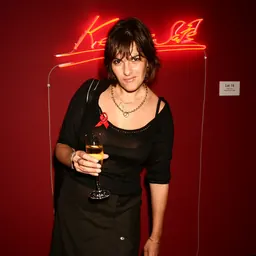
Do Not Abandon Me This collaboration took place over a span of two years with British artist Tracey Emin. The work was exhibited in London months after Bourgeois's death in 2010. The subject matter consists of male and female images. Although they appear sexual, it portrays a tiny female figure paying homage to a giant male figure, like a God. Bourgeois did the water colors and Tracey Emin did the drawing on top. It took Emin two years to decide how to figure out what she would contribute in the collaboration. When she knew what to do, she finished all of the drawings in a day and believes every single one worked out perfectly. I Lost You is about losing children, losing life. Bourgeois had to bury her son as a parent. Abandonment for her is not only about losing her mother but her son as well. Despite the age gap between the two artists and differences in their work, the collaboration worked out gently and easily.
Notable exhibitions and site-specific projects (selection) Bourgeois' work continues to be exhibited in museums and public spaces through the shape of site-specific installations around the world. For example, the Massachusetts Museum of Contemporary Art (MASS MoCA), North Adams, has presented a collection of the artist's pieces in marble and other materials for nearly a decade.
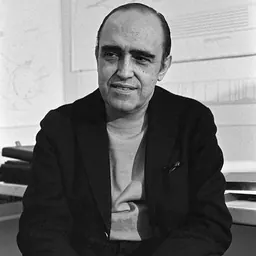
The large-scale sculpture Maman, acquired by the Itaú Cultural Institute in 1996 and lent to the São Paulo Museum of Modern Art, Brazil, was sent on a multi-city tour to institutions and public areas such as the Inhotim Institute in Minas Gerais, the Iberê Camargo Foundation in Porto Alegre, and then to the Oscar Niemeyer Museum in Curitiba.
In 2020, Bourgeois work was featured in a major group show at the Pérez Art Museum Miami, Florida. My Body, My Rules, presented an investigating about the diverse artistic practices of 23 female-identified artists in the 21st-century. Carolee Schneemann, Cindy Sherman, Lorna Simpson, Ana Mendieta, Wanguechi Mutu, Mickalene Thomas, and Francesca Woodman, were among them.
Selected works
Don’t just read it —
keep it.
Full-length biographies made to live with: read them, listen on the way to work, watch them tonight.
- E-book
- Audio
- Video
Instant download · yours to keep · every purchase keeps this site free
Important facts
People in Louise Bourgeois's life
Named in this biography and alive at the same time


Related people
Same field, nearest in time


Contemporaries
People whose lives overlapped Louise Bourgeois's






Frequently asked questions
Who was Louise Bourgeois?
French-American artist (1911-2010)
When was Louise Bourgeois born?
Louise Bourgeois was born on 25 December 1911 in 6th arrondissement of Paris.
When did Louise Bourgeois die?
Louise Bourgeois died on 31 May 2010 in New York City, Beth Israel Medical Center.
What was Louise Bourgeois's occupation?
Louise Bourgeois was a sculptor, visual artist, painter, illustrator, jewelry designer and photographer.
What nationality was Louise Bourgeois?
Louise Bourgeois was French and American.
Sources & further reading
Cite this page
APA: Biography.guide. (2026). Louise Bourgeois. https://biography.guide/louise-bourgeois/
MLA: "Louise Bourgeois." Biography.guide, https://biography.guide/louise-bourgeois/.
Chicago: "Louise Bourgeois." Biography.guide. https://biography.guide/louise-bourgeois/.
Data last updated: 2026-09-20 · Spot an error? Report a correction.
Page generated 2026-09-27 05:19 UTC