
About Louis Umfreville Wilkinson
Lived 1881 – 1966 (aged 84). Louis Umfreville Wilkinson was a British novelist.
Louis Umfreville Wilkinson (17 December 1881 – 12 September 1966) was a British author, lecturer and biographer who usually wrote under the pseudonym Louis Marlow. In a long career he associated with a number of the prominent literary figures of his day, in particular the Powys brothers John Cowper, Theodore ("T.F.") and Llewelyn. He also formed close friendships with Frank Harris, Somerset Maugham, and the notorious occultist and magician Aleister Crowley.
As a schoolboy at Radley College, Wilkinson instigated a lively correspondence with Oscar Wilde, then living in exile in France. After a short spell at Pembroke College, Oxford, from which he was dismissed for blasphemy, Wilkinson attended St John's College, Cambridge, where he established a formidable literary and personal reputation – he was known as "the Archangel". In 1905, while still at Cambridge, he wrote and published his first novel. After graduating, he embarked on a career as a lecturer in English literature, mainly in the United States, where he spent most of the following fifteen years and became part of a lively American literary scene. Wilkinson began to write seriously in 1915, and during the next forty years produced a substantial quantity of fiction and biography. In the 1920s he began using the Marlow name, which he retained in his published work for the remainder of his creative life. His books were usually well received by the critics, although their overall impact was modest and stirred little scholarly interest.
After the Second World War, Wilkinson caused a minor sensation when, at Crowley's cremation in December 1947, in accordance with the deceased's expressed wishes, he recited the latter's pagan poem "Hymn of Pan" and other sacrilegious texts – although he was not himself a follower. In addition to his novels he wrote several biographical works, and helped to edit the correspondence of the Powys brothers. After his memoir, Seven Friends, published in 1953, he faded into relative obscurity, producing little further published work before his death in 1966. He married four times, being twice widowed and twice divorced.
Life Early life, schooling, and Oscar Wilde
Wilkinson was born on 17 December 1881, in the Suffolk town of Aldeburgh, At the time of his son's birth, Wilkinson senior was running the Aldeburgh Lodge preparatory school, where Louis received his early education. Wilde and Wilkinson never met.
Lindsay Smith, in Oscar Wilde and the Cultures of Childhood , suggests that Wilkinson was a proxy for Wilde's son Cyril, with whom by law Wilde was not permitted contact. After Wilde's death on 30 November 1900, Wilkinson sent a wreath. Wilde's friend Robert Ross added Wilkinson's name to a list he prepared "of those who had shown kindness to [Oscar] during or after his imprisonment". This association with Wilde deeply affected Wilkinson, and led him to become a passionate advocate against England's repressive laws against homosexuality.
Oxford and Cambridge On leaving school in 1899, Wilkinson was accepted at Pembroke College, Oxford to study classics. Unhappy with the college's overt religiosity, he and a group of friends rejected Christianity and declared an allegiance to atheism. Wilkinson's anti-imperialist views and his opposition to the Boer War added to his unpopularity with the authorities, as did his continued championing of Wilde, a large photograph of whom decorated his rooms. He and his friends were suspected of conducting mock Masses and Confessions; The initial Powys connection to Wilkinson came through their respective mothers, who had been friends since girlhood.|group= n Other notable associates included the future literary editor J. C. Squire and the future colonial governor Ronald Storrs. Among his contemporaries he acquired the nickname "the Archangel", perhaps on account of his physical and mental attributes, In 1916 he wrote the pamphlet "Blasphemy and Religion", in which a fictitious lord and his son discuss two contrasting recent works by John Cowper Powys and his brother T.F: Wood and Stone and The Soliloquy of a Hermit. The dialogue suggested T.F's artistic superiority over his brother. In the same year Wilkinson published his second novel, The Buffoon, in which the principal character is "Jack Welsh", a satirised version of John Cowper Powis. Two more novels quickly followed: A Chaste Man (1917) and Brute Gods (1919). Wilkinson had by this time become acquainted with Frank Harris, the Irish-born journalist, editor and biographer of Wilde, who after a turbulent career in Britain had moved to America at the outset of World War I and later taken American citizenship. Harris considered Brute Gods to be Wilkinson's best work to date: "[It] deserves to be read very carefully even by those who think themselves masters of the story-telling art".
Harris was sufficiently taken with Wilkinson to include him in the third volume of his Contemporary Portraits series, published in 1920. His encomiums tend to treat Wilkinson, then nearing forty, as a newcomer to the literary scene: "I expect considerable things from Wilkinson ... [he] has the heart of the matter in him ... and so I bid him gird up his loins and give us his very best." Much later, Wilkinson described Harris as "a man of violent projections, brutal, gross, sentimental, and yet poetic ... his hand against every man's and every man's hand against him; but as a person, a talker, he was surely a man of genius".
Since 1915 Wilkinson had been associated with New York's Greenwich Village literary set, and acted as an unofficial mentor to the future poet, essayist and scholar Kenneth Burke. Wilkinson was a constructive critic of the younger man's early literary efforts, advised him what to read, and introduced him to Theodore Dreiser and other established writers. In time Burke developed an enthusiasm for the "moderns" was not encouraged by Wilkinson: "I'm sick to death of the whole blasted lot of them", the latter wrote, adding that James Joyce was absurdly overrated. Despite this division of view Wilkinson and Burke remained on good terms and continued to exchange occasional letters until 1926.
Popular British novelist, early 1920s–1946
In 1923 Wilkinson's marriage to Gregg ended in divorce, and he settled in England to resume his career as a novelist. In the same year he published Sackville of Drayton, a biography of George Sackville, 1st Viscount Sackville. The book was reviewed critically by the subject's great-great-grandniece, Vita Sackville-West, who, far from defending her distant kinsman, upbraided Wilkinson for his whitewashing of the viscount, long a pariah in her family. She characterised Sackville as "obstinate, arrogant, coarse-grained, lacking all statesmanlike vision, almost every word and act reported of him contradicts the case that Mr Marlow so gallantly endeavours to put up".
As Wilkinson aged, his literary output diminished. In 1953 he produced his final full-length work, Seven Friends, a compendium of brief lives of some of his more remarkable acquaintances: Wilde, Crowley, Harris, Maugham and the three Powys brothers. In 1954 he served on a committee formed to organise Wilde's centenary celebrations, including the erection of a commemorative plaque at Wilde's Tite Street address. In 1958 he edited and published Letters of John Cowper Powys to Louis Wilkinson, which the reviewer Douglas Hewitt described as "largely a libretto for a performance [by] a pair of outrageously shocking old men". Thereafter Wilkinson lived in quiet retirement; his last published work was a contribution to a series of essays on the works of T.F. Powys which appeared in 1964; Bumbore: a Romance, a short parody of John Cowper Powys's 1916 novel Rodmoor, was not published until 1969, after Wilkinson's death. the available fragment was published privately later. Wilkinson enjoyed a brief return to the public arena with several BBC Radio broadcasts of reminiscences, between February 1964 and May 1965. He died on 12 September 1966 at the home of his son Oliver, at Westcott Barton, near Oxford. |group= n but no significant scholarly appraisal of his work has been published. He is unlisted in modern works of literary reference such as The Oxford Companion to English Literature, although the New Cambridge Bibliography of English Literature (1972) supplies a list of his principal works. The main collection of Wilkinson's papers and manuscripts is held by the University of Texas at Austin, in the Harry Ransom Center; a number of letters to the educationist Oscar Browning, dating from 1903 to 1910, are held at King's College, Cambridge.
Wilkinson's role as the premier critic of the Powys brothers was recognised when Kenneth Hopkins dedicated his 1967 study The Powys Brothers to Wilkinson. The Times obituarist thought that Wilkinson had the qualities to be a leading literary critic, had he been prepared for the hard grind of regular reviewing. According to The Times he would be remembered, aside from his professional gifts, as "a ripe and rewarding personality with a genius for friendship." before her death in 1932. Wilkinson then married Diana Bryn; |group= n The four wives appear, lightly fictionalised, in Forth, Beast.
List of works Novels (Written as "Louis Marlow" except where stated. Main source: The New Cambridge Bibliography Volume 3.)
(as Louis Wilkinson) (as Louis Wilkinson) (as Louis Wilkinson)
(Preface by W. Somerset Maugham)
(French translation of Fool's Quarter Day, 1935)
(Novel) (Novel)
Short fiction and other writing (Written as Louis Wilkinson except where otherwise stated. Main source: Galactic Central Publications. (Biographical sketch) (Biography of George Sackville, 1st Viscount Sackville) (Biographical sketches)
Notes and references
Don’t just read it —
keep it.
Full-length biographies made to live with: read them, listen on the way to work, watch them tonight.
- E-book
- Audio
- Video
Instant download · yours to keep · every purchase keeps this site free
Important facts
People in Louis Umfreville Wilkinson's life
Named in this biography and alive at the same time

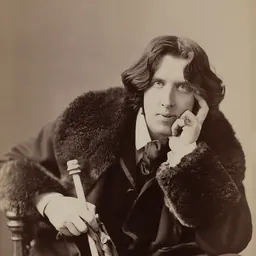



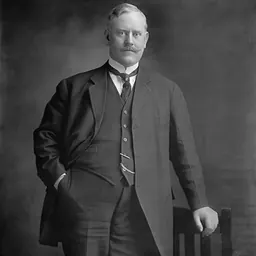
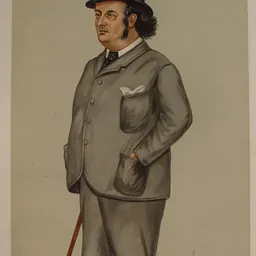
Related people
Same field, nearest in time




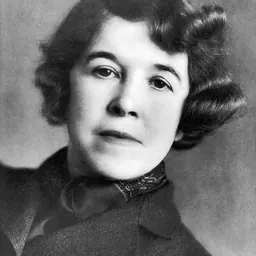
Contemporaries
People whose lives overlapped Louis Umfreville Wilkinson's



Frequently asked questions
Who was Louis Umfreville Wilkinson?
British writer (1881–1966)
When was Louis Umfreville Wilkinson born?
Louis Umfreville Wilkinson was born on 17 December 1881 in Aldeburgh.
When did Louis Umfreville Wilkinson die?
Louis Umfreville Wilkinson died on 12 September 1966 in Westcott Barton.
What was Louis Umfreville Wilkinson's occupation?
Louis Umfreville Wilkinson was a novelist.
What nationality was Louis Umfreville Wilkinson?
Louis Umfreville Wilkinson was British.
Sources & further reading
· Wikipedia: Louis Umfreville Wilkinson
Cite this page
APA: Biography.guide. (2026). Louis Umfreville Wilkinson. https://biography.guide/louis-umfreville-wilkinson/
MLA: "Louis Umfreville Wilkinson." Biography.guide, https://biography.guide/louis-umfreville-wilkinson/.
Chicago: "Louis Umfreville Wilkinson." Biography.guide. https://biography.guide/louis-umfreville-wilkinson/.
Data last updated: 2026-09-20 · Spot an error? Report a correction.
Page generated 2026-09-27 05:18 UTC