
About Louis Notari
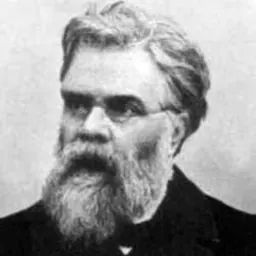
Lived 1879 – 1961 (aged 81). Louis Notari was a Monegasque writer, poet and politician.
Louis Notari (Monaco, 1879–1961) was a Monégasque poet, who was the pioneer of Monégasque literature. He wrote in the French and Monégasque languages.
Principal writings
He wrote in 1931 the final version of the text of the Monaco national anthem and he is considered as the first writer in Monégasque; before him, there was just oral literature. He wrote the lyrics to U Campanin de San Niculau and also three books:
A legenda de Santa Devota/Santa Devota (1927) -about the legend of Saint Devota Bülüghe munegasche (1941) Quelques notes sur les traditions de Monaco (1960)
Notari's writing in Monégasque has led to a veritable flowering of literature published in the language. A grammar and a dictionary by Louis Frolla and numerous other works, including by Georges Franzi, Louis Barral and Suzanne Simone (dictionary) Louis Canis, Jules Soccal, Lazare Sauvaigo and Robert Buisson, combine to allow this small country's own language to take its visible and permanent place among the other Romance languages.
However, while a substantial proportion of Notari's work was religious in inspiration, Monégasque is probably unique among the Romance languages in that it possesses, as yet, no Bible translation.
Former fascist sympathies
In his researches in Monégasque identity, Notari got in touch in the 1930s with Italian academics sustaining regional languages for a Latin federation pledged to the fascist Italian government. In this way, he wrote a few poems celebrating Benito Mussolini.
In the post-War era, however, any fascist sympathies which Notari may once have held were not stressed.
Personal legacy The decision by the late Prince Rainier III to sponsor Monégasque teachers in local schools owed much to the groundwork in promoting Monégasque which writers such as Notari and others laid. Louis Notari was also prominent in civil engineering in the Principality, and was noted for his work on Monaco's renowned exotic garden, which annually hosts large numbers of visitors from many countries.
His daughter Roxane became the first woman elected to the National Council in 1963.
A street in the suburb of La Condamine, Monaco, is named after Louis Notari. A library, the Bibliothèque Louis Notari, which serves as the national copyright library for Monaco, is also named after him.
Don’t just read it —
keep it.
Full-length biographies made to live with: read them, listen on the way to work, watch them tonight.
- E-book
- Audio
- Video
Instant download · yours to keep · every purchase keeps this site free
Important facts
People in Louis Notari's life
Named in this biography and alive at the same time




Related people
Same field, nearest in time




Contemporaries
People whose lives overlapped Louis Notari's

Frequently asked questions
Who was Louis Notari?
pioneer of Monégasque literature (1879-1961)
When was Louis Notari born?
Louis Notari was born on 2 October 1879 in Monaco.
When did Louis Notari die?
Louis Notari died on 3 September 1961 in Monaco.
What was Louis Notari's occupation?
Louis Notari was a writer, poet and politician.
What nationality was Louis Notari?
Louis Notari was Monegasque.
Sources & further reading
Cite this page
APA: Biography.guide. (2026). Louis Notari. https://biography.guide/louis-notari/
MLA: "Louis Notari." Biography.guide, https://biography.guide/louis-notari/.
Chicago: "Louis Notari." Biography.guide. https://biography.guide/louis-notari/.
Data last updated: 2026-09-20 · Spot an error? Report a correction.
Page generated 2026-09-27 05:03 UTC