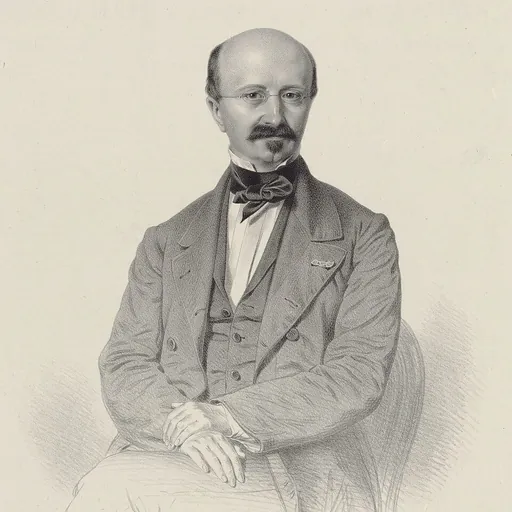
About Louis Niedermeyer
Lived 1802 – 1861 (aged 58). Louis Niedermeyer was a Swiss and French composer, music educator, music teacher and church musician.
Abraham Louis Niedermeyer (27 April 180214 March 1861) was a Swiss and naturalized French composer.
He chiefly wrote church music and a few operas. He also taught music and took over the École Choron, renamed École Niedermeyer de Paris, a school for the study and practice of church music, with students that include several eminent French musicians such as Gabriel Fauré and André Messager.
Life and career Niedermeyer was born in Nyon in 1802. His father was a music teacher from Würzburg, Germany, who had settled in Switzerland after his marriage. There, he studied piano with Ignaz Moscheles and composition with Emanuel Aloys Förster.
He then studied in Rome with Vincenzo Fioravanti, the choirmaster of the papal Chapel (1819) and in Naples with Niccolò Antonio Zingarelli.
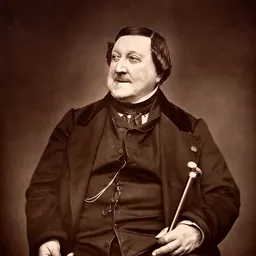
While in Rome, he met Gioachino Rossini, who befriended him and encouraged him to write operas. His first opera, Il reo per amore (Guilty for Love), premiered at the Teatro del Fondo in Naples in 1820 and encountered some success. After his studies, he came back to Switzerland and composed Le Lac.
Saint-Saëns credits Niedermeyer for bringing an important evolution to the genre:
Religious music and teaching career
In the last decades of his life, Niedermeyer gradually abandoned his operatic career and devoted himself primarily to sacred and secular vocal music.
As early as 1840, Niedermeyer and his friend, Prince de la Moskowa, had supported a revival of Baroque and Renaissance music and the rediscovery of composers such as Palestrina, Lassus or Victoria. Together, they established the Société des Concerts de Musique Vocale, religieuse et Classique.
In this capacity, Niedermeyer had a strong influence in the revival of religious music in France: The name Niedermeyer is indissolubly linked with the renaissance of religious music in France. Church choirs had almost entirely disappeared during the 1789 Revolution. Their subsequent revival had been hampered by the confiscation of clerical property and that of the émigré nobility who had supported them in the past ... Despite these unfavourable circumstances, Louis Niedermeyer founded a Society of Vocal and Religious Music in 1840, with the help of his 'pupil' Prince de la Moskowa.
This society performed sixteenth- and seventeenth-century works, and from 1843 these were published in an eleven-volume anthology.
The details of these performance did not, understandably, conform all that closely to modern musicological practice, containing as they did tempo indications (generally slow), dynamic markings and so-called 'corrections' of the harmony. Even so we must acknowledge Niedermeyer as a pioneer of polyphonic music in France, fifty years before the famous performances of the Chanteurs de St-Gervais, conducted by Charles Bordes and so much admired by Debussy. who died in 1834). It was later renamed the École Niedermeyer de Paris and remains opened to this day.
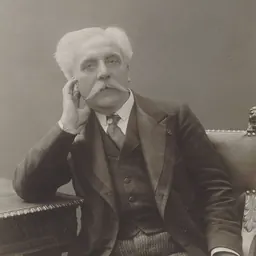
Several major composers received their musical training from the École Niedermeyer: His École de Musique Religieuse, known as École Niedermeyer, was a boarding school for boys. Its purpose was to train organists and choristers in an attempt to raise the standard of church music in France, and its success can be measured by the reputations of some of the musicians who received their training there: Gabriel Fauré, Eugène Gigout, Albert Périlhou and André Messager.
Shortly before his death, he published a manual for the use of organs in church music, Accompagnement pour Orgues des Offices de l'Église.
He died in Paris in 1861.
Don’t just read it —
keep it.
Full-length biographies made to live with: read them, listen on the way to work, watch them tonight.
- E-book
- Audio
- Video
Instant download · yours to keep · every purchase keeps this site free
Important facts
People in Louis Niedermeyer's life
Named in this biography and alive at the same time


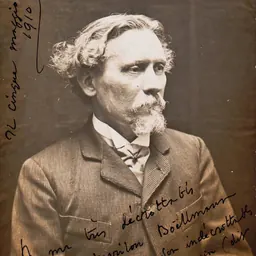
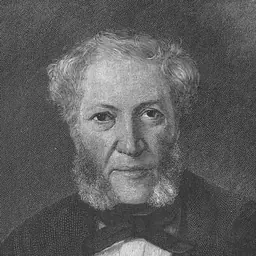


Related people
Same field, nearest in time
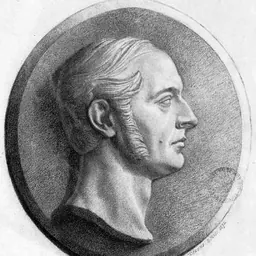

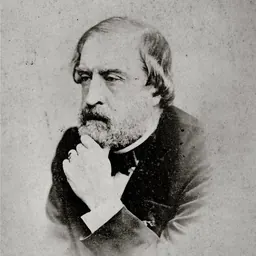
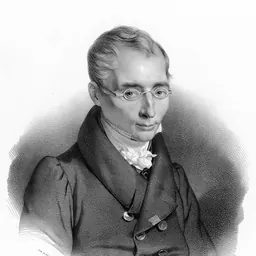

Contemporaries
People whose lives overlapped Louis Niedermeyer's





Frequently asked questions
Who was Louis Niedermeyer?
composer (1802-1861)
When was Louis Niedermeyer born?
Louis Niedermeyer was born on 27 April 1802 in Nyon.
When did Louis Niedermeyer die?
Louis Niedermeyer died on 15 March 1861 in 9th arrondissement of Paris, Paris.
What was Louis Niedermeyer's occupation?
Louis Niedermeyer was a composer, music educator, music teacher and church musician.
What nationality was Louis Niedermeyer?
Louis Niedermeyer was Swiss and French.
Sources & further reading
· Wikipedia: Louis Niedermeyer
Cite this page
APA: Biography.guide. (2026). Louis Niedermeyer. https://biography.guide/louis-niedermeyer/
MLA: "Louis Niedermeyer." Biography.guide, https://biography.guide/louis-niedermeyer/.
Chicago: "Louis Niedermeyer." Biography.guide. https://biography.guide/louis-niedermeyer/.
Data last updated: 2026-09-21 · Spot an error? Report a correction.
Portrait: Wikimedia Commons · author & licence
Page generated 2026-09-27 04:59 UTC