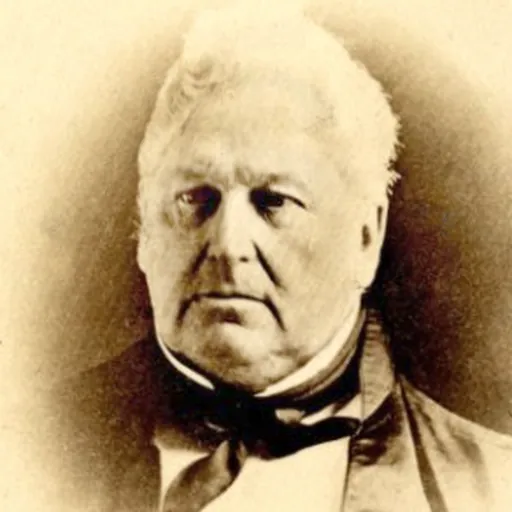
About Louis-Michel Viger
Lived 1785 – 1855 (aged 69). Louis-Michel Viger was a Canadian politician.
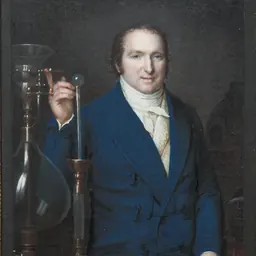
Louis-Michel Viger (; September 28, 1785 – May 27, 1855) was a lawyer, banker, businessman, seigneur and political figure in Lower Canada, and then in Canada East in the Province of Canada.
Family and early life
Viger was born in 1785 in Montreal, in the old Province of Quebec. His parents were Louis Viger and Marie-Agnès Papineau, who were part of a rising professional middle class. Their families were also heavily involved in the political life of the province of Lower Canada, created in 1791.
Louis-Michel's grandfather had been a shoemaker, but his four sons all advanced in the social scale. Louis-Michel's father, Louis, began as a blacksmith but eventually became an ironmaster. One of Louis-Michel's uncles, Denis Viger, began as a carpenter but developed a business selling potash to English markets. Another uncle, Joseph Viger, became a lumber merchant, while another uncle, Jacques Viger, was an artisan. All three uncles were elected to the Legislative Assembly of Lower Canada.
Louis-Michel's mother, Marie-Agnès Papineau, was the sister of Joseph Papineau, who began as a surveyor and then became a notary. Joseph Papineau also became a member of the Legislative Assembly.
Several of Louis-Michel's cousins became prominent in the political life of Lower Canada. Louis-Joseph Papineau, son of Joseph Papineau, became the leader of the Parti canadien (later called the Parti patriote) and the Speaker of the Legislative Assembly. He was the most significant leader in the struggles with the appointed governor of the province, and in the Lower Canada Rebellion of 1837–1838. Denis-Benjamin Papineau, brother of Louis-Joseph, was also involved in provincial politics, and became joint premier of the new Province of Canada. Another of Louis-Michel's cousins, Denis-Benjamin Viger, son of Denis Viger, was heavily involved with the Parti patriote and also became joint premier of the Province of Canada, while another cousin, Jacques Viger fils, was the first mayor of Montreal. A cousin on his mother's side, Côme-Séraphin Cherrier, also became a lawyer and was active in the Patriote movement.
La Banque du Peuple
Because of his intensive political involvement, Viger found he did not have time to continue with his legal practice after his election to the assembly. Instead, in 1835 he entered into the banking business in partnership with wealthy Montreal businessman Jacob De Witt. The Bank of Montreal had a near-monopoly on banking in the province, and was dominated by English-Canadian business interests. Viger's goal was the creation of a bank to provide credit for French-Canadian businessmen and farmers, breaking the Bank of Montreal's dominance. Viger and De Witt set up a private bank, originally called Viger, De Witt et Compagnie, and later La Banque du Peuple, as a partnership of Viger, De Witt, and ten other investors. The initial capitalisation, provided by the twelve partners, was £75,000, a large portion coming from De Witt.
Papineau was initially sceptical of Viger's plan, warning that the Banque would be "the tomb of your popularity and even your patriotism". As time passed, Papineau became more approving, seeing the value of the Banque to counter the English dominance of business credit and financing in Lower Canada. He encouraged French-Canadian businesses to use the Banque. Under the direction of Viger and De Witt, the Banque was successful.
Lower Canada Rebellion, 1837–1838
In March, 1837, the British House of Commons rejected the demands set out in the Ninety-Two Resolutions, and instead passed the Russell Resolutions, proposed by the Home Secretary, Lord John Russell. The Russell Resolutions would have increased the power of the Governor over the provincial finances, undercutting the existing authority of the elected Legislative Assembly. News of the Russell Resolutions immediately heightened tensions in Lower Canada. The British response appeared to cut off the option of peaceful constitutional change. Talk of rebellion increased.
Viger's support of the Patriote movement increased in response to the Russell Resolutions. He participated in public protest meetings organised by the Patriotes, and joined Papineau's call for a boycott of British goods. When the assembly met in August, he and De Witt appeared wearing clothes made from homespun cloth, part of the boycott. At one of the most significant public rallies in October 1837, the Assembly of the Six Counties, Viger appeared on the platform with Papineau and spoke immediately after his cousin.
As tensions grew, there were rumours that the Banque du Peuple was funnelling funds to the Patriotes to purchase arms and other supplies. In particular, there were suspicions that Denis-Benjamin Viger, who was one of the leaders of the Patriote movement, may have had an undisclosed financial interest in the Banque. Denis-Benjamin Viger was very successful financially, his picture was on the ten-dollar banknote issued by the Banque, and he had close family ties to Louis-Michel Viger and to Papineau.
When the Rebellion broke out in November 1837, Louis-Michel Viger was arrested and charged with treason. There was speculation that the British authorities arrested him to weaken the Banque. One of the directors of the Banque, Édouard-Raymond Fabre, then made a hurried trip to Saint Denis, where Papineau was staying, and met with him shortly before the Battle of Saint Denis. The reason for the trip and the meeting have never been identified. What is clear is that two days after the Patriote victory at Saint Denis, De Witt and the other directors of the Banque who were still at liberty published a sworn deposition that the Banque du Peuple had no role in funding the Patriotes.
Viger was detained in prison for nearly a year, but was never brought to trial. His lawyer, William Walker, made four different applications for habeas corpus over the course of 1837 and 1838. Viger was finally released in August, 1838, having posted bail of £2,000. When the Rebellion broke out again in November, 1838, he was again arrested, but was freed in December, 1838.
Once released from prison, Viger withdrew from public life, likely exhausted from his imprisonment. As well, his wife, Marie-Ermine, died in June, 1839. Viger spent the two years after his release attending to his personal affairs. He also handled the personal affairs of Papineau, who was in exile in the United States and then France until 1845.
Viger returned to public life. He joined in the protests in the Montreal area against the merger into the Province of Canada. Like Denis-Benjamin Viger and Louis-Hippolyte LaFontaine, he signed a petition against the union in 1840, criticising the support for union given by the Special Council and the Parliament of Upper Canada. In the general elections of 1841, Viger stood for election in his former riding of Chambly, campaigning as an opponent of the union. He was defeated by John Yule, who supported the union and the British governor general, Lord Sydenham. There was electoral violence, as was common at the time, and Viger was defeated by ten votes, after supporters of Yule seized control of the hustings. Following the elections, Viger, LaFontaine and four other defeated candidates filed elections petitions with the Legislative Assembly, seeking to have the elections in their ridings overturned for electoral violence and other irregularities, but the assembly dismissed the petitions on technical grounds.
In 1842, a vacancy occurred in the riding of Nicolet. Viger was elected to the Legislative Assembly in the resulting by-election. He joined the French-Canadian Group, along with his cousin Denis-Benjamin Viger and LaFontaine. In 1843, there was a major dispute over the role of the governor general and his relationship with the Executive Council. LaFontaine and almost all the members of the Council resigned, and were supported by a majority in the assembly, including Louis-Michel Viger. Denis-Benjamin Viger, however, took the side of Governor General Metcalfe, who appointed him to the Executive Council. When Metcalfe called the general elections in 1844, LaFontaine successfully challenged Denis-Benjamin Viger for control of the French-Canadian Group. Louis-Michel Viger chose not to stand for election.
In the general elections of 1848, LaFontaine and the French-Canadian Group carried a majority of seats in Canada East, and Robert Baldwin and the Reform group won a majority of seats in Canada West. Under the new principle of responsible government, Governor General Lord Elgin invited LaFontaine and Baldwin to form a government. LaFontaine appointed Viger to the Executive Council as receiver general. Viger had been an unsuccessful candidate in the general elections for the riding of Leinster, but he was elected in a by-election in the Terrebonne riding. Papineau, returned from exile and also elected to the assembly, criticised Viger for taking an appointment in the union government that he had originally opposed.
In the parliamentary session of 1849, held in Montreal, one of the major government initiatives was the Rebellion Losses Bill, which would provide compensation to residents of Lower Canada who had suffered property losses during the Rebellion. It was an important measure for LaFontaine, to demonstrate that the new system of responsible government could satisfy the political needs of French-Canadians. All of the members of the French-Canadian Group, including Viger, voted for the bill. It was strongly opposed by Tories, who saw it as a reward to French-Canadians for their rebellion. After the bill passed Parliament, it went to Governor General Elgin. The Tories pressured him to refuse to grant royal assent, but acting on the advice of LaFontaine and Baldwin, he granted assent on April 25, 1949. That night, Tory opponents of the bill began to riot in Montreal, eventually setting fire to the Parliament building. As a result, the members of Parliament decided to move the rest of their sessions to Toronto. Although he had supported the bill, Viger opposed the decision to move the Parliament from Montreal and resigned from the executive council in protest, continuing to sit as a backbencher in the assembly.
Viger was elected to the assembly again in the general elections of 1851, this time for the Leinster riding. He did not hold a position in the executive council. He retired from politics prior to the general elections of 1854.
Later life and death
Viger re-married in 1843, to Aurélie, the daughter of Joseph-Édouard Faribault. She was the seigneur of Saint-Ours in L'Assomption, which she had inherited after the death of her first husband. In 1848, Viger purchased the seigneury of Repentigny, an indication that he was financially well-off.
Even while he was involved in politics, Viger continued his business interests. Under the management of Viger and De Witt, the Banque du Peuple had survived and prospered. In 1844, they obtained a charter from the provincial Parliament, this time with a capitalisation of £200,000. In 1845, he was appointed president of the Banque, a position he held for the rest of his life, with De Witt as vice-president. In 1846, Viger was appointed an honorary director of a new bank, the Montreal City and District Savings Bank, set up to provide a savings bank for French-Canadians. That bank is still in business as of 2024, under the name Laurentian Bank of Canada.
Louis-Michel Viger died of a paralytic stroke in L'Assomption in 1855 and was buried at Repentigny. He left the seigneury of Repentigny and several other properties to his widow.
When he heard the news of Viger's death, Louis-Joseph Papineau wrote in a letter to Jean-Joseph Girouard, another veteran of the Patriote movement and the Rebellion:
Don’t just read it —
keep it.
Full-length biographies made to live with: read them, listen on the way to work, watch them tonight.
- E-book
- Audio
- Video
Instant download · yours to keep · every purchase keeps this site free
Important facts
People in Louis-Michel Viger's life
Named in this biography and alive at the same time



Related people
Same field, nearest in time


Contemporaries
People whose lives overlapped Louis-Michel Viger's

Frequently asked questions
Who was Louis-Michel Viger?
Canadian politician
When was Louis-Michel Viger born?
Louis-Michel Viger was born on 28 September 1785 in Montreal.
When did Louis-Michel Viger die?
Louis-Michel Viger died on 27 May 1855 in L'Assomption.
What was Louis-Michel Viger's occupation?
Louis-Michel Viger was a politician.
What nationality was Louis-Michel Viger?
Louis-Michel Viger was Canadian.
Sources & further reading
· Wikipedia: Louis-Michel Viger
Cite this page
APA: Biography.guide. (2026). Louis-Michel Viger. https://biography.guide/louis-michel-viger/
MLA: "Louis-Michel Viger." Biography.guide, https://biography.guide/louis-michel-viger/.
Chicago: "Louis-Michel Viger." Biography.guide. https://biography.guide/louis-michel-viger/.
Data last updated: 2026-09-21 · Spot an error? Report a correction.
Portrait: Wikimedia Commons · author & licence
Page generated 2026-09-27 04:59 UTC