
Louis-Mathieu Langlès
French academic, philologist, linguist, translator, author, librarian and orientalist
About Louis-Mathieu Langlès
Lived 1763 – 1824 (aged 60). Louis-Mathieu Langlès was a French librarian, linguist, translator, orientalist, philologist and curator.
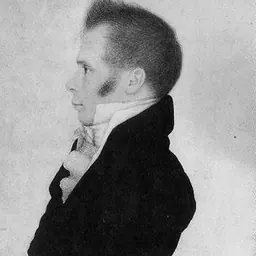
Louis-Mathieu Langlès (23 August 1763 – 28 January 1824) was a French academic, philologist, linguist, translator, author, librarian and orientalist. He was the conservator of the oriental manuscripts at the Bibliothèque Nationale in Napoleonic France and he held the same position at the renamed Bibliothèque du Roi after the fall of the empire.
Early life Langlès was born in 1763 in Pérennes, a section of the commune of Welles-Pérennes in the department of the Oise. His youthful efforts to obtain a military position were unsuccessful. Instead, he went to Paris where he enrolled at the Collège de France, studying Arabic and Persian.
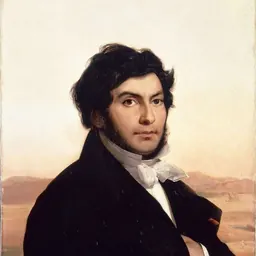
Scholarly career Along with Antoine Léonard de Chézy (1773–1832), Jean-François Champollion (1790–1832) and Jean-Pierre Abel-Rémusat (1788–1832), Langlès was a pupil and protégé of Silvestre de Sacy (1758–1838). Langlès's close links with the Collège de France were enhanced by Baron de Sacy's support, which also resulted in Chézy becoming the Collège's first Professor of Sanskrit, Rémusat becoming its first Professor of Chinese, and Champollion becoming its first Professor of Egyptology. The faculty encompassed Langlès as the college's Professor of Persian.
In 1785, he was attached to the Tribunal of the Marshals of France, which was at that time charged with suppressing duels. which is still operating under the revised name of Institut national des langues et civilisations orientales (INALCO).
The 1811 edition of Jean Chardin's Voyages de monsieur le chevalier Chardin en Perse et autres lieux de l'Orient (The Travels of Sir John Chardin in Persia and the Orient), was edited by Langlès. This is still today considered the standard version of Chardin's work. In 1819, he was elected to the American Philosophical Society in Philadelphia.
He died in Paris at the age of 81. His remains are interred in Père-Lachaise cemetery.
Honors and awards Institut de France, Chevalier. 1788 – History of the Mahrattas. 1790 – Alphabet Tartare Manchou. 1790 – Tartare Manchou Française.
Don’t just read it —
keep it.
Full-length biographies made to live with: read them, listen on the way to work, watch them tonight.
- E-book
- Audio
- Video
Instant download · yours to keep · every purchase keeps this site free
Important facts
People in Louis-Mathieu Langlès's life
Named in this biography and alive at the same time
Related people
Same field, nearest in time



Contemporaries
People whose lives overlapped Louis-Mathieu Langlès's





Frequently asked questions
Who was Louis-Mathieu Langlès?
French academic, philologist, linguist, translator, author, librarian and orientalist
When was Louis-Mathieu Langlès born?
Louis-Mathieu Langlès was born on 23 August 1763 in Welles-Pérennes.
When did Louis-Mathieu Langlès die?
Louis-Mathieu Langlès died on 28 January 1824 in Paris.
What was Louis-Mathieu Langlès's occupation?
Louis-Mathieu Langlès was a librarian, linguist, translator, orientalist, philologist and curator.
What nationality was Louis-Mathieu Langlès?
Louis-Mathieu Langlès was French.
Sources & further reading
· Wikipedia: Louis-Mathieu Langlès
· DBpedia: Louis-Mathieu Langlès
Cite this page
APA: Biography.guide. (2026). Louis-Mathieu Langlès. https://biography.guide/louis-mathieu-langles/
MLA: "Louis-Mathieu Langlès." Biography.guide, https://biography.guide/louis-mathieu-langles/.
Chicago: "Louis-Mathieu Langlès." Biography.guide. https://biography.guide/louis-mathieu-langles/.
Data last updated: 2026-09-20 · Spot an error? Report a correction.
Page generated 2026-09-27 05:20 UTC