
About Louis Leitz
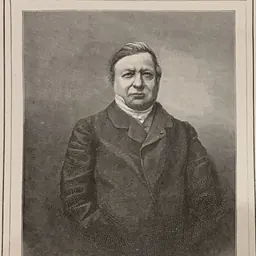
Lived 1846 – 1918 (aged 72). Louis Leitz was a German inventor, designer, entrepreneur and esselte Leitz GmbH & Co KG.
Louis Leitz (May 2, 1846 – May 18, 1918) was a German mechanic and entrepreneur who came to fame as the inventor of the Leitz ring binders later named after him.
Life
Childhood Johann Ludwig (Louis) Leitz was born on May 2, 1846, in Ingersheim, Kingdom of Württemberg, in southwest Germany. His were humble beginnings: His father Johann Ludwig Leitz (1810–1860) was a cooper, while his mother Christophine Friederike Durian (1812–1858) was the daughter of the local butcher Jakob Durian. Both his father and mother died while Johann Ludwig Leitz was still a child and in 1860, aged 14, his six siblings he was an orphan.
In keeping with the fashion of the day, Leitz later changed his middle name to the French name Louis.
Education and early career
Around 1860 Leitz began an apprenticeship as a turner in the metal-working trade at the Theilacker company in Neuenstadt am Kocher. His grandfather Christian Gottlieb had lived until 1807 in Neuenstadt am Kocher, outside Heilbronn. Until 1868, Leitz is said to have worked at the same time for mechanic Ernst Westhäuser in Heilbronn. Alongside his apprenticeship, he worked as a mechanic for his brother-in-law Jakob Trefz in a coal dealership in Stuttgart. Starting in 1870, he worked for a year in the Stuttgart-based Friedrich Rauh sewing machine factory; it manufactured not only sewing machines but also mechanisms for ‘bibliorhaptes’ – the predecessor of the modern file binder. It was there that Leitz gained his first experience in making bibliorhaptes, a patented mechanical binding device invented in France in the 19th century that innovated office management. When the French patent for the bibliorhapte expired in 1868 it became possible to manufacture the device in Germany, too. During Leitz’ time in the factory in Stuttgart he got to know mechanic Carl Heinrich, who was the manufacturing foreman for the Bibliorhapte mechanism. Until its sale in 1998, the company was managed by four executives who were all members of the fourth generation of Louis Leitz’ descendants.
Achievements
Founder and entrepreneur At the age of 25, Louis Leitz and Carl Heinrich together founded a “Mechanische Werkstatt und Fakturabücherei” on July 1, 1871. This mechanical workshop produced metal parts for filing systems and business ledgers and was located at Kasernenstraße 35 (today’s Leuschnerstraße) in Feuerbach, outside Stuttgart (today a district of Stuttgart). In 1872, only one year after the company had been established, co-founder and partner Heinrich withdrew. With support from his brother Jakob Leitz and another staff member, Louis Leitz continued the business. His wife Sophie Leitz also backed him up strongly during the early years, played an active role in the company, and at the same time looked after the family so that her husband could devote himself entirely to the business. He continued to develop the idea through 1896 and made some important changes to the development of ring binders. He came up with an innovative lever mechanism to open and close the ring arches by placing the lever outside the arches to make it easier to use. Leitz created the lever arch file, a standing binder with a riveted lever arch mechanism (the lever can be easily opened, closed and locked) and space-saving slots into the cover, thereby introducing the modern ring binder.
Leitz revolutionized office organization with his invention of the lever mechanism at the end of the 19th century. In 1903–4, he launched a lever-based file with a so-called eccentric locking mechanism and thus a roller on the office supplies market. He had patented the roller as early as 1902. This revolutionary mechanism is to be found more or less unchanged in all file binders. In 1911, a "finger hole" was introduced on the side of the binder to aid removal from crowded shelves and make it easier for users to pull it from a row on a shelf. The Bosch corporation in Stuttgart was one of the first local customers to procure Leitz file binders.
In 1901, Louis Leitz also invented the first standalone holepunch, the “Phoenix”; until that point, the hole punch had been attached to the file. That same year, the spines of Leitz file binders first boasted the name “Leitz-Ordner A” in the brushstroke script with Chinese overtones still known to this day. Leitz had registered it as a trademark on October 24, 1901. With his idea of having the company name printed as a brand name on the file binders’ spine Leitz laid the foundations on which the Leitz file binder became the generic term for file binders in Germany and a generally used symbol of orderly office management. This was followed in 1907–8 by giving the binder spine a likewise readily recognizable image with the black-and-green and/or black-and-white green-marbled paper backing. From 1911 onwards, the green Leitz logo on a black background was printed onto the binder spines.
In 1913, Louis Leitz founded the letter-file convention together with six other German letter-file factory owners, among them Soennecken (his rival at the time). The objective was to counteract the strong competition in the market by reaching cartel agreements, in particular jointly set prices.
The strong demand for office supplies in the wake of the increasing bureaucratization of government agencies and corporations alike spurred his company's growth: By 1891, Leitz already had a payment roll of 15 and relocated his business premises to a new building that combined his home and business at Traubenstraße 9 in Feuerbach; the family lived on the upper floors. Between 1894 and 1898, as demand for Leitz office supplies continued to soar, and sales rose, the payroll almost tripled from 26 to 63 employees, and in 1897 the company then moved to a modern factory building in Siemensstraße 64 in Feuerbach which Louis Leitz had had purpose-built and where it is headquartered to this day. In 1905, Leitz opened a branch office in Vienna and in 1911 a first branch factory in Berlin. In 1914, shortly before World War I broke out the Leitz company's payroll had already topped 200. In 1918, Leitz died in Stuttgart.
In 1998, the firm he had founded as a family-owned mid-sized company managed by the fourth generation of family members was sold to Swedish office supplies corporation Esselte. Since 2016, it has been part of the US ACCO Brands corporation and now operates under the name of LEITZ ACCO Brands GmbH & Co. KG.
The eponymous, non-profit Louis Leitz Foundation was founded in his memory on 30 November 2001 by the third, fourth and fifth generation of Louis Leitz' descendants. The foundation is dedicated to supporting projects in the fields of education, training, and work for disadvantages people or people who find themselves in distress. The foundation's budget is 120,000 euros per annum.
In his honor
The Louis Leitz School in Stuttgart’s Feuerbach district was named after him. The Louis Leitz Stiftung in Stuttgart bears his name. Streets are named after him in Bremen's Oberneuland district, Ingersheim, and Stuttgart. A stele was erected in his memory in his native Ingersheim on the occasion of the 175th anniversary of his birth. Since 2021, the permanent exhibition at Haus der Geschichte Baden-Württemberg in Stuttgart has included a display case with exhibits on Louis Leitz.
Don’t just read it —
keep it.
Full-length biographies made to live with: read them, listen on the way to work, watch them tonight.
- E-book
- Audio
- Video
Instant download · yours to keep · every purchase keeps this site free
Important facts
People in Louis Leitz's life
Named in this biography and alive at the same time


Related people
Same field, nearest in time


Contemporaries
People whose lives overlapped Louis Leitz's



Frequently asked questions
Who was Louis Leitz?
German inventor (1846–1918)
When was Louis Leitz born?
Louis Leitz was born on 2 May 1846 in Ingersheim.
When did Louis Leitz die?
Louis Leitz died on 18 May 1918 in Stuttgart.
What was Louis Leitz's occupation?
Louis Leitz was an inventor, designer, entrepreneur and esselte Leitz GmbH & Co KG.
What nationality was Louis Leitz?
Louis Leitz was German.
Sources & further reading
Cite this page
APA: Biography.guide. (2026). Louis Leitz. https://biography.guide/louis-leitz/
MLA: "Louis Leitz." Biography.guide, https://biography.guide/louis-leitz/.
Chicago: "Louis Leitz." Biography.guide. https://biography.guide/louis-leitz/.
Data last updated: 2026-09-22 · Spot an error? Report a correction.
Page generated 2026-09-27 04:59 UTC