
About Louis Klein
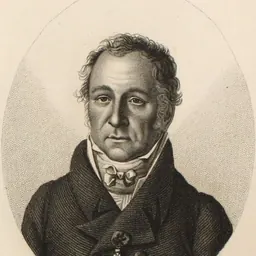
Lived 1761 – 1845 (aged 84). Louis Klein was a French politician and military personnel.
Dominique Louis Antoine Klein (; 19 January 1761 – 2 November 1845) served in the French military during the French Revolutionary Wars and the Napoleonic Wars as a general of cavalry.
Initially part of the house guard at the royal residences for Louis XVI, Klein left the military in 1787. During the French Revolution, he enlisted and rose rapidly from a lieutenant to a brigadier general; he participated in the French invasion of southwestern Germany in 1796, and was part of the Army of the Danube in 1799. His cavalry played critical roles in the battles of Austerlitz and Jena and Auerstadt. Following the Prussian campaign, he retired from active service, entered politics, and performed administrative duties in Paris.
Klein served in the French Senate, and voted for Napoleon Bonapartes abdication in 1814; he did not participate in the Hundred Days, and Louis XVIII raised him to the French peerage upon the second restoration.
Military career
Initially, Klein served in the royal house guard for the King of France, holding the prestigious position as guard of the gate. He left military service in 1787. After the French Revolution began in 1789, he rejoined the military and in 1792, he was listed as an infantry lieutenant in the Army of the North. His cavalry regiment participated in the Battle of Fleurus.
French Revolutionary Wars
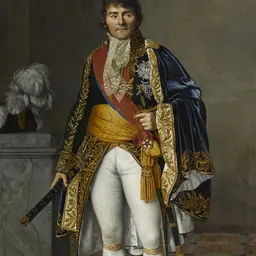
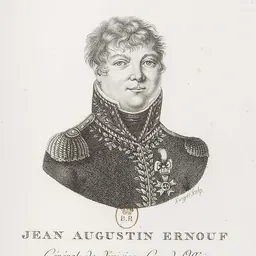
By 1795, Klein was a brigadier general in the Army of Sambre-et-Meuse, where he replaced Adjutant-General Michel Ney. Klein was appointed general of division in 1799 and crossed the Rhine at Kehl in Jean-Baptiste Jourdans Army of the Danube. He commanded the right flank of the Advance Guard, under command of François Joseph Lefebvre. His command included the 4th and 5th Hussar Regiments, the 17th Dragoons, the 1st Chasseurs à cheval, a light horse regiment, two companies of horse artillery, two of foot artillery, and a company of sappers. At the Battle of Ostrach, Klein's cavalry helped to secure the village of Hosskirch, a strategically important forward post, prior to the general engagement. After the French losses at Ostrach and the subsequent Battle of Stockach, Jourdan ordered a general withdrawal to the Black Forest. The reserve cavalry and most of Klein's division crossed the mountains and quartered near Offenburg, where their horses could find better forage. Despite the organized withdrawal and the relatively secure positions on the western side of the Black Forest, the army was in shambles. Jourdan placed his chief of staff Jean Augustin Ernouf in provisional command and went to Paris to complain about the state of his army, its equipment and its provisions. Discipline in the ranks disintegrated. Most of the divisional generals left their posts, except for Pierre Marie Barthélemy Ferino, Joseph Souham, Dominique Vandamme and Klein. In May, Andre Massena received overall command of both the Army of the Danube and the Army of Helvetia; Klein's column joined Massena near Zurich.
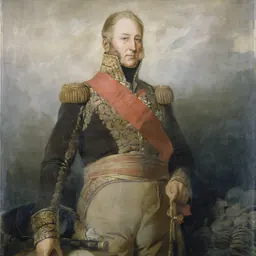
In May 1799, Klein led a cavalry division of 2,010 prior to the Battle of Winterthur. There, as the dispositions developed for the Second Battle of Zurich on 25 September, Klein remained under direct command of Massena. Klein prepared to support either the troops of Jean Thomas Guillaume Lorge or Édouard Adolphe Casimir Joseph Mortier, on the north or south flanks respectively, as required. The Austrian assault fell hardest on Mortier, who was driven back from the strategically placed Dietikon. Klein's reserve enabled the French to retake and hold the village. This convinced the Russian commander in Zurich, Alexander Korsakov, that he should draw his troops back to the city fortifications.
Returning to France after the Peace of Lunéville in 1801, Klein remained inactive for several months. In 1802 he was recalled to military service as Inspector of Cavalry. He was given command of the 1st Division of Dragoons and in 1804 was made a Grand Officer of the Legion d'honneur. Klein's division did not take part in the Battle of Dürenstein, although his dragoons were with Mortier and Gazan immediately prior to the engagement.
Klein's division was part of the decisive defeat of the Austrian and Russian force at the subsequent Battle of Austerlitz three weeks later. Initially, his dragoons, assigned to support Friant's division, occupied a position of observation on the Marchfeld. The rest of his dragoons remained near Stockerau, just to the west of Vienna, and these dragoons, plus Louis-Nicolas Davout's, François Antoine Louis Bourcier's and Marc Antoine Beaumont's divisions of dragoons, formed a cordon between Pohrlitz and Pressburg, and could move either west or east, depending on the actions of the Archduke Charles or the Russian commander Kutuzov. Consequently, Klein's dragoons, held the road between Austerlitz and Vienna, eliminating a possible Austrian retreat.
Promotions & Awards 1777–1787, Guard of the Gate. Some historians assert that Klein believed him, and learned too late that he had been deceived. Others assert that Klein's force was too weak to resist the greater Prussian numbers. He had only 800 cavalry and Antoine Lasalle, to the west, had two regiments. Blücher had either 7,000, according to Charles Mullié, or more than 12,000 Prussian infantry, artillery and horse. Regardless, Klein and Lasalle either pragmatically maintained the fiction or fell for the ruse; Blücher and his Prussians passed through the village. Charles Mullié maintains that Klein vowed revenge; with his division, he pursued and attacked Blücher force the following day. He took 10 Prussian standards and 1,000 prisoners, including a general officer, although he did not capture Blücher.
Administrative and political duties Following the Prussian campaign, Napoleon appointed Klein as governor of the Imperial palace. In 1807, Klein was called to the Senate. In 1808, he was raised by letters of patent to a count of the empire and awarded the Grand Cordon of the Order of the Bavarian Lion.
In 1808, Klein divorced Pierron, with the Emperor's permission, and on 2 July of that year remarried to Caroline of Valangin-Arberg, daughter of the Countess of Arberg, a lady-in-waiting to the Empress Josephine de Beauharnais. In this marriage, he had a son, Eugene Joseph Napoleon, who was born in 1813 in Paris and died in 1872 . Louis Klein died 2 November 1845 in Paris.
Don’t just read it —
keep it.
Full-length biographies made to live with: read them, listen on the way to work, watch them tonight.
- E-book
- Audio
- Video
Instant download · yours to keep · every purchase keeps this site free
Important facts
People in Louis Klein's life
Named in this biography and alive at the same time




Related people
Same field, nearest in time



Contemporaries
People whose lives overlapped Louis Klein's




Frequently asked questions
Who was Louis Klein?
French general (1761–1845)
When was Louis Klein born?
Louis Klein was born on 24 January 1761 in Blâmont.
When did Louis Klein die?
Louis Klein died on 2 November 1845 in Paris.
What was Louis Klein's occupation?
Louis Klein was a politician and military personnel.
What nationality was Louis Klein?
Louis Klein was French.
Sources & further reading
Cite this page
APA: Biography.guide. (2026). Louis Klein. https://biography.guide/louis-klein/
MLA: "Louis Klein." Biography.guide, https://biography.guide/louis-klein/.
Chicago: "Louis Klein." Biography.guide. https://biography.guide/louis-klein/.
Data last updated: 2026-09-25 · Spot an error? Report a correction.
Page generated 2026-09-27 05:12 UTC