
About Louis Hempelmann
Lived 1914 – 1993 (aged 79). Louis Hempelmann was an American physician, known for Manhattan Project.
Louis Henry Hempelmann Jr, (March 5, 1914 – June 21, 1993) was an American physician who was the director of the Health Group at the Manhattan Project's Los Alamos Laboratory during World War II. After the war he was involved in research into radiology. A paper he published in the New England Journal of Medicine in 1949 warned of the dangers of using fluoroscopes to measure the size of children's feet.
Early life Louis Henry Hempelmann Jr. was born in St. Louis, Missouri, on March 5, 1914, the son of Louis Henry Hempelmann Sr. Both his father and grandfather were physicians. He earned both his undergraduate and medical degrees from Washington University in St. Louis, from which he graduated in 1938. He did his internship in pathology at Barnes Hospital in St. Louis, and then his residency at Peter Bent Brigham Hospital in Boston.
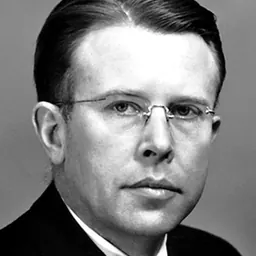
In 1941, Sherwood Moore, the director of Mallinckrodt Institute of Radiology in St. Louis, and a friend of his father, offered Hempelmann a position there. The Mallinckrodt Institute was building a cyclotron in order to treat cancer patients with neutrons. Hempelmann received a Commonwealth Fellowship to study at the University of California, Berkeley, where there was a cyclotron at the Radiation laboratory run by Ernest Lawrence, its inventor. For the next four months Hempelmann worked with Robert Stone, who was treating patients with neutrons, and Lawrence's brother, John H. Lawrence, who ran the radioactive phosphorus clinic there. Oppenheimer took the two doctors to see the Los Alamos Laboratory, which was then under construction, in March 1943, and Hempelmann moved there in April 1943, Wives were encouraged to work at Los Alamos, so she became his secretary. Hempelmann and Elinor became close friends of the Oppenheimers,
The first year at Los Alamos was uneventful for the Health Group, which researched the extent of variation in blood counts. The range of variation was found to be higher than expected. This might have resulted in misdiagnosis of overexposure. Serious health issues began to occur in 1944, with the arrival of the first samples of plutonium. Plutonium is similar to radium in that it is deposited in the bones, where its alpha radiation may cause sarcoma, but while radium is chemically similar to calcium and becomes part of living bone, plutonium is deposited on the surface membranes. It can also damage the kidneys. Hempelmann visited a Boston luminous paint company to see how it was handled in industry. When he returned he established three special committees in the Chemistry and Metallurgy Division: one to procure instrumentation to measure radioactive contamination; one to design equipment for handling plutonium; and one to develop standards and procedures for its safe handling.
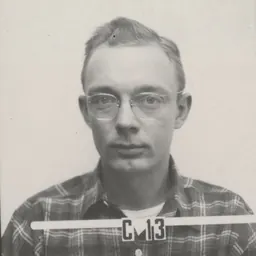
An accident occurred on August 1, 1944, when chemist Donald Mastick ingested some plutonium when a vial he was handling exploded. Mastick's face was scrubbed, but his skin remained contaminated with a microgram of plutonium. Hempelmann gave him a mouthwash of trisodium citrate, which would combine with the plutonium to form a soluble liquid, and sodium bicarbonate, which would make it solid again. This removed most of the plutonium. Nonetheless, for days afterwards his breath could make the needle on an ionization chamber go off the scale, even from across the room. Hempelmann used a stomach pump to retrieve plutonium that had been swallowed, recovering about 60 nanograms. Urine assays indicated that less than 1 microgram remained in his body. Some was still detectable thirty years later.
The accident brought to a head dissatisfaction in both the Health Group and the Chemistry and Metallurgy Division with the progress of research into biological aspects of plutonium. A committee was established consisting of Hempelmann, Joseph W. Kennedy and Arthur Wahl to develop tests for overexposure to plutonium. At the time the main means of testing was by taking swabs from the nostrils. A better assay test was devised in January 1945 that could detect plutonium in urine in quantities as low as 10−10 micrograms per liter. The test came into general use in April 1945, just in time for the arrival of larger quantities of plutonium produced at the Hanford Site. Because it was time-consuming, reliance was still placed on nose tests, those that registered as most exposed being singled out for urine tests. These indicated that four persons had more than the microgram of plutonium considered safe.
Plutonium was not the only radioactive hazard. There was also polonium, although it never became a serious problem. In 1944 three more dangers appeared: the water boiler aqueous homogeneous reactor, which occasionally sprang a leak and emitted radioactive gases; the RaLa Experiments, which used quantities of highly radioactive materials; and critical assembly experiments, which were particularly dangerous because they seemed so safe that they engendered a sense of complacency in the experimenters. These experiments resulted in two fatal accidents, causing the deaths of physicists Harry Daghlian in August 1945 and Louis Slotin in May 1946. Hempelmann later published a detailed account of these accidents in the Annals of Internal Medicine. Hempelmann and his collaborator George L. Voelz continued to study the 27 survivors of these accidents. None showed any signs of radiogenic disease until 1990, when one developed osteosarcoma.
Hempelmann was involved in the planning of the Trinity nuclear test in July 1945, and handled the safety planning for the 100-ton test that preceded it. He delegated responsibility for the main test to Nolan, but had to take over when Nolan was called away to help transport components of the Little Boy bomb to Tinian. In 1946 Hempelmann assisted with the Operation Crossroads nuclear tests in the Pacific. The Oppenheimer children, Peter and Toni, stayed with the Hempelmanns during the Oppenheimer security hearing. Hempelmann died on June 21, 1993, at Strong Memorial Hospital in Rochester, New York, from complications following a stroke. His remains were cremated and interred in Bellefontaine Cemetery in St. Louis.
Don’t just read it —
keep it.
Full-length biographies made to live with: read them, listen on the way to work, watch them tonight.
- E-book
- Audio
- Video
Instant download · yours to keep · every purchase keeps this site free
Important facts
People in Louis Hempelmann's life
Named in this biography and alive at the same time

Related people
Same field, nearest in time


Contemporaries
People whose lives overlapped Louis Hempelmann's


Frequently asked questions
Who was Louis Hempelmann?
American physician (1914–1993)
When was Louis Hempelmann born?
Louis Hempelmann was born on 5 March 1914 in St. Louis.
When did Louis Hempelmann die?
Louis Hempelmann died on 21 June 1993 in Strong Memorial Hospital.
What was Louis Hempelmann's occupation?
Louis Hempelmann was a physician.
What was Louis Hempelmann known for?
Louis Hempelmann was known for Manhattan Project.
What nationality was Louis Hempelmann?
Louis Hempelmann was American.
Sources & further reading
Cite this page
APA: Biography.guide. (2026). Louis Hempelmann. https://biography.guide/louis-hempelmann/
MLA: "Louis Hempelmann." Biography.guide, https://biography.guide/louis-hempelmann/.
Chicago: "Louis Hempelmann." Biography.guide. https://biography.guide/louis-hempelmann/.
Data last updated: 2026-09-22 · Spot an error? Report a correction.
Page generated 2026-09-27 05:29 UTC