
About Louis Émile Gratia
Lived 1878 – 1962 (aged 83–84). Louis Émile Gratia was a musicologist and music arranger.
Louis Émile Georges Gratia (17 September 1878 – 31 October 1962) was a French musician, composer, musicologist, musical editor and arranger.
Life Gratia was born in Lunéville, (Meurthe-et-Moselle). His father was the painter Charles Louis Gratia (1815–1911) who, after his return to France in 1867, settled for a time in Lunéville and remarried.
Gratia specialized in music education, making editions of piano music and arrangements for effective piano pedagogy and acquisition of music theory. His work won the attention and support of important French musicians and teachers like organist Charles-Marie Widor and pianist Isidor Philipp.
He died in Clichy (Hauts-de-Seine), in the suburbs of Paris.
Works Writings Étude du piano: Comment réaliser un maximum de progrès à l’aide d'un minimum de travail (Piano study: how to make the most progress with the least work). Preface by Charles-Marie Widor (Paris: Delagrave 1914). Instruments de musique du XXe siècle: Les conséquences pédagogiques, professionnelles, sociales, artistiques (Musical instruments of the 20th century; pedagogical, professional, social, and artistic consequences) (Paris: Heugel, 1931). Répertoire pratique du pianiste: Précedé de conseils préliminaires pour apprendre les notes et le solfège, aider au choix et à l'étude des morceaux : accompagné de 20 exemples musicaux (How a pianist should practice: with preliminary advice for learning the notes and music theory, to help in the choice and study of pieces, accompanied by 20 musical examples). Preface by Isidor Philipp (Paris: Delagrave, 1931).
Compositions L'Harmonium pour tous (23 pieces) Abrégé des grands maîtres recueil (2 volumes with 20 pieces each) Danse de la fée Dragée. Extrait simplifié du ballet de Casse-Noisette de Tschaïkowsky (Dance of the sugar plum fairy, simplified selection of Tchaikovsky's ballet The Nutcracker) (Paris: L. Philippo, 1952). Valse des fleurs. Extrait simplifié du ballet de Casse-Noisette de Tschaïkowsky (Waltz of the flowers, simplified selection from Tchaikovsky's ballet The Nutcracker) (Paris: L. Philippo, 1952).
Don’t just read it —
keep it.
Full-length biographies made to live with: read them, listen on the way to work, watch them tonight.
- E-book
- Audio
- Video
Instant download · yours to keep · every purchase keeps this site free
Important facts
People in Louis Émile Gratia's life
Named in this biography and alive at the same time
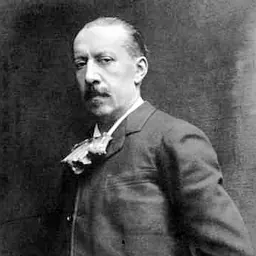
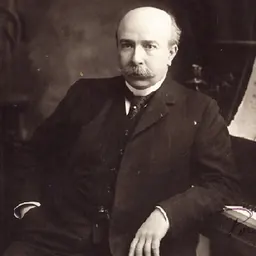

Related people
Same field, nearest in time

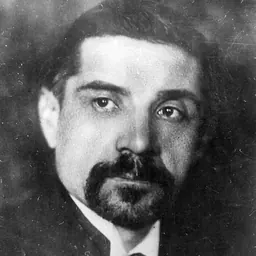

Contemporaries
People whose lives overlapped Louis Émile Gratia's




Frequently asked questions
Who was Louis Émile Gratia?
French music educator 1878-1962
When was Louis Émile Gratia born?
Louis Émile Gratia was born in 1878 in Lunéville.
When did Louis Émile Gratia die?
Louis Émile Gratia died in 1962 in Clichy.
What was Louis Émile Gratia's occupation?
Louis Émile Gratia was a musicologist and music arranger.
Sources & further reading
· Wikipedia: Louis Émile Gratia
Cite this page
APA: Biography.guide. (2026). Louis Émile Gratia. https://biography.guide/louis-emile-gratia/
MLA: "Louis Émile Gratia." Biography.guide, https://biography.guide/louis-emile-gratia/.
Chicago: "Louis Émile Gratia." Biography.guide. https://biography.guide/louis-emile-gratia/.
Data last updated: 2026-09-20 · Spot an error? Report a correction.
Page generated 2026-09-27 05:15 UTC