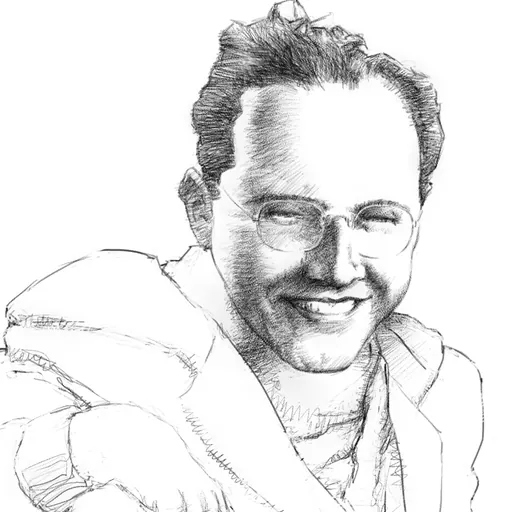
About Lou Fine
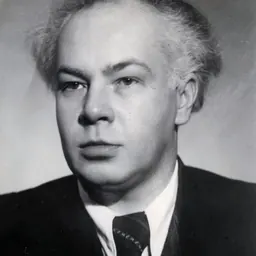
Lived 1914 – 1971 (aged 56). Lou Fine was an American illustrator and comics artist.
Louis Kenneth Fine (November 26, 1914 – July 24, 1971) was an American comic book artist known for his work during the 1940s Golden Age of comic books, where his draftsmanship became an influential model to a generation of fellow comics artists.
Biography
Early life and career Hit Comics #5 (Nov. 1940). This cover, used in The Steranko History of Comics 2 (1972), helped introduce Fine's art to a new generation. Lou Fine was born to a Jewish family in either the Manhattan or Brooklyn boroughs of New York City, the son of a house painter, Meyer, who was possibly a Russian immigrant. (which strip originator Jack Kirby had used in previous issues). Other early pseudonyms Fine employed (reflecting the fledgling Eisner & Iger's attempts to convince publishers they had a large stable of artists) were Curt Davis and Basil Berold. Eisner would later say, "I had respect for his towering kind of draftsmanship. He was the epitome of the honest draftsman. No fakery, no razzle-dazzle — very direct, very honest in his approach". (a device commonly associated with Kirby).
Advertising and comic strips Leaving comic books in 1944, Fine segued into newspapers by drawing Sunday advertising comics. Starting out at Johnstone and Cushing, he formed his own company with Don Komisarov, whom he had met doing The Throp Family for Liberty in 1946. He had many accounts, but his two most enduring were the series he did for Philip Morris USA and the Sam Spade strip for Wildroot Cream-Oil.
He later drew the comic strips Taylor Woe (1949), Adam Ames (1959) and Peter Scratch (1965). In a single return to comic books, he contributed to a toy company's custom one-shot, Wham-O Giant Comics (1967), illustrating a two-page story, "The Man From Aeons", starring a prehistoric man who, though named "Tor", was not the same-name caveman character created in the 1950s by Joe Kubert.
Fine also worked on the strip Space Conquerors in the magazine Boys' Life from the late 1960s until his death. He and writer Gill Fox, whom he had met during his time with Eisner & Iger and remained in contact with, were developing new comic strips when Fine was found dead of a heart attack in his studio.
Later life By the late 1960s, Fine lived in Lido Beach, New York, on Long Island, owning two houses there.
Collections Fine's Spirit work has been reprinted in DC Comics' hardcover collections The Spirit Archives vols. 5 to 9 (2001–2003), spanning July 1942 to December 1944.
Selections of Fine's other comics works, including the Flame, Doll Man, Uncle Sam, the Ray, and Black Condor, have been reprinted in Pure Imagination's Lou Fine Reader, by Greg Theakston, vols. 1 (2003, ) and 2.
Don’t just read it —
keep it.
Full-length biographies made to live with: read them, listen on the way to work, watch them tonight.
- E-book
- Audio
- Video
Instant download · yours to keep · every purchase keeps this site free
Important facts
People in Lou Fine's life
Named in this biography and alive at the same time




Related people
Same field, nearest in time





Contemporaries
People whose lives overlapped Lou Fine's




Frequently asked questions
Who was Lou Fine?
artist (1914–1971)
When was Lou Fine born?
Lou Fine was born on 26 November 1914 in New York City.
When did Lou Fine die?
Lou Fine died on 24 July 1971.
What was Lou Fine's occupation?
Lou Fine was an illustrator and comics artist.
What nationality was Lou Fine?
Lou Fine was American.
Sources & further reading
Cite this page
APA: Biography.guide. (2026). Lou Fine. https://biography.guide/lou-fine/
MLA: "Lou Fine." Biography.guide, https://biography.guide/lou-fine/.
Chicago: "Lou Fine." Biography.guide. https://biography.guide/lou-fine/.
Data last updated: 2026-09-23 · Spot an error? Report a correction.
Portrait: Wikimedia Commons · author & licence
Page generated 2026-09-27 05:06 UTC