
About Lottie Mwale
Lived 1952 – 2005 (aged 53). Lottie Mwale was a Zambian boxer.
Lottie Mwale (14 April 1952 – 18 October 2005) was a Zambian male Light Heavyweight-class boxer who was Commonwealth and African Boxing Union champion for a period of six years. Mwale also won the World Boxing Council (WBC) International title after defeating Ray Acquaye of Ghana in eight rounds in Lusaka in December 1990.
Early life Mwale was born in Kitwe, Zambia (then Northern Rhodesia) on 14 April 1952. He grew up in Wusakile and went to Ndeke Primary School. He lived close to Scrivener Stadium, the home of Rhokana United and had a keen interest in football, playing as a goalkeeper in neighbourhood matches. He also exhibited musical ability by playing drums in his early teens, and harboured ambitions of making it in mainstream music. After taking up boxing for fun, his friends noticed his natural ability and talked him into taking it up seriously so he decided to put his hands to a different use.
His brother-in-law was professional boxer Jackson Mambwe who also played a role in luring Mwale into the boxing ring, giving him his initial coaching and encouraging him to continue with the sport. Mwale's mother was not happy with his chosen path but when she realized he had set his heart on a career in boxing, she gave in and started supporting him.
Boxing career Mwale began his career at Rhokana Amateur Boxing Club in Kitwe and first entered the ring when he was 16. He soon fell in love with the sport and by the time he joined Zambia Army-sponsored Green Buffaloes Boxing Club, he was already a formidable amateur boxer. He reigned as middleweight champion in East and Central Africa and was appointed captain of the Zambia national boxing team in 1973. That same year, Zambia’s new golden boy, who would be known for some controversy during his career sparked off a row with officials during a triangular boxing tournament involving Zambia, Kenya and Zaire when he lost a fight against a Kenyan boxer and later claimed that he ‘just didn't want to win.’ An inquiry was almost instituted until Mwale apologised. Mwale made it into the finals with a majority points decision over Englishman Robert Davies though he suffered an injury to his right hand. An x-ray revealed that the injury was a slight sprain and this brought a sigh of relief to the Zambian camp, paving the way for the clash with Scottish champion Alexander ‘Cy’ Harrison, a bout which Mwale predicted would be ‘too easy.’ And so it proved to be as Mwale outboxed his Scottish opponent to collect the light-middleweight gold medal on a unanimous points decision, becoming the first Zambian Sportsman to reach such an achievement. Afterwards, he declared that winning the gold medal was the proudest moment of his life and that though Harrison was a good boxer, he had the measure of him and had used his reach advantage. Frank Hendry, the Scottish boxing team Manager had no hesitation in summing up Mwale as ‘the best operator at the Games.’ and the following year, Zambia dethroned world champions the United States in the International Council of Military Sports (CISM) Games and Mwale, fighting as a middleweight, was voted boxer of the tournament. He then talked of turning professional but shelved his plans due to his contract with the National Defence Force which was only due to end the following year. By this time, Mwale was being managed by Wilfred Sauerland and trained by George Francis. Later that year, he defeated African Boxing Union (ABU) champion Bagayuko Sounkalo of Mali to win the continental title and prepare himself for the World Boxing Council title fight. After 5 consecutive wins including three victories over Americans Fred Brown, Jesse Burnett and Ed Turner, Mwale won the right to challenge WBC light-heavyweight champion Matthew Saad Muhammad.
The two squared up on 28 November 1980 in San Diego with Mwale dominating the first two rounds only to waver in the third round and then he got knocked out in the fourth round, the first loss of his professional career. Afterwards, Mwale admitted that he had gotten careless after catching Muhammad with most of his shots in the first two rounds, and taking it for granted that his opponent would not last the distance. “I wanted to show that I could fight him but he proved to be stronger than me.” He also dismissed suggestions that he lost because he was lighter than Muhammad and urged his fans to accept the defeat – “When you lose, you don't start talking rubbish. I am a boxer and I lost. There are no excuses.”
In December 1981, Mwale was a victim of police brutality when he was detained and beaten up by policemen in Lusaka for allegedly splashing muddy water on people by the roadside. He was forcibly dragged out of his Range Rover by over 15 police men and detained in a police truck for nearly two hours, where they slapped him and hit him with gun butts. Mwale later complained that he was held prisoner for no reason and that he had been molested by the police. “Every time they slapped one of my cheeks, I turned over the other one for them to slap as well.”
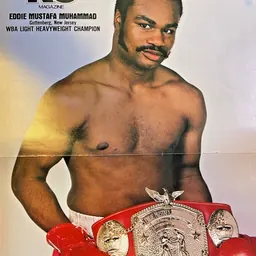
Mwale then won two fights against his closest Zambian challenger, Chisanda Mutti though many Zambian fans felt he was fortunate to get the decision in the second fight. In between, he lost his second professional fight against American Eddie Mustafa Muhammad via a 4th-round knockout in Las Vegas.
Mwale lost his Commonwealth title to Leslie Stewart of Trinidad and Tobago in Port au Spain in 1985 and soon after, the African title to Nigeria’s Joe Lasisi. In 1989, he regained the Zambian light-heavyweight title which he had had to vacate when he won the Commonwealth and African titles, with a 6th-round knockout of Enoch Chama. The following year, he added the Zambian cruiserweight belt after an 8th-round knockout of Joseph Poto. Mwale then got a shot at the WBC International title when he was pitted against Ghanaian Ray Acquaye. Mwale knew that at the age of 38, this was probably his last chance to win an international belt so he trained hard for the fight and turned back the years with an eighth-round knockout in Lusaka. As a result of this victory, Mwale expected to win the Sportsman of the Year award at the 1991 Zambian annual sports awards, but when the award went to athlete Samuel Matete, Mwale was incensed and tore up the certificate of merit that was given to him instead, in full view of everyone at the ceremony. He later apologized for his actions but said he expected to be honoured with the top award after winning an international title for the country.
He however lost the belt in his very next fight to Virgil Hill of the United States two years later in Bismarck, North Dakota after which his promoter called Sandy Saddler (not to be mistaken for the former featherweight champion), disappeared with his $55,000 purse money, leaving him stranded until the Zambian High Commission came to his aid.
He won his next two fights against Wally Kafumbi and Jim Murray and then attempted to win back the Zambian light-heavyweight title which was by then held by Mike Chilambe. In August 1993, Mwale was battered and knocked out in the 8th round after which he shocked his followers when he claimed he had lost the fight because he was drunk. He immediately asked for a rematch which Chilambe granted him. Mwale trained hard for the rematch and promised to teach Chilambe a lesson.
The two faced off again on 2 April 1994. Although Mwale fared much better in this fight, Chilambe was the clear winner with a unanimous points decision. Mwale then announced his retirement from the ring. His career fight record was: 44 fights won, with 34 knockouts, and lost 9 fights, with 4 of these coming in his last six fights.
Death Mwale then went through some hard times and ended up dependent on charity, donations from well wishers and the Zambian government. In 1999, he suffered from poor co-ordination of the limbs and was diagnosed with Parkinson's disease.
On 17 August 2001, the London-based Boxing News reported Mwale’s ‘death’, painting a grim picture of his poverty-stricken death. When Mwale, who was very much alive, complained that the story had led to the WBC stopping his pension, the magazine retracted the article with an apology, calling it 'an horrendous error' on their part.
After a 6-year battle with Parkinson's disease, Mwale died on 18 October 2005 in Lusaka Zambian President Levy Mwanawasa described him as a national hero, and in November 2008, the WBC announced plans to construct a boxing school in Lusaka in his honour.
On 24 April 2013, Mwale's remains were exhumed from Lusaka's Old Leopard's Hill Cemetery and reburied at Leopards Hill Memorial Park, a resting place befitting a Zambian hero.
Professional boxing record
Loss
PTS 12 02/04/1994
Loss
TKO 8 28/08/1993
Win
PTS 10 15/05/1993
Win
KO 6 24/11/1992
Loss
TKO 7 04/09/1992
Loss
KO 4 11/04/1992
Win
KO 8 20/12/1990
Win
KO 4 08/09/1990
Win
KO 8 05/08/1990
Win
KO 1 21/10/1989
Win
TKO 6 26/08/1989
Loss
KO 8 11/03/1988
Win
PTS 10 05/12/1987
Win
PTS 8 29/08/1987
Win
PTS 10 30/05/1987
Loss
KO 8 25/04/1986
Loss
PTS 12 04/08/1985
Win
TKO 2 15/06/1985
Win
TKO 2 05/05/1985
Win
KO 2 15/09/1984
Win
KO 2 25/08/1984
Win
PTS 12 30/07/1984
Win
PTS 12 08/10/1983
Win
KO 2 28/08/1983
Win
TKO 3 15/03/1983
Win
TKO 2 30/01/1983
Win
KO 13 28/11/1982
Loss
KO 4 02/10/1982
Win
TKO 13 05/07/1982
Win
KO 8 01/11/1981
Win
KO 5 06/09/1981
Loss
KO 4 28/11/1980
Win
KO 2 04/05/1980
Win
PTS 12 04/03/1980
Win
KO 7 29/12/1979
Win
PTS 10 23/10/1979
Win
KO 2 09/10/1979
Win
KO 5 30/09/1979
Win
KO 3 11/09/1979
Win
TKO 4 04/06/1979
Win
TKO 5 31/03/1979
Win
TKO 2 26/02/1979
Win
KO 4 30/12/1978
Win
KO 5 04/11/1978
Win
KO 1 30/09/1978
Win
PTS 8 17/06/1978
Win
KO 1 23/05/1978
Win
PTS 10 02/03/1978
Win
KO 6 01/09/1977
Win
KO 2 01/08/1977
Win
KO 4 01/07/1977
Win
KO 6 09/05/1977
Win
KO 6 08/04/1977
Don’t just read it —
keep it.
Full-length biographies made to live with: read them, listen on the way to work, watch them tonight.
- E-book
- Audio
- Video
Instant download · yours to keep · every purchase keeps this site free
Important facts
People in Lottie Mwale's life
Named in this biography and alive at the same time





Related people
Same field, nearest in time




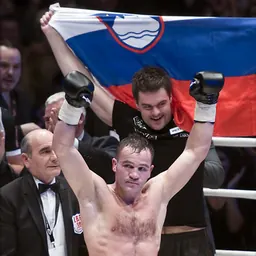
Contemporaries
People whose lives overlapped Lottie Mwale's

Frequently asked questions
Who was Lottie Mwale?
Zambian boxer (1952-2005)
When was Lottie Mwale born?
Lottie Mwale was born on 14 April 1952 in Kitwe.
When did Lottie Mwale die?
Lottie Mwale died on 18 October 2005 in Lusaka.
What was Lottie Mwale's occupation?
Lottie Mwale was a boxer.
What nationality was Lottie Mwale?
Lottie Mwale was Zambian.
Sources & further reading
Cite this page
APA: Biography.guide. (2026). Lottie Mwale. https://biography.guide/lottie-mwale/
MLA: "Lottie Mwale." Biography.guide, https://biography.guide/lottie-mwale/.
Chicago: "Lottie Mwale." Biography.guide. https://biography.guide/lottie-mwale/.
Data last updated: 2026-09-20 · Spot an error? Report a correction.
Page generated 2026-09-27 05:10 UTC