
Lothar Kreyssig
German judge, founder of Action Reconciliation Service for Peace
About Lothar Kreyssig
Lived 1898 – 1986 (aged 87). Lothar Kreyssig was a German judge, peace activist, resistance fighter, farmer and jurist.
Lothar Kreyssig (; 30 October 1898 – 6 July 1986) was a German judge during the Weimar and Nazi era. He was the only German judge who attempted to stop the mass-murder of persons deemed "unworthy of living" under the Aktion T4 "involuntary euthanasia" program, an intervention that cost him his job. After the Second World War, he was again offered a judgeship but declined. Later, he became an advocate of German reconciliation and founded the Action Reconciliation Service for Peace and the German development aid non-government organization, Action for World Solidarity.
Biography
Early years
Lothar Ernst Paul Kreyssig was born in Flöha, Saxony, the son of a businessman and grain merchant. After elementary school, he attended a gymnasium in Chemnitz. He set aside his education and enlisted in the army in 1916 during the First World War. Two years of service in the war took him to France, the Baltics and Serbia. After the war, between 1919 and 1922, he studied law in Leipzig, receiving his doctorate in 1923. In 1926, he went to work at the district court in Chemnitz and two years later became a judge there.
In 1933, Kreyssig was pressured to join the Nazi party, but refused, citing his need for judicial independence. However, in 1934, he joined the Confessing Church and in 1935, was elected Praeses at the synod of the Confessing Church in Saxony.
He was still able to work in his profession and in 1937, he was transferred to Brandenburg an der Havel to the lower district court. His work as a mental health court guardianship judge made him responsible for several hundred mentally challenged children and adults. He bought an estate in nearby Havelsee, where he practiced biodynamic farming. A preliminary investigation prompted by Kreyssig's church activities was made against him, but no action was taken.
After the number of death certificates of his wards began to accumulate on his desk, he began to suspect the deaths were connected to the "mercy killing" that had begun. He reported his suspicions in a letter to Minister of Justice Franz Gürtner, dated July 8, 1940. He pilloried the Nazis' Aktion T4 euthanasia program. He also addressed the disenfranchisement of prisoners in Nazi concentration camps, making all his arguments on firm legal grounds.
Kreyssig then filed a charge against Reichsleiter Philipp Bouhler for murder. He filed an injunction against the institutions in which he had housed his wards, prohibiting them from transferring the wards without his consent.
On 13 November 1940 Kreyssig was summoned by Gürtner, who laid before Kreyssig Hitler's personal letter that had started the euthanasia program and which constituted the sole legal basis for it. Kreyssig replied, "The Führer's word does not create a right," clearly signifying that he did not recognize this as a legal right. Gürtner then told Kreyssig, "If you cannot recognise the will of the Führer as a source of law, then you cannot remain a judge." In December 1940, Kreyssig was suspended. The first projects were in Norway, the Netherlands, Great Britain, France and Greece. With the construction of the Berlin Wall, Kreyssig was cut off from the international activities of his organization. As a result, he gave up running the organization and devoted himself to building a version of the organization in the German Democratic Republic. One of the first projects of this initiative was to rebuild two destroyed churches in Magdeburg.
In 1971, Kreyssig and his wife moved to West Berlin. He lived in a nursing home from 1977 in Bergisch Gladbach until his death in 1986.
Legacy and memorials To this day, Kreyssig is known as the only judge who tried to stop the systematic murders conducted under the Nazis' T4 program.
Publications Gerechtigkeit für David. Gottes Gericht und Gnade über dem Ahnen Jesu Christi. Nach dem 2. Buch Samuelis, 1949 Appeal to found the Action for Reconciliation Action for Reconciliation Service for Peace, official website. Berlin 1958. Retrieved March 13, 2010
Don’t just read it —
keep it.
Full-length biographies made to live with: read them, listen on the way to work, watch them tonight.
- E-book
- Audio
- Video
Instant download · yours to keep · every purchase keeps this site free
Important facts
People in Lothar Kreyssig's life
Named in this biography and alive at the same time

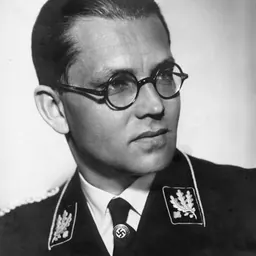

Related people
Same field, nearest in time
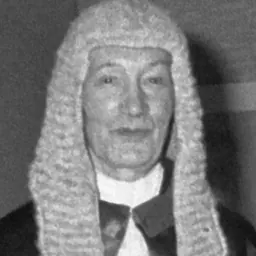
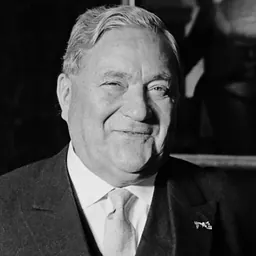
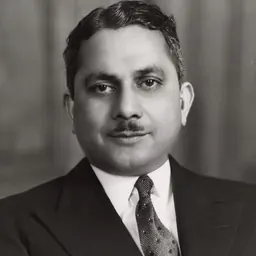



Contemporaries
People whose lives overlapped Lothar Kreyssig's


Frequently asked questions
Who was Lothar Kreyssig?
German judge, founder of Action Reconciliation Service for Peace (1898–1986)
When was Lothar Kreyssig born?
Lothar Kreyssig was born on 30 October 1898 in Flöha.
When did Lothar Kreyssig die?
Lothar Kreyssig died on 5 July 1986 in Bergisch Gladbach.
What was Lothar Kreyssig's occupation?
Lothar Kreyssig was a judge, peace activist, resistance fighter, farmer and jurist.
What nationality was Lothar Kreyssig?
Lothar Kreyssig was German.
Sources & further reading
Cite this page
APA: Biography.guide. (2026). Lothar Kreyssig. https://biography.guide/lothar-kreyssig/
MLA: "Lothar Kreyssig." Biography.guide, https://biography.guide/lothar-kreyssig/.
Chicago: "Lothar Kreyssig." Biography.guide. https://biography.guide/lothar-kreyssig/.
Data last updated: 2026-09-22 · Spot an error? Report a correction.
Page generated 2026-09-27 05:07 UTC