
About Lorraine Copeland
Lived 1921 – 2013 (aged 91–92). Lorraine Copeland was a British anthropologist, archaeologist, prehistorian and sOE agent.
Lorraine Copeland (née Elizabeth Lorraine Adie; 19 May 1921 – 27 April 2013) was a British archaeologist specialising in the Palaeolithic period of the Near East. She was a secret agent with the Special Operations Executive during the Second World War.
Early life Elizabeth Lorraine Adie was born May 19, 1921, in Marylebone, London. Her father, William John Adie (1886–1935), an Australian-born British physician and neurologist known for describing the Adie syndrome and narcolepsy. He practiced medicine in London on Harley Street. Elizabeth Lorraine Adie was privately educated at Wycombe Abbey girls' school in High Wycombe, Buckinghamshire.
Special operations executive Copeland worked for British Intelligence during the Second World War, in the Special Operations Executive. She met her American husband, Miles Copeland Jr., during this period, when he was based in the UK undertaking counter-intelligence for the US Army Counter Intelligence Corps. They married on 25 September 1942 and soon afterwards Miles' work took them to the Near East, particularly Syria, Lebanon and Egypt, and it was whilst in this area that Copeland first developed her interest in archaeology. They held a church wedding September 25, 1943, at Holy Trinity Church, near Harley Street, London.
Archaeology Copeland worked in the field of Palaeolithic and Neolithic archaeology for over fifty years, and was associated with the University College London Institute of Archaeology. Accompanied by Peter J. Wescombe she co-compiled three volumes titled Volume 1 (1965) covered the central portion of the western coast from Tripoli to the North bank of the Litani River. Volume 2 (1966) provided an inventory of Stone Age sites in Southern Lebanon and the Beqaa Valley, expanding on the discovery of the Heavy Neolithic Qaraoun culture, named by Henri Fleisch. Volume 3 was published in 1997. She was an adviser to the Stone Age Institute. In 2004 the festschrift, , was published in her honour.
Archaeological sites investigated by Copeland Lebanon
Akkar plain foothills Antelias Cave Haret ech Cheikh Jebel Aabeby
Mayrouba
Ourrouar Plain of Zgharta
Sands of Beirut Tell Kirri
Wadi Yaroun
Ard Saouda Tell Dibbine
Ard Tlaili Bustan Birke Duris Flaoui Haouch Tall Safiyeh Hashbai
Maqne Neba'a Faour Qaraoun
Ras Baalbek (Rock Shelter) Tahun ben Aissa Tell Aalaq Tell Ablah Tell Addus Tell Ahle Tell Ain Cerif Tell Ain Ghessali Tell Ain Nfaikh Tell Ain Sofar Tell Ayoub Tell Bar Elias Tell Beshara Tell Bir Dakoue Tell Deir Tell Delhamieh Tell Derzenoun Tell El Ghassil Tell El Hadeth Tell Hazzine Tell Hoch Rafqa Tell Jezireh Tell Jisr Tell Kabb Elias Tell Karmita Tell Majdaloun Tell Masoud Tell Meouchi Tell Murtafa Tell Nahariyah Tell Neba'a Chaate Tell Neba'a Litani Tell Rasm El Hadeth Tell Rayak Tell Saoudhi Tell Serhan Tell Shaikh Hassan al Rai Tell Shamsine Tell Zeitoun
Syria
El Kowm
★ Indicates sites discovered or first recorded by Copeland, sometimes with collaborators.
Family Copeland married Miles on 25 September 1942 at St Mary's Church, Great Portland Street, London. The couple had four children, all of whom went on to have notable careers: Their eldest son Miles Copeland III (born 2 May 1944) is an executive in the entertainment industry. Ian Copeland (1949–2006) was a music promoter and booking agent. Lorraine "Lennie" Copeland is a writer and film producer. Stewart Copeland (born 16 July 1952) is a musician best known as the drummer for the band The Police.
Her husband Miles died on 14 January 1991. Lorraine Copeland died at (Marouatte Castle), Dordogne, France, on 27 April 2013. Lorraine Copeland is buried next to her husband, Miles Axe Copeland, Jr., in the churchyard of St Peter and St Paul's Church (Church of England), Aston Rowant, Oxfordshire.
Selected publications
Don’t just read it —
keep it.
Full-length biographies made to live with: read them, listen on the way to work, watch them tonight.
- E-book
- Audio
- Video
Instant download · yours to keep · every purchase keeps this site free
Important facts
People in Lorraine Copeland's life
Named in this biography and alive at the same time





Related people
Same field, nearest in time
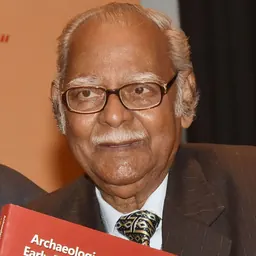

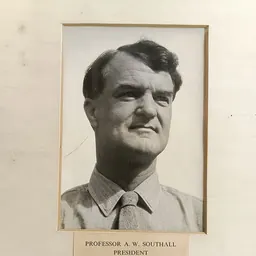


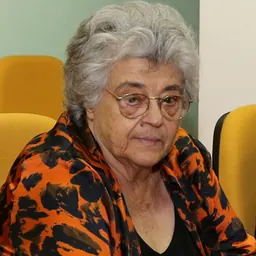
Contemporaries
People whose lives overlapped Lorraine Copeland's
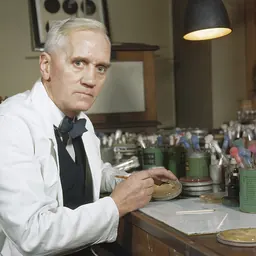



Frequently asked questions
Who was Lorraine Copeland?
British archaeologist (1921–2013)
When was Lorraine Copeland born?
Lorraine Copeland was born in 1921 in London.
When did Lorraine Copeland die?
Lorraine Copeland died on 27 April 2013 in Grand-Brassac.
What was Lorraine Copeland's occupation?
Lorraine Copeland was an anthropologist, archaeologist, prehistorian and sOE agent.
What nationality was Lorraine Copeland?
Lorraine Copeland was British.
Sources & further reading
· Wikipedia: Lorraine Copeland
Cite this page
APA: Biography.guide. (2026). Lorraine Copeland. https://biography.guide/lorraine-copeland/
MLA: "Lorraine Copeland." Biography.guide, https://biography.guide/lorraine-copeland/.
Chicago: "Lorraine Copeland." Biography.guide. https://biography.guide/lorraine-copeland/.
Data last updated: 2026-09-20 · Spot an error? Report a correction.
Page generated 2026-09-27 05:21 UTC