
About Lorenzo Monaco
Lived 1370 – 1425 (aged 54–55). Lorenzo Monaco was a painter, illuminator and monk.
Lorenzo Monaco (1370 – 1425) was a Sienese painter and miniaturist of the late Gothic to early Renaissance age, active principally in Florence. He was born Piero di Giovanni. Little is known about his youth, apart from the fact that he was apprenticed in Florence. He has been considered the last important exponent of the Giotto style, before the Renaissance revolution that came with Fra Angelico and Masaccio.
Life He was probably born in Florence and not in Siena, as it was believed until recently. Nothing is known of his early years, but he was certainly trained in painting in Florence. Formed in the same tradition as Giotto, he was influenced not only by him but also by that artist's followers Spinello Aretino and Agnolo Gaddi. He later worked with Gaddi in painting the predella of the altarpiece in the Nobili Chapel in Santa Maria degli Angeli.
In 1390 he entered the Camaldolese monastery of Santa Maria degli Angeli, as a novice, where he took his vows in 1391. Here he worked for a long time as an illuminator in the scriptorium and as a panel painter, consecrating himself at the time as the greatest painter of sacred subjects in Florence. The three chorales in the Laurentian Library date back to the last decade of the 14th century, and were executed for his own Camaldolese monastery, already perceive a personal style, characterized by taut linearism and a cold chromatic range.
Starting from around 1404, his style shows the influence of the International Gothic, influenced by the first works of Lorenzo Ghiberti and of Gherardo Starnina, who had returned in those years from Spain. From that year, stands out The Pietà in the Galleria dell'Accademia of Florence, a work dominated by a nervous line and a certain emotional tension. In the numerous paintings with a gold background, he created a style characterized by extremely elongated figures, with the sinuous lines of the crescent-shaped drapery, sharp edges, the bright and rich colors (profusion of gold and lapis lazuli), the hinted gestures, and an almost annulled space. His works, in general, showed images with a strong spiritual value, detached from reality, where the profane and naturalistic elements are usually almost completely absent.
From this period, among others, can be mentioned the Tabernacle with the Madonna, Child and Saints, at the Pinacoteca di Siena, and the beautiful Oration in the Garden of the Galleria dell'Accademia, in Florence. The sumptuous Coronation of the Virgin of the National Gallery, in London, one of his most famous works dates to 1407-1409. The Polyptych of Monteoliveto, in the Galleria dell'Accademia is slightly later, and it is imbued with a spirituality that even preludes Fra Angelico. In the same museum is the Triptych of San Procolo where are already notice the wavy rhythms, like the arabesques of an illuminated codex, which appear again in the Coronation of the Virgin (now at the Uffizi), composed with a great number of saints of sinuous shapes, and with brilliant colors that reach their peak in the blinding white of the Virgin's dress and in the ultramarine blue of Christ's mantle, seemingly in an authentic irradiation of divine light.
The numerous commissions that he took, led him to request several times dispensations to leave the monastery, which were regularly granted by his superiors, but Lorenzo never forgot his monastic status.
In the last phase of his production, he did not follow the innovations of his contemporaries Masaccio and Filippo Brunelleschi. Although he knew how to update his style with some innovations, especially concerning a more realistic representation of space, he always remained faithful to his personal style, without radical changes. A typical work of this time is the Adoration of the Magi of 1420–1422, where the foreshortenings seem markedly incoherent and surreal precisely because the now widespread geometrical perspective is totally absent. However, the pictorial quality remains very high, with an original use of the contour line, which creates one of the most imaginative results of all Florentine painting.
Lorenzo's works remained popular in the 1420s, as testified by the numerous commissions he received, such as the Stories of the Virgin in the Bartolini Salimbeni Chapel of Santa Trinita, one of his few frescoes.
Giorgio Vasari, who included his biography in his Lives, states that he died at the age of fifty-five, from an unidentified infection, perhaps an infected pustule, gangrene or a tumor, which had forced him to bed for many months. He was buried in the chapter house of the monastery, a privilege usually reserved only for high religious offices and famous personalities, further proof of the great esteem in which he was held in his lifetime.
His production was also very vast in miniature, where he achieved results of great value both at a creative and at a formal level. He also composed musical chants. Many manuscripts illuminated by him are kept in the Biblioteca Medicea Laurenziana.
Selected works His works include: Coronation of the Virgin (1388–1390), Courtauld Gallery, London Madonna and Child with Saints (1395–1402) Episodes in the Life of Saint Benedict (c. 1407–1409) Nativity (1409), a panel believed to form part of a predella Coronation of the Virgin (1414), also for Santa Maria degli Angeli Annunciation Triptych (1410–1415), Galleria dell'Accademia, Florence Bartolini Salimbeni Chapel (1410–1415), Santa Trinita, Florence Adoration of the Magi (1422), Uffizi, Florence Beheading of St Paul, Princeton University Art Museum Processional Cross, Chicago Art Institute Crucifixion of St Peter, Walters Art Museum, Baltimore Madonna and Child, National Gallery of Art, Washington, D.C. Madonna of Humility, Treasure Museum of the Basilica of Saint Francis, Assisi Virgin and Child, Scottish National Gallery, Edinburgh
Paintings
Don’t just read it —
keep it.
Full-length biographies made to live with: read them, listen on the way to work, watch them tonight.
- E-book
- Audio
- Video
Instant download · yours to keep · every purchase keeps this site free
Important facts
more
Monaco Lorenzo, Il Monaco, di Giovanni Piero, Pietro di Giovanni dalle Tovaglie, Lorenzo, Don Monaco, don Lorenzo, Don Lorenzo Monaco, lorenzo di monacoPeople in Lorenzo Monaco's life
Named in this biography and alive at the same time

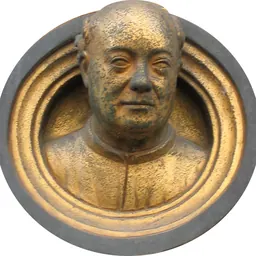

Related people
Same field, nearest in time
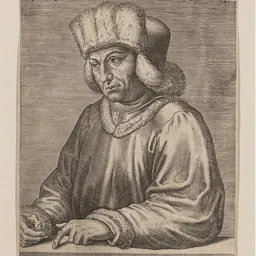


Contemporaries
People whose lives overlapped Lorenzo Monaco's


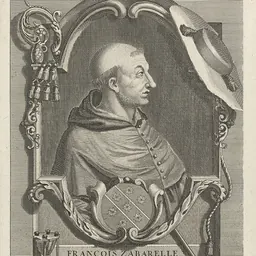

Frequently asked questions
Who was Lorenzo Monaco?
Italian painter (c. 1370 – c. 1425)
When was Lorenzo Monaco born?
Lorenzo Monaco was born in 1370 in Siena.
When did Lorenzo Monaco die?
Lorenzo Monaco died in 1425 in Florence.
What was Lorenzo Monaco's occupation?
Lorenzo Monaco was a painter, illuminator and monk.
Sources & further reading
Cite this page
APA: Biography.guide. (2026). Lorenzo Monaco. https://biography.guide/lorenzo-monaco/
MLA: "Lorenzo Monaco." Biography.guide, https://biography.guide/lorenzo-monaco/.
Chicago: "Lorenzo Monaco." Biography.guide. https://biography.guide/lorenzo-monaco/.
Data last updated: 2026-09-20 · Spot an error? Report a correction.
Page generated 2026-09-27 05:34 UTC