
About Lorenzo Bartolini
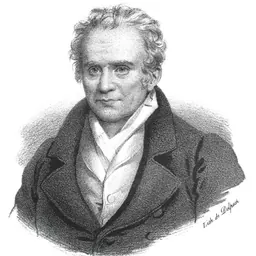
Lived 1777 – 1850 (aged 73). Lorenzo Bartolini was a sculptor.
Lorenzo Bartolini (Prato, 7 January 1777 Florence, 20 January 1850) was an Italian sculptor who infused his neoclassicism with a strain of sentimental piety and naturalistic detail, while he drew inspiration from the sculpture of the Florentine Renaissance rather than the overpowering influence of Antonio Canova that circumscribed his Florentine contemporaries.
Biography
Bartolini was born in Savignano di Prato, near Prato, Tuscany.
After studying at the Florentine Academy of Fine Arts, honing his skills and reputation as a modeller in alabaster, he went in 1797 to Paris, where he studied painting under Jean-Baptiste Frédéric Desmarais, and afterwards sculpture under François-Frédéric Lemot. The bas-relief Cleobis and Biton, with which he gained the second prize of the Academy in 1803, at once established his fame as a sculptor and gained for him a number of influential patrons. His bas-relief of the Battle of Austerlitz was among those executed for the column erected in Place Vendôme. He also executed many minor pieces for Vivant Denon, besides portrait busts of the opera composers Méhul and Cherubini.
His great patron, however, was Napoleon, for whom he executed a colossal bust, and who sent him, on the recommendations of his sister Elisa Baciocchi, to the Accademia Carrara in Bergamo in 1807, to teach sculpture, " limited his opportunities. His naturalistic and somewhat sentimental marble L'Ammostatore ("The Bird's-nest Stealer", 1820) took its inspiration from under-appreciated Quattrocento Florentine sculptors like Andrea del Verrocchio. In his decade of impoverishment, supportive commissions came from foreigners; the funeral monument to Princess Zofia Czartoryska in the Santa Croce, Florence's Westminster Abbey, is an anti-classical statement for naturalism. Two other Bartolini monuments in Santa Croce can be compared with it; in the Capella Giugni is his monument to Charlotte Bonaparte, but when the occasion required a more formal approach, as in the monument to Leone Battista Alberti, the result could be chilly.
A major commission came in 1830 from the sons of the Russian emigree prince Nicola Demidoff, who had retired to Florence. The sons commissioned the Monument to Nicola Demidoff to honor their father, which was placed in Piazza Demidoff, Florence. The commission's multiple figures took shape during Bartolini's last decades; it was completed by Bartolini's assistant Pasquale Romanelli.
His works are varied and include an immense number of portrait busts. The best are, perhaps, the group of Charity (1824), the Hercules and Lichas and Faith in God,
Don’t just read it —
keep it.
Full-length biographies made to live with: read them, listen on the way to work, watch them tonight.
- E-book
- Audio
- Video
Instant download · yours to keep · every purchase keeps this site free
Important facts
People in Lorenzo Bartolini's life
Named in this biography and alive at the same time
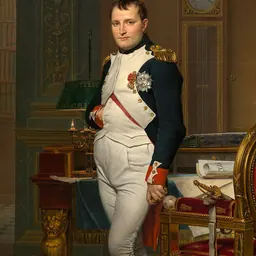

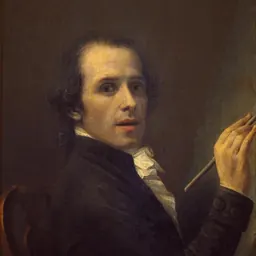




Related people
Same field, nearest in time


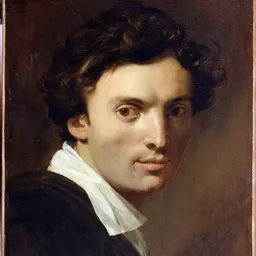

Contemporaries
People whose lives overlapped Lorenzo Bartolini's

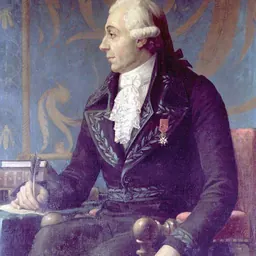

Frequently asked questions
Who was Lorenzo Bartolini?
Italian sculptor (1777-1850)
When was Lorenzo Bartolini born?
Lorenzo Bartolini was born on 7 January 1777 in Vaiano.
When did Lorenzo Bartolini die?
Lorenzo Bartolini died on 20 January 1850 in Florence.
What was Lorenzo Bartolini's occupation?
Lorenzo Bartolini was a sculptor.
Sources & further reading
· Wikipedia: Lorenzo Bartolini
Cite this page
APA: Biography.guide. (2026). Lorenzo Bartolini. https://biography.guide/lorenzo-bartolini/
MLA: "Lorenzo Bartolini." Biography.guide, https://biography.guide/lorenzo-bartolini/.
Chicago: "Lorenzo Bartolini." Biography.guide. https://biography.guide/lorenzo-bartolini/.
Data last updated: 2026-09-20 · Spot an error? Report a correction.
Page generated 2026-09-27 05:27 UTC