
About Liza Lehmann
Lived 1862 – 1918 (aged 56). Liza Lehmann was a British composer, singer and opera singer.
Elisabetha Nina Mary Frederica Lehmann (11 July 1862 – 19 September 1918) was an English soprano and composer, known for her vocal compositions. Her father was the German painter Rudolf Lehmann, and her mother was Amelia (A.L.) Chambers, a music teacher, composer and arranger. Lehmann "grew up in an intellectual and artistic atmosphere" The same year, she wrote a voice study text, Practical Hints for Students of Singing. Leslie was the father of the conductor Steuart Bedford and the composer David Bedford. Lehmann completed her memoirs in 1918 and died, shortly after completing them,
Music After her performing career ended in 1894, Lehmann concentrated on composing music for the rest of her life. and Bird Songs (1907), with words attributed to "A.S.", thought to have been Alice Sayers, the family nurse. She became known for her art songs, parlour songs and other works in the following years. Many of her songs are for children, ranging from the sweet and trivial "There are fairies at the bottom of our garden" to the melodically and harmonically passionate "Stars" in The Daisy-Chain. Her tenor song "Ah, moon of my delight" from In a Persian Garden has been recorded through the years by tenors such as John McCormack, Jan Peerce, Mario Lanza, Robert White, and Webster Booth.
In 1904 she was commissioned by Frank Curzon to compose the score for the Edwardian musical comedy Sergeant Brue, with a libretto by Owen Hall and lyrics by James Hickory Wood. The piece was a success in London and New York, but Lehmann was unhappy that Curzon added other composers' music to her score. Although she refused to write any further musicals, Lehmann composed the score for a comic opera adaptation of The Vicar of Wakefield in 1906, with a libretto by Laurence Housman. This piece was a modest success but did not lead to further comic operas. In 1916, she returned to writing for the stage, with the score for the opera Everyman, which was produced by the Beecham Opera Company.
Lehmann, Ethel Smyth and Maude Valérie White were England's foremost female composers of songs at the beginning of the 20th century. Although they all composed solo settings of serious texts, Lehmann and White excelled in setting lighter material. Some of Lehmann's compositional practices, such as her frequent writing of four-voice cycles and writing piano links between songs, were consistent with her time. Although her pieces were inventive, they are now often overlooked and disregarded. More Daisies (1902) Nonsense Songs (from L. Carroll: Alice in Wonderland) (1908) Breton Folk-Songs (F.M. Gostling) (1909) Prairie Pictures (Lehmann) (1911) Parody Pie (1914)
Songs for solo voice Mirage (H. Malesh) (1894) Nine English Songs (1895) Eight German Songs (1888) Twelve German Songs (1889) In memoriam (Tennyson) (1899) Cameos: Five Greek Love-Songs (1901) Five French Songs (G. Boutelleau, F. Plessis) (1901) To a Little Red Spider (L.A. Cunnington) (1903) The Life of a Rose (L. Lehmann) (1905) Bird Songs (A.S.) (1907) Mr. Coggs and Other Songs for Children (E.V. Lucas) (1908) Liza Lehmann Album (1909) Five Little Love Songs (C. Fabbri) (1910) Oh, tell me Nightingale (Mirza Shafi Vazeh) (1910) Songs of a ‘Flapper’ (Lehmann) (1911) Cowboy Ballads (J.A. Lomax) (1912) The Well of Sorrow (H. Vacaresco: The Bard of the Dimbovitza) (1912) Five Tenor Songs (1913) Hips and Haws (M. Radclyffe Hall) (1913) Songs of Good Luck (Superstitions) (H. Taylor) (1913) Magdalen at Michael’s Gate (H. Kingsley) (1913) By the Lake (Ethel Clifford) (1914) The Poet and the Nightingale (J.T. White) (1914) The Lily of a Day (Jonson) (1917) There are Fairies at the Bottom of Our Garden (R. Fyleman) (1917) When I am Dead, My Dearest (C. Rossetti) (1918) Three Songs for Low Voice (Meredith, Browning) (1922)
Other vocal works Music, When Soft Voices Die (Percy Bysshe Shelley), voice and piano The Secrets of the Heart (H. Austin Dobson), soprano, alto, and piano (1895) Good-Night, Babette! (Austin Dobson), soprano, baritone, violin, 'cello, and piano (1898) The Eternal Feminine (monologue, L. Eldée) (1902) Songs of Love and Spring (E. Geibel), alto, baritone, and piano (1903) The Happy Prince, melodrama (recitation, O. Wilde) (1908) Four Cautionary Tales and a Moral (Hilaire Belloc), two voices and piano (1909) Four Shakespearean Part-Songs (1911) The Selfish Giant (recitation, Wilde), 1911 The High Tide (recitation, J. Ingelow) (1912) Behind the Nightlight (J. Maude, N. Price) (1913) Three Snow Songs (Lehmann), solo voice, piano, organ, female chorus (1914)
Instrumental Romantic Suite, violin and piano (1903) Cobweb Castle, piano solo (1908)
Writings The Life of Liza Lehmann, by Herself (T Fisher Unwin, London, 1919) Practical Hints for Students of Singing (Enoch & Sons, 1913)
Footnotes
Don’t just read it —
keep it.
Full-length biographies made to live with: read them, listen on the way to work, watch them tonight.
- E-book
- Audio
- Video
Instant download · yours to keep · every purchase keeps this site free
Important facts
People in Liza Lehmann's life
Named in this biography and alive at the same time




Related people
Same field, nearest in time

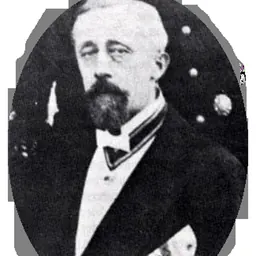
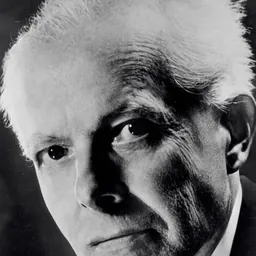

Contemporaries
People whose lives overlapped Liza Lehmann's

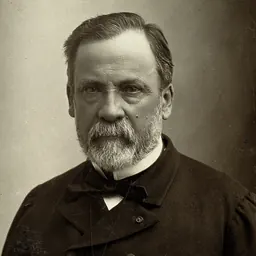



Frequently asked questions
Who was Liza Lehmann?
English operatic soprano and composer (1862–1918)
When was Liza Lehmann born?
Liza Lehmann was born on 11 July 1862 in London.
When did Liza Lehmann die?
Liza Lehmann died on 19 September 1918 in London.
What was Liza Lehmann's occupation?
Liza Lehmann was a composer, singer and opera singer.
What nationality was Liza Lehmann?
Liza Lehmann was British.
Sources & further reading
Cite this page
APA: Biography.guide. (2026). Liza Lehmann. https://biography.guide/liza-lehmann/
MLA: "Liza Lehmann." Biography.guide, https://biography.guide/liza-lehmann/.
Chicago: "Liza Lehmann." Biography.guide. https://biography.guide/liza-lehmann/.
Data last updated: 2026-09-20 · Spot an error? Report a correction.
Page generated 2026-09-27 05:30 UTC