
About Ethel Smyth
Lived 1858 – 1944 (aged 86). Ethel Smyth was a British composer, librettist, conductor, autobiographer, suffragist and women's rights activist.
Dame Ethel Mary Smyth (; 22 April 18588 May 1944) was an English composer and a member of the women's suffrage movement. Her compositions include songs, works for piano, chamber music, orchestral works, choral works and operas.
Smyth tended to be marginalised as a "woman composer", as though her work could not be accepted as mainstream. the fourth of eight children. While 22 April is the actual date of her birth, Smyth habitually stated it was 23 April, the day that was celebrated by her family, as they enjoyed the coincidence with William Shakespeare's. Her father, John Hall Smyth, who was a major general in the Royal Artillery, was very much opposed to her making a career in music. The home of her early years was Sidcup Place in Sidcup, then in Kent. From 1867 her family base was Frimhurst, near Frimley Green; from 1894 she lived at One Oak, also in Frimley, before moving in 1910 to Hook Heath on the outskirts of Woking. Her youngest brother was Robert ("Bob") Napier Smyth (1868–1947), who rose to become a Brigadier in the British Army.
Musical career Smyth was a child prodigy. She was a stellar pianist at a very young age and was able to compose her first hymn by the age of 10. She decided to study music at the age of 12. Smyth first studied with Alexander Ewing when she was 17. He introduced her to the music of Wagner and Berlioz. After a major battle with her father about her plans to devote her life to music, Smyth was allowed to advance her musical education at the Leipzig Conservatory, where she studied Brahmsian musical composition with Carl Reinecke. She left after a year, however, disillusioned with the low standard of teaching, and continued her music studies privately with Heinrich von Herzogenberg.
Another of her operas, Der Wald, mounted in 1903, was, for more than a century, the only opera by a woman composer ever produced at New York's Metropolitan Opera (until Kaija Saariaho's L'Amour de loin in December 2016).
On 28 May 1928, the nascent BBC broadcast two concerts of Smyth's music, marking her "musical jubilee", The first comprised chamber music,
After her release from prison, Smyth composed her final major work, the hour-long vocal symphony The Prison, setting a text by Henry Bennett Brewster. It was first performed in 1931. The first recording was issued by Chandos in 2020. Smyth’s composing and conducting career came to a premature end before the 1920s as she started to develop hearing loss, which eventually led to her becoming completely deaf. However, she found a new interest in literature and, between 1919 and 1940, she published ten highly successful, mostly autobiographical, books. Though Smyth’s four movement Serenade earned her orchestral and public debut in England, she had to use the pseudonym E.M. Smith to avoid biased criticism. Other critics were more favourable: "The composer is a learned musician: it is learning which gives her the power to express her natural inborn sense of humour... Dr. Smyth knows her Mozart and her Sullivan: she has learned how to write conversations in music... The Boatswain's Mate is one of the merriest, most tuneful, and most delightful comic operas ever put on the stage."
Involvement with the suffrage movement
In 1910, Smyth joined the Women's Social and Political Union (WSPU), which agitated for women's suffrage, giving up music for two years to devote herself to the cause. Smyth argued in her memoirs that the disadvantages that women face in music stem from the lack of a political vote or voice. She developed a very close relationship with the charismatic leader of the WSPU, Emmeline Pankhurst, and accompanied her on many occasions. This eventually became the anthem of the WSPU and the suffragette movement. After further practice aiming stones at trees near the home of fellow suffragette Zelie Emerson, Pankhurst called on WSPU members to break a window of the house of any politician who opposed votes for women. Smyth was one of the 109 members who responded to Pankhurst's call, asking to be sent to attack the home of Colonial Secretary Lewis Harcourt, who had remarked that if his wife's beauty and wisdom was present in all women, they would have already won the vote.
Smyth stood half the bail for Helen Craggs, who had been caught on the way to carry out the arson of the leading politician's home. When Thomas Beecham, her proponent-friend, went to visit her there, he found suffragettes marching in the quadrangle and singing, as Smyth leaned out of a window conducting the song with a toothbrush.
In her book, Female Pipings in Eden, Smyth said her prison experience was of being "in good company" of united women "old, young, rich, poor, strong, delicate", putting the cause they were imprisoned for before their personal needs. Smyth revealed that the prison was infested with cockroaches, even in the hospital ward. She was released early, due to a medical assessment that she was mentally unstable and hysterical. Smyth gave written evidence in the November trial of Pankhurst and others for inciting violence, stating that she (Smyth) had freely engaged in activism. She continued to correspond with Pankhurst, and heard of her getting lost trying to find the safe house provided for her to avoid re-arrest in Scotland.
According to Ethel, the marriage between Harry and Julia was, by design, flimsy and dissolvable, and thus Harry sought a harmonious dissolution of their union so that he may pursue a relationship with Ethel. It is clear that Harry supported this idea, and in letters written near the time of Julia’s death, he expressed a distaste for monogamy and frustration as to its insistence. It is likely, however, that Julia did not fully agree to this weakened matrimonial bond and thus resisted the attempts made by her husband for a mutual divorce, and when this drama became more public, it substantially harmed Ethel’s relationship with the Herzogenberg family. Ethel’s relationships with Lisl and Julia would notably not be restored before their deaths in 1892 and 1895 respectively. In contrast, however, she remained close to Harry up until his death in 1908. In 1884, at the height of this love triangle debacle, Ethel spoke about how the “best happiness” that she narrowly missed (regarding a relationship with Harry) significantly impacted her ability to write music, as she says that she composes best when she is happiest.
She would later be granted her wish when, after a time of low correspondence with Harry, and after the sudden death of Lisl in 1892, she decided that she would forsake her inhibitions and her concern for Julia (at some point Harry and Julia did dissolve their marriage, though it’s unclear when) and pursue a full relationship with Harry. This relationship would become central to her life and would inspire many of her creative works, though for a time (including the entire time before Lisl’s death), the pair abstained entirely from a sexual relationship, constraining it solely to sensual and romantic letters sent between the two. Ethel, herself, described how she did not feel the need for sexual pleasure because she felt that her musical career satisfied the same desire in a more dignified and self-controlled way. Over time, however, the letters sent between them suggested a heightened desire for a physical consummation of their relationship, and in 1895 they pursued a long-lasting unmarried sexual relationship vividly described in their many letters of correspondence.
Although Ethel had a serious physical relationship with Harry, she placed a higher emphasis on personal relationship when it comes to romance, and thus felt a closer kinship to women. She wrote to him in 1892: "I wonder why it is so much easier for me to love my own sex more passionately than yours. I can't make it out, for I am a very healthy-minded person", describing her inability to become emotionally attracted to nearly any man other than him. For this reason, and for the distaste for monogamy that they both seemed to share, during her relationship with Harry and after his death, Smyth had several passionate affairs, most of them with women. Smyth was at one time in love with the married suffragette Pankhurst. At the age of 71, she fell in love with writer Virginia Woolf – herself having worked in the women's suffrage movement – who, both alarmed and amused, said it was "like being caught by a giant crab", but the two became friends.
In recognition of her work as a composer and writer, Smyth was made a Dame Commander of the Order of the British Empire (DBE) in 1922, becoming the first female composer to be awarded a damehood. Smyth received honorary doctorates in music from the universities of Durham and Oxford. She died in Woking in 1944 at the age of 86.
Smyth was actively involved in sport throughout her life. In her youth, she was a keen horse-rider and tennis player. She was a passionate golfer and a member of the ladies' section of Woking Golf Club, near where she lived. After she died and was cremated, her ashes were, as she had requested, scattered in the woods neighbouring the club Her musical executor was the composer and musicologist Kathleen Dale, a close neighbour.
Representations and legacy
Ethel Smyth featured, under the name of Edith Staines, in E. F. Benson's Dodo books (1893–1921), decades before the quaint musical characters of his more famous Mapp and Lucia series. She "gleefully acknowledged" the portrait, according to Prunella Scales. She was later a model for the fictional Dame Hilda Tablet in the 1950s radio plays of Henry Reed.
In "Recomposing Her History: The Memoirs and Diaries of Ethel Smyth
Since 2018, the actress and singer, Lucy Stevens, has portrayed Ethel Smyth on stage at various venues in Britain.
In 2021, Smyth posthumously received a Grammy Award for Best Classical Vocal Solo based on the recording of The Prison by conductor James Blachly and soloists Sarah Brailey and Dashon Burton, members of Experiential Orchestra. Their rendition was released in August 2020 to coincide with the 100th anniversary of the Nineteenth Amendment, which gave women the right to vote in the United States. by the Mayor of Woking, Cllr Liam Lyons, with invited guests who included members of Smyth's family as well as academics and councillors. Charlesworth described her sculpture as: Ethel stands, wearing her usual tweed skirt, enthusiastically conducting passers-by with her over-sized baton, as presented to her at the Royal Albert Hall by Emeline Pankhurst.Her jacket is half open, her arms are beating out the time and her eyes are full of concentration as she battles with her hearing loss, which went completely in her 50's.Also detailed in her pocket is a sheaf of paper which could be ideas for a new opera, or maybe notes for a new book, as well as sketches and polemical essays.
Literary works
Writings Impressions That Remained: Memoirs (1919) Vol. 1 · Vol. 2 Streaks Of Life (1921) (1927) (1928) Female Pipings in Eden (1933) Beecham and Pharaoh (1935) (1936) (1936) Maurice Baring (1938), a memoir of Maurice Baring What Happened Next (1940) The Memoirs of Ethel Smyth (1987), abridged and edited by Ronald Crichton. Available on 14-day loan at Archive.org (free registration required)
Recordings The Boatswain's Mate. Nadine Benjamin, Rebecca Louise Dale, Edward Lee, Ted Schmitz, Jeremy Huw Williams, Simon Wilding, Mark Nathan, Lontano Ensemble, c. Odaline de la Martinez. Retrospect Opera RO001 (2016, two CDs). Cello Sonata in C minor. Friedemann Kupsa cello, Anna Silova piano; Lieder und Balladen, Opp. 3 & 4. Three Moods of the Sea. Maarten Koningsberger baritone, Kelvin Grout piano. TRO-CD 01417 (1997). Cello Sonata in A minor. Lionel Handy cello, Jennifer Hughes piano: Lyrita SRCD412 (2023). Complete Piano Works. Liana Șerbescu. CPO 999 327-2 (1995). Concerto for Violin, Horn and Orchestra. BBC Philharmonic, c. Odaline de la Martinez. Chandos Chan 9449 (1996). Double Concerto in A for violin, horn and piano. Renate Eggebrecht violin, Franz Draxinger horn, Céline Dutilly piano; Four Songs for mezzo-soprano and chamber ensemble (1907): Melinda Paulsen mezzo, Ethel Smyth ensemble; Three Songs for mezzo-soprano and piano (1913): Melinda Paulsen mezzo, Angela Gassenhuber piano. TRO-CD 01405 (1992). Entente Cordiale. Retrospect Opera fundraising campaign for future recording, 2024. Fete Galante: A Dance Dream. Charmian Bedford (soprano), Carolyn Dobbin (mezzo soprano), Mark Milhofer (tenor), Alessandro Fisher (tenor), Felix Kemp (baritone), Simon Wallfisch (baritone), Lontano Ensemble/Odaline de la Martinez. Retrospect Opera RO007 (2019). Mass in D, March of the Women, Scene from The Boatswain's Mate. Eiddwen Harrhy, The Plymouth Music Series, Philip Brunelle. Virgin Classics VC 7 91188-2 (1991). Mass in D. Philharmonia Chor Stuttgart, Württembergische Philharmonie Reutlingen, Helmut Wolf, LC 04480 (1997) Piano Trio in D minor. Neave Trio, Chandos CHAN20238 (2024) The Prison. Sarah Brailey, Dashon Burton, soloists; Experiential Orchestra and Chorus; James Blachly, Conductor. Steven Fox, Chorus Master, Blanton Alspaugh and Soundmirror, producer. Chandos Records (2020). Serenade in D major. BBC Philharmonic, c. Odaline de la Martinez. Chandos Chan 9449 (1996). Serenade in D major. On 'Lauter!', Ensemble reflektor. Solaire SOL1017 (2024). String Quartet in C minor. Maier Quartet. DB Productions, DBCD197 (2020). String Quartet in E minor, String Quintet in E Major, Op. 1. Mannheimer Streichquartett and Joachim Griesheimer. CPO 999 352-2 (1996). String Trio in D major. Trio d’Iroise. Solaire SOLD004 (2025) Suite for String Orchestra, Südwestdeutsches Kammerorchester Pforzheim, conducted by Douglas Bostock. CPO 555 457-2 (2022). Violin Sonata in A minor, Op. 7, Cello Sonata in A minor, Op. 5, String Quintet in E major, Op. 1, String Quartet in E minor. Renate Eggebrecht, violin, Friedemann Kupsa cello, Céline Dutilly piano, Fanny Mendelssohn Quartet. TRO-CD 01403 (2012, two CDs). Violin Sonata in A minor, Op. 7. Annette-Barbara Vogel, violin, Durval Cesetti, piano. Toccata TOCN0013 (2021). Der Wald. Natalya Romaniw, Claire Barnett-Jones, Robert Murray, Andrew Shore, Morgan Pearce, Matthew Brook; BBC Singers, BBC Symphony Orchestra, conducted by John Andrews (2023). The Wreckers. Anne-Marie Owens, Justin Lavender, Peter Sidhom, David Wilson-Johnson, Judith Howarth, Anthony Roden, Brian Bannatyne-Scott, Annemarie Sand. Huddersfield Choral Society, BBC Philharmonic, c. Odaline de la Martinez. Conifer Classics (1994). (Re-released in 2018 by Retrospect Opera, RO004).
Don’t just read it —
keep it.
Full-length biographies made to live with: read them, listen on the way to work, watch them tonight.
- E-book
- Audio
- Video
Instant download · yours to keep · every purchase keeps this site free
Important facts
People in Ethel Smyth's life
Named in this biography and alive at the same time

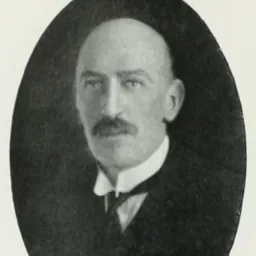



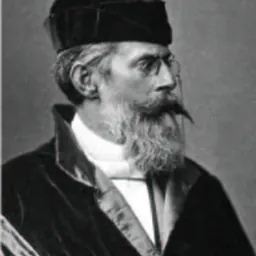
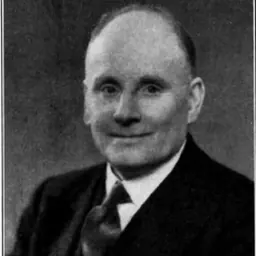

Related people
Same field, nearest in time
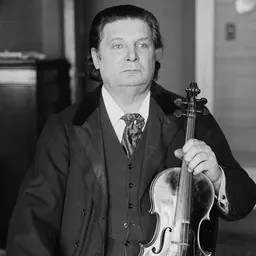
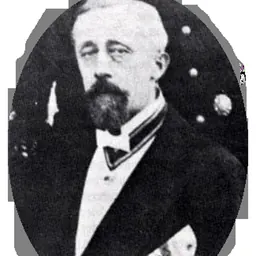
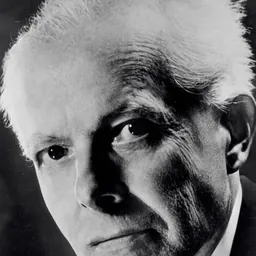
Contemporaries
People whose lives overlapped Ethel Smyth's
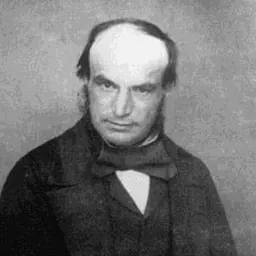
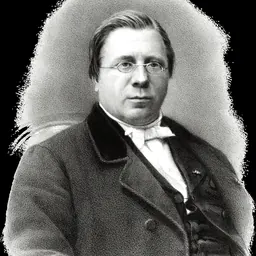
Frequently asked questions
Who was Ethel Smyth?
English composer and suffragette (1858–1944)
When was Ethel Smyth born?
Ethel Smyth was born on 22 April 1858 in Sidcup.
When did Ethel Smyth die?
Ethel Smyth died on 8 May 1944 in Woking.
What was Ethel Smyth's occupation?
Ethel Smyth was a composer, librettist, conductor, autobiographer, suffragist and women's rights activist.
What nationality was Ethel Smyth?
Ethel Smyth was British.
Sources & further reading
Cite this page
APA: Biography.guide. (2026). Ethel Smyth. https://biography.guide/ethel-smyth/
MLA: "Ethel Smyth." Biography.guide, https://biography.guide/ethel-smyth/.
Chicago: "Ethel Smyth." Biography.guide. https://biography.guide/ethel-smyth/.
Data last updated: 2026-09-20 · Spot an error? Report a correction.
Page generated 2026-09-27 05:21 UTC