
About Liu Bannong
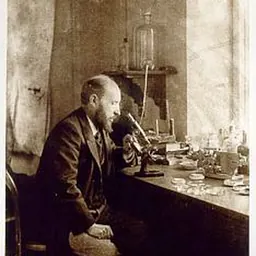
Lived 1891 – 1934 (aged 43). Liu Bannong was a Chinese linguist, poet, writer, translator and photographer.
Liu Bannong (; May 29, 1891 – July 14, 1934) or Liu Fu was a Chinese poet and linguist. He was a leader in the May Fourth Movement. He made great contributions to modern Chinese literature, phonology and photography.
Life A son of the educator Liu Baoshan, Liu Bannong was born in Jiangyin, Jiangsu Province, China. In 1912, he moved to Shanghai and in 1916, his work debuted in New Youth, the most influential journal of the May Fourth New Culture Movement. His essay "My Views on the Change of Written Chinese," published in the May 1917 issue, was a significant piece in promoting modern Chinese language and literature. The same year, Liu took a teaching post at Beijing University, where he began experimenting with using colloquial expressions and folk songs in his poetry. Under his urging, the Beijing University Monthly published folk ballads collected from all over the country, including the 20 "Boat Songs" Liu gathered from his native Jiangyin.
Liu studied in England and France from 1920 to 1925. In 1920, he left China to study linguistics abroad, first in London, then in Paris. He gained his PhD in 1925 at the Institut de Phonétique de la Sorbonne, University of Paris, writing a dissertation on the phonetics and phonology of Chinese tones.
Liu returned to China in 1925, and began a university teaching career. He taught in the field of phonology at colleges in Beijing,
Personal He was the elder brother of the musicologist Liu Tianhua.
He died of an acute illness after a linguistic research trip to the northwest, at the age of 44.
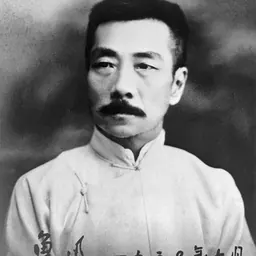
Lu Xun wrote a short memoir about Liu after his death.
Literary Achievements Liu began writing poetry in vernacular Chinese in 1917, and was credited with having coined the Chinese feminine pronoun ta , which differs from masculine ta and neuter ta only in writing, but not in pronunciation, and which he made use of in his poems. The usage was popularised by the song Jiao Wo Ruhe Bu Xiang Ta ( "Tell me how to stop thinking of her"), a "pop hit" in the 1930s in China. The lyrics were written by him and the melody by Yuen Ren Chao.
During his time in Paris, he compiled Dunhuang Duosuo ( "Miscellaneous works found in the Dunhuang Caves"), a pioneering work about the Dunhuang manuscripts.
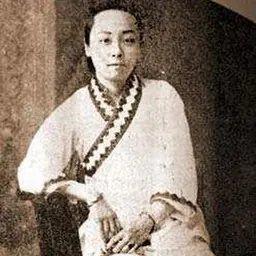
In 1933 Liu Bannong conducted an interview with Sai Jinhua. He wrote The Wife of Zhuangyuan: Sai Jinhua, which he called her "true story".
Literary Reform Invited by Chen Duxiu, Liu Bannong became an important contributor to the influential magazine New Youth (Xin Qingnian) during the May Fourth Movement, starting from 1916. and proposes to differentiate the concept of literature in Chinese (wenxue) from that of language by resorting to the English definition of literature. More importantly, to clarify the concept of literature, he translated an amount of English linguistic contexts (literature, language, tongue, and speech). "What is literature? This question has been discussed by many authors. One might argue that 'literature conveys Dao.' But Dao is Dao; literature is literature." —Liu Bannong, "My View on Literary Reform: What is literature?" , 1917.
Photography Liu was a pioneer in Chinese photography. He called for a photographic style which would be technically advanced but rooted in Chinese tradition. This call was an inspiration to younger photographers such as Lang Jingshan, who established a style of photography which incorporated the aesthetic of Chinese landscape painting. Liu held the opinion that photography should express the author's conception and emotion. This is referred to as "ink and wash painting."
Liu was an active member of the Beijing guangshe (Beijing Photography Society).
Liu has published Bannong tan ying (Bannong on Photography). In which he combined technical instructions with a theoretical discussion of photography, which was the first appearance in China.
Don’t just read it —
keep it.
Full-length biographies made to live with: read them, listen on the way to work, watch them tonight.
- E-book
- Audio
- Video
Instant download · yours to keep · every purchase keeps this site free
Important facts
People in Liu Bannong's life
Named in this biography and alive at the same time

Related people
Same field, nearest in time

Contemporaries
People whose lives overlapped Liu Bannong's


Frequently asked questions
Who was Liu Bannong?
Chinese writer and linguist (1891–1934)
When was Liu Bannong born?
Liu Bannong was born on 27 May 1891 in Jiangyin.
When did Liu Bannong die?
Liu Bannong died on 14 July 1934 in Beijing.
What was Liu Bannong's occupation?
Liu Bannong was a linguist, poet, writer, translator and photographer.
What nationality was Liu Bannong?
Liu Bannong was Chinese.
Sources & further reading
Cite this page
APA: Biography.guide. (2026). Liu Bannong. https://biography.guide/liu-bannong/
MLA: "Liu Bannong." Biography.guide, https://biography.guide/liu-bannong/.
Chicago: "Liu Bannong." Biography.guide. https://biography.guide/liu-bannong/.
Data last updated: 2026-09-22 · Spot an error? Report a correction.
Page generated 2026-09-27 05:30 UTC