
About Lipót Baumhorn
Lived 1860 – 1932 (aged 71). Lipót Baumhorn was a Hungarian architect.
Lipót Baumhorn (, , 28 December 1860, Kisbér – 8 July 1932, Kisbér) was a Hungarian architect of Jewish heritage, the most influential Hungarian synagogue architect in the first half of the 20th century. He drew blueprints for about 20 synagogues in the Kingdom of Hungary.
Career He graduated from the main real school in Győr, the technical university in Vienna under Freiherr von Ferstel, König and Weyr. Then he came to Budapest and worked for 12 years in the office of architects Ödön Lechner and Gyula Pártos. In 1893 and 1899. He traveled to Italy, 1904. to Central Europe for architectural studies. His first independent work was the Moorish-style synagogue in Esztergom, built in 1888, which established his reputation. Since then, B. built 22 synagogues in Hungary, the most significant of which is Szeged (1903), which was one of the largest in the old Austro-Hungarian monarchy (with 740 men's and 600 women's seats), significant new rural, Nagybecskerek, Fiume, Brassó, Temesvár, Szolnok, Cegléd, Eger, Losonc, Liptószentmiklós, Budapest: Aréna-út, Páva utca, Csáky utca synagogues. Other buildings include: The King of Győr. table (1890), the glass factories of Salgótarján (1893), the pavilion of the paper and reproduction industry of the millennial exhibition (1896), the headquarters of the Temesvár Valley Water Regulatory Company, the Temesvár higher girls' school, the headquarters of the Szeged-Csongrád Savings Bank, (1903), the Újvidék Savings Bank the Baja Savings Bank, the Temesvár Lloyd and the Stock Exchange Palace (1910–12).
Buildings
Secular buildings Temesvár-Béga Palace (Timișoara) Junior High School (Timișoara, 1902–1904) (with Jakab Klein) Szeged-Csongrád Savings Bank (Szeged, Széchenyi tér 7. – Takarékpénztár u. 7. 1902–1903) Iron house (Szeged, Horváth Mihály u. 9. – Takarékpénztár u. 8., 1912–1913) Wagner Palace (Szeged, Kölcsey u. 4. – Kárász u. 14., 1904–1905) Savings Bank Palace (Újvidék (Novi Sad), 1904–1905) Menrat's Palace (Újvidék (Novi Sad), 1908) Tomin's Palace (Újvidék (Novi Sad), 1909) Csata Street School (Budapest, 13th district, Csata u. 20., 1909–1911) Wagner Palace (Szeged, Feketesas u. 28., 1910–1911) Forbát House (Szeged, Dugonics tér 11. – Lajos Tisza 60., 1911–1912) Lloyd's Palace (Timișoara, 1912) Metal Trading Company Limited Office Building (Budapest, 13th district, Balzac u. 5., 1922)
Headquarters of the Jewish Community Headquarters of the Jewish Community of Szeged (Gutenberg u. 20 - Jósika 12., 1901–1903, Szeged)
Synagogues
Lipót Baumhorn designed many synagogues. The following is a detailed list:
No.Location Name Built Destroyed Remarks Picture 1st Esztergom, Hungary Esztergom Synagogue 1888 stand It is used for cultural purposes. 100px 2nd Rijeka, Croatia Rijeka Synagogue 1895 1944 It was destroyed by Nazis. 100px 3rd Zrenjanin, Serbia Zrenjanin Synagogue 1896 1941 It was demolished by the German occupiers during World War II, only its organ escaped. 100px 4th Timișoara, Romania Fabric Synagogue 1897–1899 stand It is in a dilapidated state, threatened with collapse. 100px 5th Szolnok, Hungary Szolnok Synagogue 1898 stand Recently renovated. The Szolnok Gallery operates in the building. 100px 6th Brașov, Romania Brașov Synagogue 1899–1901 stand Recently renovated. In use. 100px 7th Szeged, Hungary Szeged New Synagogue 1900–1902 stand It is the second largest synagogue in Hungary and the fourth largest in the world. Recently renovated. In use. 100px 8th Cegléd, Hungary Cegléd Synagogue 1902 stand It functions as a sports hall. 100px 9th Novi Sad, Serbia Novi Sad Synagogue 1905–1909 stand It is used for many cultural concerts and events. 100px 10th Satu Mare, Romania Satmar Synagogue 1906–1909 after 1945 It was demolished at an unknown time after World War II. 100px 11th Murska Sobota, Slovenia Murska Sobota Synagogue 1908 1954 It was demolished in 1954. 100px 12th Budapest, Hungary Arena Synagogue 1908–1909 stand The building is now used by the Budapest Honved Fencing Hall 100px 13th Nitra, Slovakia Nitra Synagogue 1908–1911 stand Renovated from 2003, it is also available to the public as a museum of Jewish culture and a venue for various cultural events. 100px 14th Eger, Hungary Eger Synagogue 1911–1913 1967 It was blown up, citing its exaggerated and degrading size of the settlement. 100px 15th Makó, Hungary Makó Neological Synagogue 1914 1965 After the destruction of Makó Jewry in World War II, the synagogue lost its former role. In the 1950s and 1960s, several ideas were born for recycling, but they were eventually dismantled. 100px 16th Nyíregyháza, Hungary Nyíregyháza New Synagogue 1918–1923 stand In use. 100px 17th Budapest, Hungary Páva Street Synagogue 1923–1924 stand Recently renovated. In use. 100px 18th Lučenec, Slovakia Lučenec Synagogue 1924–1925 stand Recently renovated. It is used for cultural purposes. 100px 19th Gyöngyös, Hungary Gyöngyös Synagogue 1929–1930 stand Recently renovated. It is used for cultural purposes. 100px
Expansions
Draft of the Lipótváros Synagogue (1899) Expansion of the Pécs Synagogue (1905) Reconstruction of the Kaposvár Synagogue (1905–1906) Reconstruction of the Synagogue of Liptovský Mikuláš (1906) Reconstruction and minor transformation of the Szeged Old Synagogue (1906) Expansion of the Újpest Synagogue (1909) Redesigning the damaged dome of Kecskemét synagogue with his finger (1910) Transformation of Kass Vígadó into a hotel (Szeged, Dózsa u. 1. – Stefánia 8. – Arany János u. 2–4. 1916) Extension of the Csáky Street Synagogue (1925–1927) Reconstruction of the Nagykanizsa Synagogue (1928) Plans for the New Synagogue of Žilina (1920s). He did not win the tender. Expansion of the Bethlen Space Synagogue (1931–1932)
Don’t just read it —
keep it.
Full-length biographies made to live with: read them, listen on the way to work, watch them tonight.
- E-book
- Audio
- Video
Instant download · yours to keep · every purchase keeps this site free
Important facts
People in Lipót Baumhorn's life
Named in this biography and alive at the same time
Related people
Same field, nearest in time




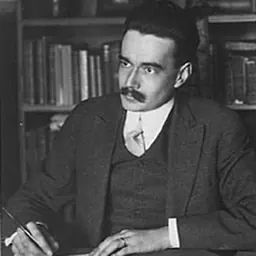
Contemporaries
People whose lives overlapped Lipót Baumhorn's



Frequently asked questions
Who was Lipót Baumhorn?
Hungarian architect (1860–1932)
When was Lipót Baumhorn born?
Lipót Baumhorn was born on 28 December 1860 in Kisbér.
When did Lipót Baumhorn die?
Lipót Baumhorn died on 8 July 1932 in Kisbér.
What was Lipót Baumhorn's occupation?
Lipót Baumhorn was an architect.
What nationality was Lipót Baumhorn?
Lipót Baumhorn was Hungarian.
Sources & further reading
Cite this page
APA: Biography.guide. (2026). Lipót Baumhorn. https://biography.guide/lipot-baumhorn/
MLA: "Lipót Baumhorn." Biography.guide, https://biography.guide/lipot-baumhorn/.
Chicago: "Lipót Baumhorn." Biography.guide. https://biography.guide/lipot-baumhorn/.
Data last updated: 2026-09-26 · Spot an error? Report a correction.
Page generated 2026-09-27 05:16 UTC