
About Lintorn Simmons
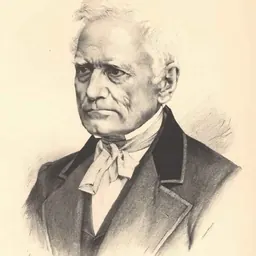
Lived 1821 – 1903 (aged 82). Lintorn Simmons was a British engineer, diplomat and governor of Malta.
Field Marshal Sir John Lintorn Arabin Simmons, (12 February 1821 – 14 February 1903) was a British Army officer. Early in his career he served as Inspector of Railways, Secretary of the Railways Commission and then Secretary of the Railway Department under the Board of Trade. He went on to be British Commissioner with the Turkish Army providing advice to General Omar Pasha during the Crimean War. He assisted the Turks at the defence of Silistra and then led them at the Battle of Giurgevo before landing with them at the Battle of Eupatoria and remaining with them for the Siege of Sevastopol. After that he became British Consul in Warsaw, Commander, Royal Engineers at Aldershot and then Director of the Royal Engineer Establishment in Chatham. He went on to be Lieutenant-Governor of the Royal Military Academy and subsequently Governor of the Academy. His last appointments were as Colonel Commandant of the Royal Engineers, as Inspector General of Fortifications and then as Governor of Malta.
Military career Born the fifth son of Captain Thomas Frederick Simmons, RA and Mary Simmons (née Perry), Simmons was educated at Elizabeth College, Guernsey and the Royal Military Academy, Woolwich. He was commissioned as a second lieutenant in the Royal Engineers on 4 December 1837 and promoted to lieutenant on 15 October 1839. He was then deployed to Canada where he carried out survey work on the disputed border with the United States of America. He was appointed Inspector of Railways in 1847, Secretary of the Railways Commission in 1850 and Secretary of the Railway Department under the Board of Trade in 1851. The Battle of Eupatoria, at which Simmonds served with the Turks, during the Crimean WarIn 1853, whilst on leave from his role with the Board of Trade, he was in Constantinople when Turkey declared war on Russia. The British Ambassador, Lord Stratford de Redcliffe, took up Simmons' offer of his services, requesting that he report on Turkish defences and their ability to resist a Russian advance. he became British Commissioner with the Turkish Army providing advice to General Omar Pasha as the Crimean War started. and to brevet lieutenant colonel on 14 July 1854, he landed with the Turks at the Battle of Eupatoria in February 1855 and remained with them for the Siege of Sevastopol in the Summer of 1855. Simmons became British Consul in Warsaw in February 1858, Commander, Royal Engineers at Aldershot in 1860 and Director of the Royal Engineer Establishment in Chatham in 1865. he became Lieutenant-Governor of the Royal Military Academy in March 1869 and subsequently Governor of the Academy. with promotion to lieutenant general on 27 August 1872. He was also appointed a Commissioner to enquire into the Causes of Accidents on Railways in June 1874.
Simmons went on to be Inspector General of Fortifications in 1875, and having been promoted to full general on 1 October 1877, he was invited to join a Royal Commission appointed to inquire into the condition and sufficiency of the means provided for the defence of the more important seaports within the Colonial Possessions. In June 1884 he became Governor of Malta, where he oversaw significant constitutional and social changes on the island. After he retired in September 1888, the Foreign Office continued to utilise his services and in 1889 he went to Rome as Envoy Extraordinary and Minister Plenipotentiary to Pope Leo XIII. He also became honorary colonel of the 1st Gloucestershire (The Western Counties) Engineer Volunteers, Royal Engineers and subsequently of the 1st Devonshire and Somersetshire Royal Engineers and after that of the 1st Middlesex Royal Engineers as well as honorary colonel of the Engineer and Railway Volunteer Staff Corps.
Promoted to field marshal on 21 May 1890, Simmons retired to Hawley House at Hawley in Hampshire where he died on 14 February 1903. He is buried at the Church of St John the Baptist, Churchill in Somerset.
Family In 1846 Simmons married his cousin, Ellen Lintorn Simmons; they had one daughter, Eleanor. who married Charles Orman.
Honours Simmons's honours included: Knight Grand Cross of the Order of the Bath (GCB) – 29 July 1878 (KCB – 2 June 1869 ) Knight Grand Cross of St Michael and St George (GCMG) – 24 May 1887 Legion of Honour, 4th Class (France) – 22 March 1858 Grand Cordon of the Order of the Medjidie (Ottoman Empire) – 13 March 1890
Memorial
There is a memorial to him in St Paul's Cathedral.
Don’t just read it —
keep it.
Full-length biographies made to live with: read them, listen on the way to work, watch them tonight.
- E-book
- Audio
- Video
Instant download · yours to keep · every purchase keeps this site free
Important facts
People in Lintorn Simmons's life
Named in this biography and alive at the same time


Related people
Same field, nearest in time

Contemporaries
People whose lives overlapped Lintorn Simmons's



Frequently asked questions
Who was Lintorn Simmons?
British Field Marshal (1821-1903)
When was Lintorn Simmons born?
Lintorn Simmons was born on 12 February 1821 in Langford Budville.
When did Lintorn Simmons die?
Lintorn Simmons died on 14 February 1903 in Hawley.
What was Lintorn Simmons's occupation?
Lintorn Simmons was an engineer, diplomat and governor of Malta.
What nationality was Lintorn Simmons?
Lintorn Simmons was British.
Sources & further reading
Cite this page
APA: Biography.guide. (2026). Lintorn Simmons. https://biography.guide/lintorn-simmons/
MLA: "Lintorn Simmons." Biography.guide, https://biography.guide/lintorn-simmons/.
Chicago: "Lintorn Simmons." Biography.guide. https://biography.guide/lintorn-simmons/.
Data last updated: 2026-09-26 · Spot an error? Report a correction.
Page generated 2026-09-27 05:14 UTC