
About Lincoln Gordon
Lived 1913 – 2009 (aged 96). Lincoln Gordon was an American diplomat and economist.
Early life Born September 10, 1913 in New York City, Gordon attended the Ethical Culture Fieldston School in Riverdale, and later attended Harvard University.
While he was a student at Harvard, Gordon met his future wife, Allison Wright, at a film exhibition in Dunster House.
Career in government (1944–67) Gordon was program vice-chairman of the War Production Board from 1944 to 1945. He started in the Bureau of Research and Statistics of the War Production Board before joining the staff of the Requirements Committee, helping design the Controlled Materials Plan. This Plan regulated the conservation and allocation of critical materials such as steel, copper, zinc, and aluminum—materials that were scarce or were in danger of becoming so during World War II.
Brazil and Latin America (1960–67)
In 1960, Gordon helped develop the Alliance for Progress, an aid program designed to prevent Latin America from turning to revolution and socialism for economic progress.
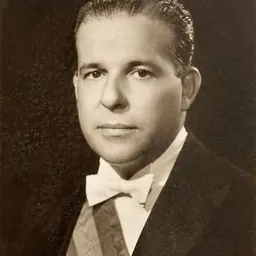
Gordon served as U.S. Ambassador to Brazil (1961–66), where he played a major role for the support of the opposition against the government of President João Goulart and during the 1964 Brazilian coup d'état. On July 30, 1962, President Kennedy held a meeting with Gordon and U.S Latin American Advisor Richard N. Goodwin and urged for a "liaison" with Brazil's military. On March 27, 1964, he wrote a top secret cable to the US government, urging it to support the coup of Humberto de Alencar Castelo Branco with a "clandestine delivery of arms" and shipments of gas and oil, to possibly be supplemented by CIA covert operations. Gordon believed that Goulart, wanting to "seize dictatorial power", was working with the Brazilian Communist Party.
Afterward, Gordon became Assistant Secretary of State for Inter-American Affairs (1966–68) in Washington, D.C.,
During his tenure, students and faculty briefly occupied the university's executive offices to protest against the Vietnam War despite the fact that Gordon had expressed opposition to the Vietnam War. He also took part in a campus-wide discussion over military recruiting on campus and whether the ROTC should have a place at Johns Hopkins.
During his tenure, the university was suffering a financial crisis, with an operating deficit of more than $4 million. The crisis caused Gordon to order budget cuts, which in turn caused faculty protests. Faculty were angered because while Gordon was cutting teaching positions, he was increasing the size of the university's administration. He also incurred student wrath when he re-wrote the student conduct code.
Gordon resigned in March 1971, following a vote of "no-confidence" by a committee of senior faculty, attributing his resignation to growing criticism from the university's faculty. The New York Times stated that "Dr. Gordon's four years at Johns Hopkins were dogged by deteriorating finances, faculty complaints over pay and academic priorities, and students rebellious over the 'relevance' of their educations." Although Gordon had agreed to remain until an interim successor could be named, he left town abruptly, forcing the trustees to move quickly; they asked Gordon's predecessor, Milton S. Eisenhower, to return in an emergency capacity.
Later career
Gordon was a fellow of the Woodrow Wilson International Center for Scholars at the Smithsonian Institution from 1972 to 1975. He was survived by two sons, Robert and Hugh, and two daughters, Sally and Amy and seven grandchildren (including Kate Gordon); and three great-grandchildren.
Gordon died December 16, 2009.
Books A New Deal for Latin America (1963) Growth Policies and the International Order (1979) Energy Strategies for Developing Nations (1981) Eroding Empire: Western Relations with Eastern Europe (1987) Brazil's Second Chance: En Route toward the First World (Brookings Institution Press, 2001).
Don’t just read it —
keep it.
Full-length biographies made to live with: read them, listen on the way to work, watch them tonight.
- E-book
- Audio
- Video
Instant download · yours to keep · every purchase keeps this site free
Important facts
People in Lincoln Gordon's life
Named in this biography and alive at the same time




Related people
Same field, nearest in time
Contemporaries
People whose lives overlapped Lincoln Gordon's





Frequently asked questions
Who was Lincoln Gordon?
U.S. Ambassador to Brazil and university president (1913–2009)
When was Lincoln Gordon born?
Lincoln Gordon was born on 10 September 1913 in New York City.
When did Lincoln Gordon die?
Lincoln Gordon died on 19 December 2009 in Mitchellville.
What was Lincoln Gordon's occupation?
Lincoln Gordon was a diplomat and economist.
What nationality was Lincoln Gordon?
Lincoln Gordon was American.
Sources & further reading
Cite this page
APA: Biography.guide. (2026). Lincoln Gordon. https://biography.guide/lincoln-gordon/
MLA: "Lincoln Gordon." Biography.guide, https://biography.guide/lincoln-gordon/.
Chicago: "Lincoln Gordon." Biography.guide. https://biography.guide/lincoln-gordon/.
Data last updated: 2026-09-20 · Spot an error? Report a correction.
Page generated 2026-09-27 05:19 UTC