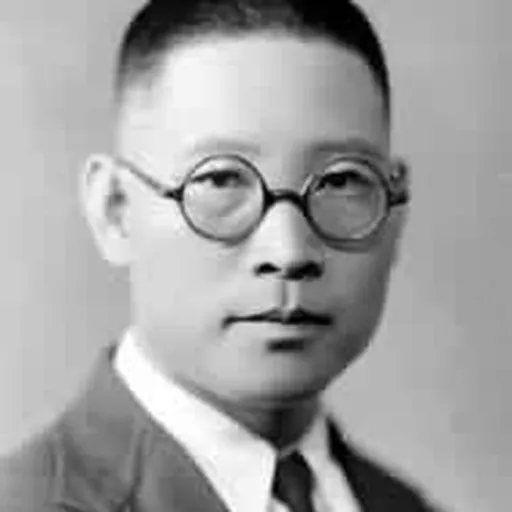
About Lin Hui Xiang
Lived 1901 – 1958 (aged 56). Lin Hui Xiang was a Chinese and Japanese anthropologist and folklorist.
Biography
Genealogy Lim Hooi Seong's great-grandfather, Lin Gongzhan (1792–1873) was a jinshi recipient. His grandfather, Lin Xinyu (1844–1870), along with his brother and family immigrated to Lukang. The Lin family was involved in commerce in Taiwan and had amassed a significant fortune. However, after his early passing, the family business declined, and his wife became a single parent, taking care of his two sons, including Lin's father, Lin Mingfang (1869–1929). After the First Sino-Japanese War, Taiwan was ceded to Japanese rule in 1895, hence Lin Mingfang became a Japanese citizen.
Early life Lim Hooi Seong was born in Jinjiang, Fujian on 3 May 1901. The second son of Lin Mingfang, his birth brought excitement to his father due to the early death of his first son. As mastering the Japanese language was a requirement for merchants in Taiwan at the time, he was admitted into the Dongying Academy, a Japanese school in Fuzhou. He was noted as a brilliant student, graduating first among his class; and was an avid reader of classical novels, later recalling that it "significantly improved [my] mastery in Chinese". He was well-liked by his headmaster, Hiroyuki Yokoo, and was recommended by him to work as a merchant in Japan, but turned down the advice.
Lin became friends with a classmate who was proficient in Classical Chinese and was motivated to study ancient Chinese texts and English, eventually succeeding in enrolling himself in an English high school managed by the YMCA. After attending a semester in the school, he was one of the top students of his year but felt progress was too slow. Suffering from financial difficulties from his father's struggling business, he decided to withdraw from school and started self-studying. This decision brought his father disappointment. Afterwards, Yokoo approached him and recommended he become a Chinese teacher at his alma mater, and tried to persuade him to further his studies in Japan through funding from the Lin Ben Yuan family. However, Lin turned down all of Yokoo's invitations. Soon after his father's business failed he returned to Taiwan and became an accountant for a local businessman.
After his graduation, he stayed at Xiamen University and became a lecturer. In 1927, he resigned from his position amidst controversies related to Lu Xun's dismissal from the university, and returned to the Philippines to study anthropology at the University of the Philippines, under the guidance of H. Otley Beyer. He graduated prematurely from his studies in 1928 to return to China and was hired as an academician at Xiamen University once more. He later became a researcher in anthropological studies of the Academia Sinica in Nanking.
After the sacking, he returned to Singapore and presided over the death of his wife and son from starvation later that year. In February 1942, Singapore fell under Japanese rule. He was offered by the Japanese occupation government to work as a linguist, but he refused any association with the Japanese. He moved to the Malay Peninsula and went incognito for three years as a farmer.
Post-war and death
After the end of the war in 1945, Lin became Tan Kah Kee's secretary. He was involved in the editorials of Tan's several publications, including Memoirs of a Straits' Chinese (Chinese: 南侨回忆录, 1946), and The War and the Straits' Chinese (Chinese: 大战与南侨, 1947). He returned to China in 1947 and assumed his previous job as a history professor at Xiamen University. After the resumption of the Second Chinese Civil War, he refused invitations from the KMT to participate in politics, and expressed his students with anti-war thoughts, causing his arrest in 1949 by the KMT government. He was released after Xiamen fell to communist control. In 1951 he suggested the formation of an anthropological museum within Xiamen University and donated his entire book and artefact collections. In 1953, he became the founding director of the Museum of Anthropology of Xiamen University. Four years later, he joined the CCP and was elected as a member of the National People's Congress, representing Xiamen.
Nationality According to Lin's biography, his father, Lin Mingfang, received his Japanese citizenship while living in Taiwan. As Japanese citizenship laws at the time followed the principles of Jus sanguinis, his family became Japanese citizens by default. Despite this, most of the family resided in Quanzhou. As his father did not precisely state his nationality, he attained double citizenship from both Japan and the Qing Dynasty. Furthermore, his father had joined a research institute set up by the Qing Government in Fuzhou, graduating in 1909.
During his time at Xiamen University, the May Fourth Movement influenced him to abandon his Japanese nationality. He opted to apply as a Chinese national, registering as a native of Fujian, but faced difficulties in revoking his Japanese identity, and eventually gave up on changing it. While in the Philippines in 1928, he only referred to himself as a Chinese national and used the name Thomas Huixiang Lim to not reveal his identity. While returning to Taiwan in 1929, he used a Chinese passport. Since then and until his death, Lin refused to recognize his Japanese citizenship and insisted that he was always a Chinese national.
Taiwanese anthropologist Li Yih-yuan remarked that Lin's biggest contribution towards anthropology was his 1934 work, Wenhua Renleixue (Cultural Anthropology). Since its inception, it became the standard teaching material for anthropological studies in Taiwan and was still commonly used within Taiwanese high schools and universities until the 1980s. The book popularized many modern cultural concepts, such as feminism. His 1930 work, Taiwanfanzhuzhi Yuanshiwenhua (The Primitive Cultures of the Taiwanese Indigenous People) became the precedent of modern Chinese studies towards the Taiwanese indigenous people. He proposed similarities between the Baiyue and the Malays, now classified under the Austronesian peoples, and hypothesized that the Austronesians originated from South China and northern-Mainland Southeast Asia. Besides, his archaeological studies contributed greatly to the knowledge of prehistoric archaeology in South China, Taiwan and Malaysia. His academic work at Xiamen University laid the foundations for the creation of the institution's anthropological department in 1984.
Lin called for the integration of several fields in humanities towards the study of history, combining techniques used within historical studies to conduct anthropological research. He was the first Chinese anthropologist to classify Chinese ethnicities into historical and modern classifications. Li Yih-yuan assessed Lin's Zhongguo Minzushi (Chinese Ethnohistory) and concluded that the work fused both historical elements and modern ethnic concepts, establishing modern classification methods for Chinese ethnicities.
Don’t just read it —
keep it.
Full-length biographies made to live with: read them, listen on the way to work, watch them tonight.
- E-book
- Audio
- Video
Instant download · yours to keep · every purchase keeps this site free
Important facts
People in Lin Hui Xiang's life
Named in this biography and alive at the same time

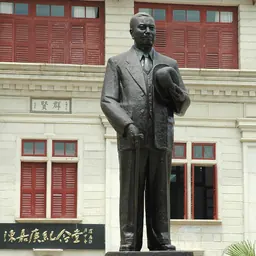
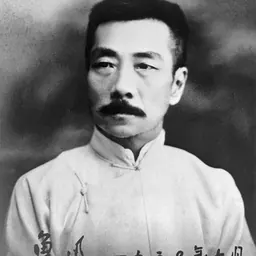
Related people
Same field, nearest in time


Contemporaries
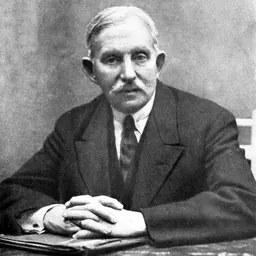
People whose lives overlapped Lin Hui Xiang's


Frequently asked questions
Who was Lin Hui Xiang?
Chinese anthropologist and archaeologist
When was Lin Hui Xiang born?
Lin Hui Xiang was born on 1 June 1901 in Fujian.
When did Lin Hui Xiang die?
Lin Hui Xiang died on 13 February 1958.
What was Lin Hui Xiang's occupation?
Lin Hui Xiang was an anthropologist and folklorist.
What nationality was Lin Hui Xiang?
Lin Hui Xiang was Chinese and Japanese.
Sources & further reading
Cite this page
APA: Biography.guide. (2026). Lin Hui Xiang. https://biography.guide/lin-hui-xiang/
MLA: "Lin Hui Xiang." Biography.guide, https://biography.guide/lin-hui-xiang/.
Chicago: "Lin Hui Xiang." Biography.guide. https://biography.guide/lin-hui-xiang/.
Data last updated: 2026-09-22 · Spot an error? Report a correction.
Portrait: Wikimedia Commons · author & licence
Page generated 2026-09-27 05:01 UTC