
Lilie Chouliaraki
Professor of Media and Communication in London School of Economics
About Lilie Chouliaraki
Born 1963. Lilie Chouliaraki is a Greek sociologist and university teacher.
Lilie Chouliaraki is Chair in Media and Communications at the London School of Economics and Political Sciences (LSE). Chouliaraki’s main area of research is the mediation of human vulnerability and suffering. Her publications have pioneered an interdisciplinary research field in Media and Communications Ethics, focusing on three areas of research:
Media Representations and Vulnerable Populations in the Global South: How media portrayals influence Western moral and political relationships with vulnerable populations in the Global South, shaping perceptions and responses to their circumstances.
Her research examines case studies on disaster news, as well as war and conflict journalism,
Education and Career Chouliaraki has a background in Languages and Linguistics, having completed both her MA and PhD in Linguistics from Lancaster University and her BA (Ptycheion) at the University of Athens. While her specialization is in Critical Linguistics and Discourse Theory and Analysis, Chouliaraki’s work has a strong interdisciplinary orientation, drawing on Social and Cultural Theory, Moral Philosophy and Sociology, Visual Communication and Social Semiotics.
From 1997 to 2003, Chouliaraki worked as a post-doc, Assistant and Associate Professor at the Departments of Philology, and of Film and Media, University of Copenhagen. In 2004, she joined the Copenhagen Business School (CBS), becoming Professor of Media and Discourse Studies in 2006. A year later, she moved to the London School of Economics and Political Science (LSE) as Chair in Media and Communication, where she remains today.
Chouliaraki maintains an Honorary Professorship at the Copenhagen Business School and has held visiting professorships at several universities, including CELSA-Sorbonne, Paris, University of Helsinki, Stockholm University, The New School of Social Research, Yale University and New York University. She also held a Professorial Fellowship at the Institute of Advanced Studies, University of Bologna in 2017. Her work has been translated in Portuguese, Polish, Danish, Greek, Italian, French, Chinese and is currently being translated in Korean. Chouliaraki's work has received funding from the Greek, Danish, Nordic and Dutch Research Councils. In 2020, Chouliaraki was announced as an ICA Fellow, in recognition of her distinguished scholarly contributions to the field of Media and Communications.
She serves on the editorial board of numerous international journals, including the International Journal of Communication, Discourse and Society; Visual Communication; Social Semiotics; Critical Discourse Studies; Crime, Media, Culture; Journal of Language and Politics, JOMEC Journal, Popular Communication, Digital Journalism.
In addition to numerous academic keynote lectures worldwide, Chouliaraki has also lectured for major NGOs, such as Amnesty International (UK, Finland) and Doctors without Borders (Netherlands) on the development of their communication agendas and strategies. She was also a judge at The Guardian’s International Development Competition, 2012 and 2013.
In 2014, in Media Ethics & Humanitarianism, Chouliaraki discussed 'the moral implications of the use of celebrities by humanitarian organisations' in the LSE’s YouTube video debates ‘Gearty Grillings’ with Prof. Conor Gearty. Her 2024 book, Wronged: The Weaponization of Victimhood
Victimhood in the Public Sphere Chouliaraki's current research focuses on the concept of victimhood and its role in the political sphere and culture wars in Western public spheres. She examines the historical and contemporary conditions under which vulnerability, a social state of openness to violence, transforms into victimhood, a form of communication that bestows the moral value of the vulnerable upon those who claim it. Chouliaraki explores the relationship between western spectators and vulnerable “others” in contexts of disaster, oppression and war on their news screens. Chouliaraki’s book was one of the first systematic studies in the field of Media and Communication that demonstrated how the use of language and image in Western national and trans-national television networks tell news stories that invite different degrees of moral and emotional identification with those others, depending on who they are and where they come from, and, in this way, perpetuate hierarchical patterns of place and human life along a West/non-West axis.
In chapter 4 of this book, In this way, the analytics of mediation aims to preserve the modernist heritage of normative research, social criticism and change, and, at the same time, to support the mission of a bottom-up, case-by-case critical interpretation of specific communicative events.
This methodology is grounded on earlier Discourse Analytical work as developed in Discourse in Late Modernity Chouliaraki turns her attention to the problem of human vulnerability in the context of humanitarian and human rights communication. In this award-winning book, she examines how, in the past half century, western NGO and INGO actors have radically changed the ways they represent the suffering of vulnerable “others” as a cause for solidarity.
Looking into Amnesty International and Oxfam campaigns, charity concerts like Live Aid and Live 8, the celebrity advocacy of Audrey Hepburn and Angelina Jolie, and the BBC’s digital blog on the 2010 Haiti earthquake, Chouliaraki identifies those transformations as institutional (the commercialisation of the aid and development field), technological (the rise of social media platforms) and political (the fall of ideological narratives and the rise of individualism), and shows in detail how these transformations have shifted the ethical message of humanitarian communications from “doing good to others” to “feeling good in ourselves”. As a consequence, she argues, solidarity has today lost its moral and political character and has become a matter of consumerist choice and lifestyle. Solidarity, in other words, has turned into humanitarianism without ethics, into “post-humanitarianism”, and we as western publics have become reluctant and ego-centric yet benevolent “ironic spectators” of other people's suffering. (with Anne Vestergaard, 2021).
Migration and the Symbolic Border From 2015 to 2020, Chouliaraki's interest in the communication of human vulnerability was channelled in her study on human mobility and migration. Together with Prof. Myria Georgiou, she co-led a multi-method research on the biggest migration event of the 21st century in the west - the 2015 migration “crisis” and its aftermath up to 2020 – so as to explore Europe’s digital communication practices at a time of extreme securitization, datafication and platformization of its borders. In their book The Digital Border. Migration, Technology, Power Nominated for Walter Benjamin Outstanding Article Award in the Field of Media Ecology of the Media Ecology Association, New York 2017. Victimhood, voice and power in digital media Simonsen K.M. and Kjaergaard J. R. (eds) Discursive Framings of Human rights: Negotiating Agency and Victimhood Abingdon: Routledge pp. 247–62. Outstanding Book of the Year Award, International Communication Association, 2015. 'The Ironic Spectator: Solidarity in the Age of Post-humanitarianism: Solidarity in the Age of Post-humanitarianism' (1999), The Spectatorship of Suffering (2008), Media, Organizations, Identity (2009), Self-mediation. New Media, Citizenship and Civic Selves (2012), The Ironic Spectator: Solidarity in the Age of Post-humanitarianism Portuguese, Polish, Danish, Greek and Chinese.
Books Wronged: The Weaponization of Victimhood (2024) The Digital Border: Migration, Technology, Power (2022, with Myria Georgiou) The Routledge Handbook of Humanitarian Communication (2021 with Anne Vestergaard) European Journal of Cultural Studies, 24 (1). 10 - 27. ISSN 1367-5494 (open access) Chouliaraki, Lilie and Al-Ghazzi, Omar (2022) Beyond verification: flesh witnessing and the significance of embodiment in conflict news. Popular Communication 15 (2): 78-94. Chouliaraki Lilie and Georgiou Myria (2016) Hospitability: The Communicative Architecture of Humanitarian Securitization at Europe's Borders Journal of Communication 67(2): 159–180. Chouliaraki, Lilie (2013) Re-mediation, inter-mediation, trans-mediation. Journalism Studies, 14 (2). pp. 267–283 Chouliaraki, Lilie (2013) Mediating vulnerability: cosmopolitanism and the public sphere. Media, Culture and Society, 35 (1). pp. 105–112. Chouliaraki, Lilie (2010) Post-humanitarianism: humanitarian communication beyond a politics of pity. International journal of cultural studies, 13 (2). pp. 107–126. Chouliaraki Lilie and Fairclough Norman (2010) Critical Discourse Analysis in Organizational Studies: Towards an integrationist methodology. Journal of Management Studies 47 (6): 1213–1218. Chouliaraki, Lilie (2010) Ordinary witnessing in post-television news: towards a new moral imagination. Critical Discourse Studies, 7 (4). pp. 305–319. Chouliaraki, Lilie (2008) The Mediation of suffering and the vision of a cosmopolitan public. Television & new media, 9 (5). pp. 371–391. ISSN 1552-8316 Chouliaraki, Lilie (2006) Aestheticization of suffering on television. Visual Communication, 5 (3). pp. 261–285. Chouliaraki, Lilie (2004) Watching 11 September: the politics of pity. Discourse & Society, 15 (2-3). pp. 185–198.
Selected reviews "Wronged explores how the practice of claiming harm has become the rhetorical province of the powerful". Lily Meyer in When Victimhood Takes a Bad-Faith Turn, The Atlantic. "In a moment when competing victim claims overwhelm public discourse, leading many to shun victim talk, Wronged gets so much right. By disentangling systemic precarity from privileged grievance, Chouliaraki recuperates the language of victimization for the most vulnerable. Wronged is a rich and sophisticated study that makes a major contribution to overcoming our current political impasse". Alyson Cole, author of The Cult of True Victimhood: From the War on Welfare to the War on Terror. "How have powerful and privileged men managed to pass themselves off as the victims of their own victims? This important book offers a new and convincing answer. It is essential reading for feminist scholarship, cultural and media studies, and the study of intersectionality". Eva Illouz, author of Cold Intimacies: The Making of Emotional Capitalism "Where has the holy sorrow of silent saints gone? Lilie Chouliaraki has an answer. It’s vanished into the market of competitive suffering, one that, like all markets, advantages the usual suspects. She urgently and eloquently calls us, in the name of a just and beautiful polity, to attend to suffering undistorted by power". John Durham Peters, author of The Marvelous Clouds: Toward a Philosophy of Elemental Media Wronged is an instant classic for anyone seeking to make sense of the pervasive politics of victimhood in the era of digital platforms and profound polarization. In writing that is both strikingly original and deeply moving, Chouliaraki performs the magic trick of rendering visible what was previously unseen: even if suffering is universal, the politics of pain is deeply embedded within power relations and privileges the voices of the powerful over those of the powerless. Karin Wahl-Jorgensen, author of Emotions, Media, and Politics "This book achieves a rare combination of opening new analytical and theoretical ground while retaining direct and lucid engagement with critical and urgent human concerns." The British Journal of Sociology "The Ironic Spectator, therefore, is not only an eminent work of media studies scholarship that presents a detailed and inspiring analytical framework. Its theorization of post-humanitarianism and the aesthetic and sociopolitical questions posed by new media practices deserves to earn it a wide readership in all disciplines interested in contemporary popular culture and world politics." European Journal of Communication "The significance of The Ironic Spectator for students and scholars of contemporary media, international relations, "development", and the broader social sciences, and, ideally, people working within media, for NGOs and INGOs, and the wider humanitarian and development sectors, cannot be overstated." Social Semiotics "Chouliaraki conducts an impressive, interdisciplinary analysis. She embraces the paradoxes and ambivalences of each genre, presenting a state of the art critique, and thoroughly analysing the genre's past and present form in order to suggest how the changes in communicative structure may affect how we are invited to act on distant others." The Journal of Development Studies "Chouliaraki qualifies as a high priestess of the representation of suffering and how we engage with distant others. She dissects with great clarity exactly what is taking place in this post humanitarian sensibility and how supporters are now being drawn in to apparently care and show solidarity with distant sufferers." LSE Review of Books "As refreshing and enervating as a cold mountain spring on a hot day. Chouliaraki has extraordinary ability to condense and parse complex debates briskly." Journal of International Development "The Spectatorship of Suffering, by Lilie Chouliaraki, rapidly became a classic, present on almost every key and suggested reading list on courses dealing with global media and international journalism… Therefore, The Ironic Spectator is a more than welcome contribution to this field, offering an opportunity to discuss one of the most pressing issues in media and journalism studies. In this book, she deals with the issue of humanitarian communication, offering a comprehensive set of arguments which makes us think truly out of the box." Digital Journalism
Don’t just read it —
keep it.
Full-length biographies made to live with: read them, listen on the way to work, watch them tonight.
- E-book
- Audio
- Video
Instant download · yours to keep · every purchase keeps this site free
Important facts
People in Lilie Chouliaraki's life
Named in this biography and alive at the same time
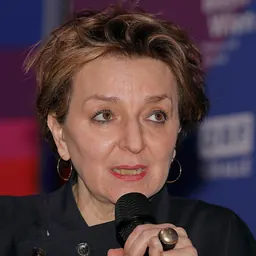




Related people
Same field, nearest in time

Contemporaries
People whose lives overlapped Lilie Chouliaraki's




Frequently asked questions
Who is Lilie Chouliaraki?
professor of Media and Communication in London School of Economics
When was Lilie Chouliaraki born?
Lilie Chouliaraki was born on 5 November 1963 in Komotini.
What is Lilie Chouliaraki's occupation?
Lilie Chouliaraki is a sociologist and university teacher.
What nationality is Lilie Chouliaraki?
Lilie Chouliaraki is Greek.
Sources & further reading
· Wikipedia: Lilie Chouliaraki
Cite this page
APA: Biography.guide. (2026). Lilie Chouliaraki. https://biography.guide/lilie-chouliaraki/
MLA: "Lilie Chouliaraki." Biography.guide, https://biography.guide/lilie-chouliaraki/.
Chicago: "Lilie Chouliaraki." Biography.guide. https://biography.guide/lilie-chouliaraki/.
Data last updated: 2026-09-20 · Spot an error? Report a correction.
Page generated 2026-09-27 05:23 UTC