
About Lieven Bauwens
Lived 1769 – 1822 (aged 52). Lieven Bauwens was a Belgian and French industrialist, spy, politician, entrepreneur and engineer.
Lieven Bauwens (14 June 1769 in Ghent – 17 March 1822 in Paris) was an entrepreneur and industrial spy from the Austrian Netherlands. He was sent to Great Britain at a young age and brought a spinning mule and skilled workers to the European continent.
He started textile plants in Paris (1798) and Ghent (1799). In Ghent he was appointed mayor in 1800, but resigned after one year.
Early life Lieven Bauwens was born 14 June 1769 in Ghent. He was born eldest of thirteen children to George Jean Bauwens and his second wife, Jeanne van Peteghem, who were guild tanners.
He had four brothers, François, Pierre, Jean, and Charles. The scale of the tanning operation at the monastery enabled Bauwens to start selling his leather products back in London. The volume of goods being produced by the tannery were so great that Bauwens was paying as much as 450,000-500,000 Francs just in import costs to bring the leather products to Great Britain.
Tanning was not Bauwens' passion, however. He only entered into the trade to appease his parents, who desired that he follow them into the tanning business. From a young age, he had an interest in machines, reportedly assembling a working clock at the age of 12. His interest later turned his focus on bringing the textile machines of Great Britain to mainland Europe. as well as one daughter Elvine Marie Bernardine and two sons, Napoleon and Felix.
Other ventures Around 1805 Bauwens founded another textile mill outside of Ghent in Drongen, at Drongen Abbey.
As mentioned before, Bauwens was involved in the purchase of silver from churches and convents, which proved lucrative.
Downfall The effects of the Continental Blockade and the fall of the French Empire marked the end of Bauwens' success. He declared bankruptcy in 1814, and his property was liquidated.
Bauwens petitioned King William I, The Infanta of Spain, Henry Clay, and John Quincy Adams with the hopes of garnering support for the establishment of his cotton industries in their respective countries, with no success.
In 1819, he moved to Paris, obtained a patent for working with silk waste, sold partial rights to the patent and saw the creation of twenty five silk waste machines. Unfortunately, he was not able to rebuild his fortune due to dying of an aneurysm at 53.
Legacy Lieven Bauwens statue in GhentA square in Ghent is named in his honor, featuring a statue of him. The statue was sculpted by the Ghent sculptor Pieter De Vigne (fr).
Don’t just read it —
keep it.
Full-length biographies made to live with: read them, listen on the way to work, watch them tonight.
- E-book
- Audio
- Video
Instant download · yours to keep · every purchase keeps this site free
Important facts
People in Lieven Bauwens's life
Named in this biography and alive at the same time
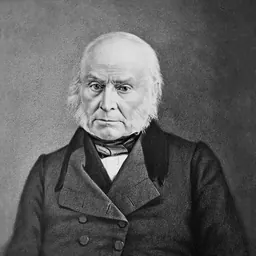
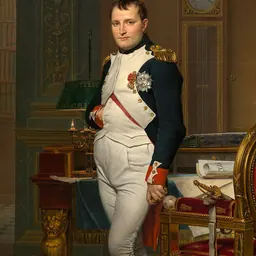

Related people
Same field, nearest in time
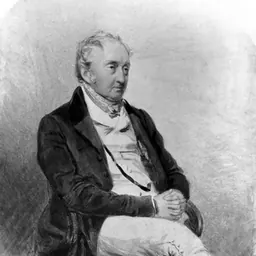
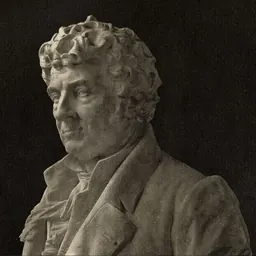


Contemporaries
People whose lives overlapped Lieven Bauwens's




Frequently asked questions
Who was Lieven Bauwens?
engineer, entrepreneur, industrial spy (1769-1822)
When was Lieven Bauwens born?
Lieven Bauwens was born on 14 June 1769 in Ghent.
When did Lieven Bauwens die?
Lieven Bauwens died on 17 March 1822 in Paris.
What was Lieven Bauwens's occupation?
Lieven Bauwens was an industrialist, spy, politician, entrepreneur and engineer.
What nationality was Lieven Bauwens?
Lieven Bauwens was Belgian and French.
Sources & further reading
Cite this page
APA: Biography.guide. (2026). Lieven Bauwens. https://biography.guide/lieven-bauwens/
MLA: "Lieven Bauwens." Biography.guide, https://biography.guide/lieven-bauwens/.
Chicago: "Lieven Bauwens." Biography.guide. https://biography.guide/lieven-bauwens/.
Data last updated: 2026-09-26 · Spot an error? Report a correction.
Page generated 2026-09-27 05:15 UTC